Aljaž Škrjanc , Amalija Golobič , Matjaž Mazaj , Matej Huš , Blaž Likozar , Nataša Zabukovec Logar
{"title":"机械化学绿色合成功能化钠盐zif及其CO2捕集性能","authors":"Aljaž Škrjanc , Amalija Golobič , Matjaž Mazaj , Matej Huš , Blaž Likozar , Nataša Zabukovec Logar","doi":"10.1016/j.micromeso.2024.113453","DOIUrl":null,"url":null,"abstract":"<div><div>Mechanochemical synthesis of Zeolitic imidazolate frameworks (ZIFs) has emerged as a compelling and environmetally conscious alternative to conventional solvothermal methods, especially when they rely on the use of toxic formamide-based solvents and excess of metal precursors or linkers. In this study, a facile liquid assisted grinding synthesis achieving high product yields with short synthesis times, have been introduced for a series of ZIFs with SOD topology featuring both single and mixed ligands with diverse functional groups. The phase pure and crystalline products with even particle size distribution and retained sorption performance confirmed the efficiency of mechanochemical synthesis as sustainable and viable approach for the optimisation and the design of a new ZIF archetypes. Deeper insights into the structural and CO<sub>2</sub> sorption capabilities was gained by a comparative quantum chemical calculations between a benchmark ZIF-8 and a newly synthesized isostructural analogue NICS-23, featuring an ester-functionalized imidazole ligand. The analysis revealed distinctive sorption characteristics of NICS-23, showcasing also its potential for gas separation processes with wet CO<sub>2</sub> involved. Findings highlight the advatages of mechanochemical synthesis in ZIF production as a facile green synthesis method over the longer solvothermal procedure, potentially allowing also for faster screening of functional materials.</div></div>","PeriodicalId":392,"journal":{"name":"Microporous and Mesoporous Materials","volume":"384 ","pages":"Article 113453"},"PeriodicalIF":4.7000,"publicationDate":"2025-02-15","publicationTypes":"Journal Article","fieldsOfStudy":null,"isOpenAccess":false,"openAccessPdf":"","citationCount":"0","resultStr":"{\"title\":\"Green synthesis of functionalized sodalite ZIFs through mechanochemistry and their performance in CO2 capture\",\"authors\":\"Aljaž Škrjanc , Amalija Golobič , Matjaž Mazaj , Matej Huš , Blaž Likozar , Nataša Zabukovec Logar\",\"doi\":\"10.1016/j.micromeso.2024.113453\",\"DOIUrl\":null,\"url\":null,\"abstract\":\"<div><div>Mechanochemical synthesis of Zeolitic imidazolate frameworks (ZIFs) has emerged as a compelling and environmetally conscious alternative to conventional solvothermal methods, especially when they rely on the use of toxic formamide-based solvents and excess of metal precursors or linkers. In this study, a facile liquid assisted grinding synthesis achieving high product yields with short synthesis times, have been introduced for a series of ZIFs with SOD topology featuring both single and mixed ligands with diverse functional groups. The phase pure and crystalline products with even particle size distribution and retained sorption performance confirmed the efficiency of mechanochemical synthesis as sustainable and viable approach for the optimisation and the design of a new ZIF archetypes. Deeper insights into the structural and CO<sub>2</sub> sorption capabilities was gained by a comparative quantum chemical calculations between a benchmark ZIF-8 and a newly synthesized isostructural analogue NICS-23, featuring an ester-functionalized imidazole ligand. The analysis revealed distinctive sorption characteristics of NICS-23, showcasing also its potential for gas separation processes with wet CO<sub>2</sub> involved. Findings highlight the advatages of mechanochemical synthesis in ZIF production as a facile green synthesis method over the longer solvothermal procedure, potentially allowing also for faster screening of functional materials.</div></div>\",\"PeriodicalId\":392,\"journal\":{\"name\":\"Microporous and Mesoporous Materials\",\"volume\":\"384 \",\"pages\":\"Article 113453\"},\"PeriodicalIF\":4.7000,\"publicationDate\":\"2025-02-15\",\"publicationTypes\":\"Journal Article\",\"fieldsOfStudy\":null,\"isOpenAccess\":false,\"openAccessPdf\":\"\",\"citationCount\":\"0\",\"resultStr\":null,\"platform\":\"Semanticscholar\",\"paperid\":null,\"PeriodicalName\":\"Microporous and Mesoporous Materials\",\"FirstCategoryId\":\"88\",\"ListUrlMain\":\"https://www.sciencedirect.com/science/article/pii/S138718112400475X\",\"RegionNum\":3,\"RegionCategory\":\"材料科学\",\"ArticlePicture\":[],\"TitleCN\":null,\"AbstractTextCN\":null,\"PMCID\":null,\"EPubDate\":\"2024/12/11 0:00:00\",\"PubModel\":\"Epub\",\"JCR\":\"Q1\",\"JCRName\":\"CHEMISTRY, APPLIED\",\"Score\":null,\"Total\":0}","platform":"Semanticscholar","paperid":null,"PeriodicalName":"Microporous and Mesoporous Materials","FirstCategoryId":"88","ListUrlMain":"https://www.sciencedirect.com/science/article/pii/S138718112400475X","RegionNum":3,"RegionCategory":"材料科学","ArticlePicture":[],"TitleCN":null,"AbstractTextCN":null,"PMCID":null,"EPubDate":"2024/12/11 0:00:00","PubModel":"Epub","JCR":"Q1","JCRName":"CHEMISTRY, APPLIED","Score":null,"Total":0}
Green synthesis of functionalized sodalite ZIFs through mechanochemistry and their performance in CO2 capture
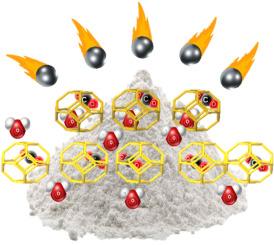
Mechanochemical synthesis of Zeolitic imidazolate frameworks (ZIFs) has emerged as a compelling and environmetally conscious alternative to conventional solvothermal methods, especially when they rely on the use of toxic formamide-based solvents and excess of metal precursors or linkers. In this study, a facile liquid assisted grinding synthesis achieving high product yields with short synthesis times, have been introduced for a series of ZIFs with SOD topology featuring both single and mixed ligands with diverse functional groups. The phase pure and crystalline products with even particle size distribution and retained sorption performance confirmed the efficiency of mechanochemical synthesis as sustainable and viable approach for the optimisation and the design of a new ZIF archetypes. Deeper insights into the structural and CO2 sorption capabilities was gained by a comparative quantum chemical calculations between a benchmark ZIF-8 and a newly synthesized isostructural analogue NICS-23, featuring an ester-functionalized imidazole ligand. The analysis revealed distinctive sorption characteristics of NICS-23, showcasing also its potential for gas separation processes with wet CO2 involved. Findings highlight the advatages of mechanochemical synthesis in ZIF production as a facile green synthesis method over the longer solvothermal procedure, potentially allowing also for faster screening of functional materials.
期刊介绍:
Microporous and Mesoporous Materials covers novel and significant aspects of porous solids classified as either microporous (pore size up to 2 nm) or mesoporous (pore size 2 to 50 nm). The porosity should have a specific impact on the material properties or application. Typical examples are zeolites and zeolite-like materials, pillared materials, clathrasils and clathrates, carbon molecular sieves, ordered mesoporous materials, organic/inorganic porous hybrid materials, or porous metal oxides. Both natural and synthetic porous materials are within the scope of the journal.
Topics which are particularly of interest include:
All aspects of natural microporous and mesoporous solids
The synthesis of crystalline or amorphous porous materials
The physico-chemical characterization of microporous and mesoporous solids, especially spectroscopic and microscopic
The modification of microporous and mesoporous solids, for example by ion exchange or solid-state reactions
All topics related to diffusion of mobile species in the pores of microporous and mesoporous materials
Adsorption (and other separation techniques) using microporous or mesoporous adsorbents
Catalysis by microporous and mesoporous materials
Host/guest interactions
Theoretical chemistry and modelling of host/guest interactions
All topics related to the application of microporous and mesoporous materials in industrial catalysis, separation technology, environmental protection, electrochemistry, membranes, sensors, optical devices, etc.




 京公网安备 11010802042870号
京ICP备2023020795号-1
京公网安备 11010802042870号
京ICP备2023020795号-1

 分享
分享
 求助内容:
求助内容: 应助结果提醒方式:
 扫码关注我们
