Juliana G. Pereira , João M. J. M. Ravasco , Latimah Bustillo , Inês S. Marques , Po-Yu Kao , Po-Yi Li , Yen-Chu Lin , Tiago Rodrigues , Vasco D. B. Bonifácio , Andreia F. Peixoto , Carlos A. M. Afonso , Rafael F. A. Gomes
{"title":"主动学习有助于化学直觉识别甲壳素到3-乙酰氨基-5-乙酰呋喃的可扩展转换†‡","authors":"Juliana G. Pereira , João M. J. M. Ravasco , Latimah Bustillo , Inês S. Marques , Po-Yu Kao , Po-Yi Li , Yen-Chu Lin , Tiago Rodrigues , Vasco D. B. Bonifácio , Andreia F. Peixoto , Carlos A. M. Afonso , Rafael F. A. Gomes","doi":"10.1039/d4gc04280h","DOIUrl":null,"url":null,"abstract":"<div><div>The shift towards a more sustainable chemical and pharma industry led to considerable efforts on discoverying biorenewable synthons, amongst other approaches. Whereas lignocellulosic biomass has thrived as a source of furan building blocks, chitin has struggled in competing despite its abundance and being a source of sustainable nitrogen. This may be due to the difficulties in large scale production of chitin-derived furans. Here, we leverage active learning for the optimization of a multi-parameter reaction, namely the formation of 3-acetamido-5-acetylfuran. This active learning approach was able to outperform a trial-and-error optimization based on chemical intuition, yielding the desired <em>N</em>-rich furan in up to 70% yield from <em>N</em>-acetylglucosamine and in 10.5 mg g<sup>−1</sup> directly from dry shrimp shells. The reaction was scalable up to a 4.5 mmol scale, bypasses the use of undesirable toxic, high boiling point solvents and allows the reuse of the reaction media, supporting the utility of machine learning to advance green chemistry and the valorization of biomasses.</div></div>","PeriodicalId":78,"journal":{"name":"Green Chemistry","volume":"27 6","pages":"Pages 1740-1746"},"PeriodicalIF":9.2000,"publicationDate":"2025-01-20","publicationTypes":"Journal Article","fieldsOfStudy":null,"isOpenAccess":false,"openAccessPdf":"https://pubs.rsc.org/en/content/articlepdf/2025/gc/d4gc04280h?page=search","citationCount":"0","resultStr":"{\"title\":\"Active learning assists chemical intuition identify a scalable conversion of chitin to 3-acetamido-5-acetylfuran†‡\",\"authors\":\"Juliana G. Pereira , João M. J. M. Ravasco , Latimah Bustillo , Inês S. Marques , Po-Yu Kao , Po-Yi Li , Yen-Chu Lin , Tiago Rodrigues , Vasco D. B. Bonifácio , Andreia F. Peixoto , Carlos A. M. Afonso , Rafael F. A. Gomes\",\"doi\":\"10.1039/d4gc04280h\",\"DOIUrl\":null,\"url\":null,\"abstract\":\"<div><div>The shift towards a more sustainable chemical and pharma industry led to considerable efforts on discoverying biorenewable synthons, amongst other approaches. Whereas lignocellulosic biomass has thrived as a source of furan building blocks, chitin has struggled in competing despite its abundance and being a source of sustainable nitrogen. This may be due to the difficulties in large scale production of chitin-derived furans. Here, we leverage active learning for the optimization of a multi-parameter reaction, namely the formation of 3-acetamido-5-acetylfuran. This active learning approach was able to outperform a trial-and-error optimization based on chemical intuition, yielding the desired <em>N</em>-rich furan in up to 70% yield from <em>N</em>-acetylglucosamine and in 10.5 mg g<sup>−1</sup> directly from dry shrimp shells. The reaction was scalable up to a 4.5 mmol scale, bypasses the use of undesirable toxic, high boiling point solvents and allows the reuse of the reaction media, supporting the utility of machine learning to advance green chemistry and the valorization of biomasses.</div></div>\",\"PeriodicalId\":78,\"journal\":{\"name\":\"Green Chemistry\",\"volume\":\"27 6\",\"pages\":\"Pages 1740-1746\"},\"PeriodicalIF\":9.2000,\"publicationDate\":\"2025-01-20\",\"publicationTypes\":\"Journal Article\",\"fieldsOfStudy\":null,\"isOpenAccess\":false,\"openAccessPdf\":\"https://pubs.rsc.org/en/content/articlepdf/2025/gc/d4gc04280h?page=search\",\"citationCount\":\"0\",\"resultStr\":null,\"platform\":\"Semanticscholar\",\"paperid\":null,\"PeriodicalName\":\"Green Chemistry\",\"FirstCategoryId\":\"92\",\"ListUrlMain\":\"https://www.sciencedirect.com/org/science/article/pii/S1463926225000202\",\"RegionNum\":1,\"RegionCategory\":\"化学\",\"ArticlePicture\":[],\"TitleCN\":null,\"AbstractTextCN\":null,\"PMCID\":null,\"EPubDate\":\"2025/1/3 0:00:00\",\"PubModel\":\"Epub\",\"JCR\":\"Q1\",\"JCRName\":\"CHEMISTRY, MULTIDISCIPLINARY\",\"Score\":null,\"Total\":0}","platform":"Semanticscholar","paperid":null,"PeriodicalName":"Green Chemistry","FirstCategoryId":"92","ListUrlMain":"https://www.sciencedirect.com/org/science/article/pii/S1463926225000202","RegionNum":1,"RegionCategory":"化学","ArticlePicture":[],"TitleCN":null,"AbstractTextCN":null,"PMCID":null,"EPubDate":"2025/1/3 0:00:00","PubModel":"Epub","JCR":"Q1","JCRName":"CHEMISTRY, MULTIDISCIPLINARY","Score":null,"Total":0}
引用次数: 0
摘要
向更可持续的化学和制药行业的转变导致了在发现生物可再生合成物方面的巨大努力,以及其他方法。尽管木质纤维素生物质作为呋喃构建块的来源而蓬勃发展,但几丁质一直在竞争中挣扎,尽管其丰富且是可持续氮的来源。这可能是由于大规模生产几丁质衍生呋喃的困难。在这里,我们利用主动学习来优化多参数反应,即3-乙酰氨基-5-乙酰呋喃的形成。这种主动学习方法优于基于化学直觉的试错优化,从n -乙酰氨基葡萄糖和直接从干虾壳中获得10.5 mg g - 1的产率高达70%的富n呋喃。该反应可扩展到4.5 mmol的规模,绕过了不需要的有毒高沸点溶剂的使用,并允许反应介质的重复使用,支持机器学习的应用,以推进绿色化学和生物质的增值。
Active learning assists chemical intuition identify a scalable conversion of chitin to 3-acetamido-5-acetylfuran†‡
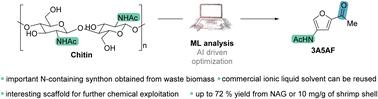
The shift towards a more sustainable chemical and pharma industry led to considerable efforts on discoverying biorenewable synthons, amongst other approaches. Whereas lignocellulosic biomass has thrived as a source of furan building blocks, chitin has struggled in competing despite its abundance and being a source of sustainable nitrogen. This may be due to the difficulties in large scale production of chitin-derived furans. Here, we leverage active learning for the optimization of a multi-parameter reaction, namely the formation of 3-acetamido-5-acetylfuran. This active learning approach was able to outperform a trial-and-error optimization based on chemical intuition, yielding the desired N-rich furan in up to 70% yield from N-acetylglucosamine and in 10.5 mg g−1 directly from dry shrimp shells. The reaction was scalable up to a 4.5 mmol scale, bypasses the use of undesirable toxic, high boiling point solvents and allows the reuse of the reaction media, supporting the utility of machine learning to advance green chemistry and the valorization of biomasses.
期刊介绍:
Green Chemistry is a journal that provides a unique forum for the publication of innovative research on the development of alternative green and sustainable technologies. The scope of Green Chemistry is based on the definition proposed by Anastas and Warner (Green Chemistry: Theory and Practice, P T Anastas and J C Warner, Oxford University Press, Oxford, 1998), which defines green chemistry as the utilisation of a set of principles that reduces or eliminates the use or generation of hazardous substances in the design, manufacture and application of chemical products. Green Chemistry aims to reduce the environmental impact of the chemical enterprise by developing a technology base that is inherently non-toxic to living things and the environment. The journal welcomes submissions on all aspects of research relating to this endeavor and publishes original and significant cutting-edge research that is likely to be of wide general appeal. For a work to be published, it must present a significant advance in green chemistry, including a comparison with existing methods and a demonstration of advantages over those methods.




 京公网安备 11010802042870号
京ICP备2023020795号-1
京公网安备 11010802042870号
京ICP备2023020795号-1

 分享
分享
 求助内容:
求助内容: 应助结果提醒方式:
 扫码关注我们
