{"title":"三元共聚物IA-PEG-SAMS阻垢性能及机理研究","authors":"Zhuoling Xiao, Dajun Ren, Shuqin Zhang, Xiaoqing Zhang, Xiangyi Gong, Yongliang Chen","doi":"10.1007/s10924-024-03442-y","DOIUrl":null,"url":null,"abstract":"<div><p>This research aims to develop an effective scale inhibitor to prevent calcium carbonate and calcium sulfate scaling in industrial circulating cooling water systems. Terpolymer IA-PEG-SAMS was synthesized via free-radical polymerization using itaconic acid (IA), polyethylene glycol (PEG), and sodium methacryl sulfonate (SAMS) as monomers. The optimal synthesis parameters for the terpolymer IA-PEG-SAMS were investigated using the single-factor method. FT-IR, <sup>1</sup>H-NMR, and GPC characterized the terpolymer and monomers obtained. The impact of various factors on calcium scale inhibition under optimal synthesis conditions was examined. The scale inhibition performance of IA-PEG-SAMS on calcium carbonate and calcium sulfate scales was compared with current commercial scale inhibitors. The findings indicated that IA-PEG-SAMS demonstrated superior efficacy in inhibiting calcium scaling compared to most commercially available scale inhibitors. The scale inhibition efficiency was 95.16% for calcium carbonate and 92.13% for calcium sulfate at 90 mg/L and 0.2 mg/L IA-PEG-SAMS concentrations. Scanning electron microscopy (SEM) and X-ray diffraction (XRD) analyses demonstrated that IA-PEG-SAMS markedly altered the calcium scale’s morphology, crystal shape, and crystal structure. The terpolymer can effectively adsorb on the active component of calcium scale crystals and chelating calcium ions. The process involves a synergistic effect of lattice aberration and chelation solubilization, resulting in a loose and porous crystal structure of the calcium scale. The water flow can easily wash away this structure. Based on the above characteristics, the scale inhibitor shows considerable potential in water treatment.</p></div>","PeriodicalId":659,"journal":{"name":"Journal of Polymers and the Environment","volume":"33 2","pages":"777 - 793"},"PeriodicalIF":5.0000,"publicationDate":"2024-11-02","publicationTypes":"Journal Article","fieldsOfStudy":null,"isOpenAccess":false,"openAccessPdf":"","citationCount":"0","resultStr":"{\"title\":\"Scale Inhibition Performance and Mechanism of Terpolymer IA-PEG-SAMS\",\"authors\":\"Zhuoling Xiao, Dajun Ren, Shuqin Zhang, Xiaoqing Zhang, Xiangyi Gong, Yongliang Chen\",\"doi\":\"10.1007/s10924-024-03442-y\",\"DOIUrl\":null,\"url\":null,\"abstract\":\"<div><p>This research aims to develop an effective scale inhibitor to prevent calcium carbonate and calcium sulfate scaling in industrial circulating cooling water systems. Terpolymer IA-PEG-SAMS was synthesized via free-radical polymerization using itaconic acid (IA), polyethylene glycol (PEG), and sodium methacryl sulfonate (SAMS) as monomers. The optimal synthesis parameters for the terpolymer IA-PEG-SAMS were investigated using the single-factor method. FT-IR, <sup>1</sup>H-NMR, and GPC characterized the terpolymer and monomers obtained. The impact of various factors on calcium scale inhibition under optimal synthesis conditions was examined. The scale inhibition performance of IA-PEG-SAMS on calcium carbonate and calcium sulfate scales was compared with current commercial scale inhibitors. The findings indicated that IA-PEG-SAMS demonstrated superior efficacy in inhibiting calcium scaling compared to most commercially available scale inhibitors. The scale inhibition efficiency was 95.16% for calcium carbonate and 92.13% for calcium sulfate at 90 mg/L and 0.2 mg/L IA-PEG-SAMS concentrations. Scanning electron microscopy (SEM) and X-ray diffraction (XRD) analyses demonstrated that IA-PEG-SAMS markedly altered the calcium scale’s morphology, crystal shape, and crystal structure. The terpolymer can effectively adsorb on the active component of calcium scale crystals and chelating calcium ions. The process involves a synergistic effect of lattice aberration and chelation solubilization, resulting in a loose and porous crystal structure of the calcium scale. The water flow can easily wash away this structure. Based on the above characteristics, the scale inhibitor shows considerable potential in water treatment.</p></div>\",\"PeriodicalId\":659,\"journal\":{\"name\":\"Journal of Polymers and the Environment\",\"volume\":\"33 2\",\"pages\":\"777 - 793\"},\"PeriodicalIF\":5.0000,\"publicationDate\":\"2024-11-02\",\"publicationTypes\":\"Journal Article\",\"fieldsOfStudy\":null,\"isOpenAccess\":false,\"openAccessPdf\":\"\",\"citationCount\":\"0\",\"resultStr\":null,\"platform\":\"Semanticscholar\",\"paperid\":null,\"PeriodicalName\":\"Journal of Polymers and the Environment\",\"FirstCategoryId\":\"5\",\"ListUrlMain\":\"https://link.springer.com/article/10.1007/s10924-024-03442-y\",\"RegionNum\":3,\"RegionCategory\":\"工程技术\",\"ArticlePicture\":[],\"TitleCN\":null,\"AbstractTextCN\":null,\"PMCID\":null,\"EPubDate\":\"\",\"PubModel\":\"\",\"JCR\":\"Q2\",\"JCRName\":\"ENGINEERING, ENVIRONMENTAL\",\"Score\":null,\"Total\":0}","platform":"Semanticscholar","paperid":null,"PeriodicalName":"Journal of Polymers and the Environment","FirstCategoryId":"5","ListUrlMain":"https://link.springer.com/article/10.1007/s10924-024-03442-y","RegionNum":3,"RegionCategory":"工程技术","ArticlePicture":[],"TitleCN":null,"AbstractTextCN":null,"PMCID":null,"EPubDate":"","PubModel":"","JCR":"Q2","JCRName":"ENGINEERING, ENVIRONMENTAL","Score":null,"Total":0}
Scale Inhibition Performance and Mechanism of Terpolymer IA-PEG-SAMS
This research aims to develop an effective scale inhibitor to prevent calcium carbonate and calcium sulfate scaling in industrial circulating cooling water systems. Terpolymer IA-PEG-SAMS was synthesized via free-radical polymerization using itaconic acid (IA), polyethylene glycol (PEG), and sodium methacryl sulfonate (SAMS) as monomers. The optimal synthesis parameters for the terpolymer IA-PEG-SAMS were investigated using the single-factor method. FT-IR, 1H-NMR, and GPC characterized the terpolymer and monomers obtained. The impact of various factors on calcium scale inhibition under optimal synthesis conditions was examined. The scale inhibition performance of IA-PEG-SAMS on calcium carbonate and calcium sulfate scales was compared with current commercial scale inhibitors. The findings indicated that IA-PEG-SAMS demonstrated superior efficacy in inhibiting calcium scaling compared to most commercially available scale inhibitors. The scale inhibition efficiency was 95.16% for calcium carbonate and 92.13% for calcium sulfate at 90 mg/L and 0.2 mg/L IA-PEG-SAMS concentrations. Scanning electron microscopy (SEM) and X-ray diffraction (XRD) analyses demonstrated that IA-PEG-SAMS markedly altered the calcium scale’s morphology, crystal shape, and crystal structure. The terpolymer can effectively adsorb on the active component of calcium scale crystals and chelating calcium ions. The process involves a synergistic effect of lattice aberration and chelation solubilization, resulting in a loose and porous crystal structure of the calcium scale. The water flow can easily wash away this structure. Based on the above characteristics, the scale inhibitor shows considerable potential in water treatment.
期刊介绍:
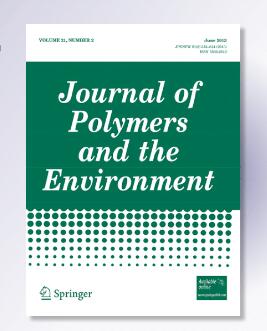
The Journal of Polymers and the Environment fills the need for an international forum in this diverse and rapidly expanding field. The journal serves a crucial role for the publication of information from a wide range of disciplines and is a central outlet for the publication of high-quality peer-reviewed original papers, review articles and short communications. The journal is intentionally interdisciplinary in regard to contributions and covers the following subjects - polymers, environmentally degradable polymers, and degradation pathways: biological, photochemical, oxidative and hydrolytic; new environmental materials: derived by chemical and biosynthetic routes; environmental blends and composites; developments in processing and reactive processing of environmental polymers; characterization of environmental materials: mechanical, physical, thermal, rheological, morphological, and others; recyclable polymers and plastics recycling environmental testing: in-laboratory simulations, outdoor exposures, and standardization of methodologies; environmental fate: end products and intermediates of biodegradation; microbiology and enzymology of polymer biodegradation; solid-waste management and public legislation specific to environmental polymers; and other related topics.





 京公网安备 11010802042870号
京ICP备2023020795号-1
京公网安备 11010802042870号
京ICP备2023020795号-1

 分享
分享
 求助内容:
求助内容: 应助结果提醒方式:
 扫码关注我们
