Ulyana M. Zavorotnaya, Yaroslav E. Gudkov, Igor I. Ponomarev, Nikolay V. Lyskov, Ivan A. Ryzhkin, Vitaly V. Sinitsyn
{"title":"磺化全氟化和碳氢化合物质子交换膜水化过程中质子电导率行为的比较研究","authors":"Ulyana M. Zavorotnaya, Yaroslav E. Gudkov, Igor I. Ponomarev, Nikolay V. Lyskov, Ivan A. Ryzhkin, Vitaly V. Sinitsyn","doi":"10.1007/s11581-024-06024-z","DOIUrl":null,"url":null,"abstract":"<div><p>Impedance spectroscopy was used to study proton conductivity changing of pre-dried sulfonated perfluorinated and hydrocarbon (polynaphtoleimide) membranes over time during their hydration. For this purpose, commercial perfluorinated membranes Nafion 212, Nafion 211, Gore 18 and hydrocarbon co-polynaphthoyleneimide (co-PNIS) membranes with different hydrophobicity blocks (ODAS/MDAC and ODAS/MDOT) synthesized in this work were used. It was found that the proton conductivity steady state values of Gore 18 membrane were established faster in humidity atmosphere after its drying than for other membranes studied in this work. This membrane demonstrates also better characteristics with cyclic humidity changes from 35 to 75% (sorption) and from 75 to 35% (desorption), which actually simulates start operation of PEMFC after its storage at the normal conditions. It was found that Nafion type membranes possess more universal hydration characteristics PEMFC in whole investigated humidity values interval and reveal consistently both high proton transport values and proton conductivity recovery kinetics parameters from dry state. However, the proton conductivity highest level at RH > 75% is demonstrated by fluorine-free co-PNIS membranes, which is also associated with its higher hydration degree compared to perfluorinated analogues. Moreover, it has been observed that the hydrocarbon co-PNIS (ODAS/MDOT) membrane, with a large difference in the hydrophobicity degree between polymer blocks is characterized by both higher protonic conductivity and its recovery kinetics parameters compared to the hydrocarbon analogue co-PNIS (ODAS/MDAC). The effect of the hydrophobic block on proton transport in co-PNIS membrane is discussed.</p></div>","PeriodicalId":599,"journal":{"name":"Ionics","volume":"31 2","pages":"1891 - 1907"},"PeriodicalIF":2.6000,"publicationDate":"2025-01-09","publicationTypes":"Journal Article","fieldsOfStudy":null,"isOpenAccess":false,"openAccessPdf":"","citationCount":"0","resultStr":"{\"title\":\"Comparative studies of the proton conductivity behavior during hydration of sulfonated perfluorinated and hydrocarbon proton exchange membranes\",\"authors\":\"Ulyana M. Zavorotnaya, Yaroslav E. Gudkov, Igor I. Ponomarev, Nikolay V. Lyskov, Ivan A. Ryzhkin, Vitaly V. Sinitsyn\",\"doi\":\"10.1007/s11581-024-06024-z\",\"DOIUrl\":null,\"url\":null,\"abstract\":\"<div><p>Impedance spectroscopy was used to study proton conductivity changing of pre-dried sulfonated perfluorinated and hydrocarbon (polynaphtoleimide) membranes over time during their hydration. For this purpose, commercial perfluorinated membranes Nafion 212, Nafion 211, Gore 18 and hydrocarbon co-polynaphthoyleneimide (co-PNIS) membranes with different hydrophobicity blocks (ODAS/MDAC and ODAS/MDOT) synthesized in this work were used. It was found that the proton conductivity steady state values of Gore 18 membrane were established faster in humidity atmosphere after its drying than for other membranes studied in this work. This membrane demonstrates also better characteristics with cyclic humidity changes from 35 to 75% (sorption) and from 75 to 35% (desorption), which actually simulates start operation of PEMFC after its storage at the normal conditions. It was found that Nafion type membranes possess more universal hydration characteristics PEMFC in whole investigated humidity values interval and reveal consistently both high proton transport values and proton conductivity recovery kinetics parameters from dry state. However, the proton conductivity highest level at RH > 75% is demonstrated by fluorine-free co-PNIS membranes, which is also associated with its higher hydration degree compared to perfluorinated analogues. Moreover, it has been observed that the hydrocarbon co-PNIS (ODAS/MDOT) membrane, with a large difference in the hydrophobicity degree between polymer blocks is characterized by both higher protonic conductivity and its recovery kinetics parameters compared to the hydrocarbon analogue co-PNIS (ODAS/MDAC). The effect of the hydrophobic block on proton transport in co-PNIS membrane is discussed.</p></div>\",\"PeriodicalId\":599,\"journal\":{\"name\":\"Ionics\",\"volume\":\"31 2\",\"pages\":\"1891 - 1907\"},\"PeriodicalIF\":2.6000,\"publicationDate\":\"2025-01-09\",\"publicationTypes\":\"Journal Article\",\"fieldsOfStudy\":null,\"isOpenAccess\":false,\"openAccessPdf\":\"\",\"citationCount\":\"0\",\"resultStr\":null,\"platform\":\"Semanticscholar\",\"paperid\":null,\"PeriodicalName\":\"Ionics\",\"FirstCategoryId\":\"92\",\"ListUrlMain\":\"https://link.springer.com/article/10.1007/s11581-024-06024-z\",\"RegionNum\":4,\"RegionCategory\":\"化学\",\"ArticlePicture\":[],\"TitleCN\":null,\"AbstractTextCN\":null,\"PMCID\":null,\"EPubDate\":\"\",\"PubModel\":\"\",\"JCR\":\"Q3\",\"JCRName\":\"CHEMISTRY, PHYSICAL\",\"Score\":null,\"Total\":0}","platform":"Semanticscholar","paperid":null,"PeriodicalName":"Ionics","FirstCategoryId":"92","ListUrlMain":"https://link.springer.com/article/10.1007/s11581-024-06024-z","RegionNum":4,"RegionCategory":"化学","ArticlePicture":[],"TitleCN":null,"AbstractTextCN":null,"PMCID":null,"EPubDate":"","PubModel":"","JCR":"Q3","JCRName":"CHEMISTRY, PHYSICAL","Score":null,"Total":0}
Comparative studies of the proton conductivity behavior during hydration of sulfonated perfluorinated and hydrocarbon proton exchange membranes
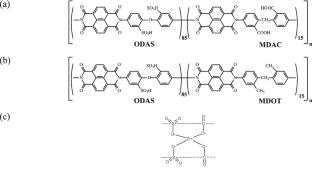
Impedance spectroscopy was used to study proton conductivity changing of pre-dried sulfonated perfluorinated and hydrocarbon (polynaphtoleimide) membranes over time during their hydration. For this purpose, commercial perfluorinated membranes Nafion 212, Nafion 211, Gore 18 and hydrocarbon co-polynaphthoyleneimide (co-PNIS) membranes with different hydrophobicity blocks (ODAS/MDAC and ODAS/MDOT) synthesized in this work were used. It was found that the proton conductivity steady state values of Gore 18 membrane were established faster in humidity atmosphere after its drying than for other membranes studied in this work. This membrane demonstrates also better characteristics with cyclic humidity changes from 35 to 75% (sorption) and from 75 to 35% (desorption), which actually simulates start operation of PEMFC after its storage at the normal conditions. It was found that Nafion type membranes possess more universal hydration characteristics PEMFC in whole investigated humidity values interval and reveal consistently both high proton transport values and proton conductivity recovery kinetics parameters from dry state. However, the proton conductivity highest level at RH > 75% is demonstrated by fluorine-free co-PNIS membranes, which is also associated with its higher hydration degree compared to perfluorinated analogues. Moreover, it has been observed that the hydrocarbon co-PNIS (ODAS/MDOT) membrane, with a large difference in the hydrophobicity degree between polymer blocks is characterized by both higher protonic conductivity and its recovery kinetics parameters compared to the hydrocarbon analogue co-PNIS (ODAS/MDAC). The effect of the hydrophobic block on proton transport in co-PNIS membrane is discussed.
期刊介绍:
Ionics is publishing original results in the fields of science and technology of ionic motion. This includes theoretical, experimental and practical work on electrolytes, electrode, ionic/electronic interfaces, ionic transport aspects of corrosion, galvanic cells, e.g. for thermodynamic and kinetic studies, batteries, fuel cells, sensors and electrochromics. Fast solid ionic conductors are presently providing new opportunities in view of several advantages, in addition to conventional liquid electrolytes.




 京公网安备 11010802042870号
京ICP备2023020795号-1
京公网安备 11010802042870号
京ICP备2023020795号-1

 分享
分享
 求助内容:
求助内容: 应助结果提醒方式:
 扫码关注我们
