P. O. Bykov, V. A. Chaikin, A. B. Kuandykov, M. M. Suyundikov, V. A. Salina, A. K. Zhunusov, N. K. Kulumbaev
{"title":"钢包内原铝熔炼的热力学模拟","authors":"P. O. Bykov, V. A. Chaikin, A. B. Kuandykov, M. M. Suyundikov, V. A. Salina, A. K. Zhunusov, N. K. Kulumbaev","doi":"10.1134/S0036029524701696","DOIUrl":null,"url":null,"abstract":"<p>The processing of primary aluminum with boric acid in a ladle is subjected to thermodynamic analysis. The HSC Chemistry 9.0 (Outotec Technologies) software was used for calculations. The temperature range investigated in the calculations (650–950°C) corresponds to the production conditions of the Kazakhstan Electrolysis Plant. The pressure range is determined using the technological conditions of flux treatment of aluminum in a crane ladle with a working height of 2 m and ranged from 101.33 to 148.99 kPa. The presence of a solid phase and low process kinetics are characterized by the lower limit of the temperature range. The upper limit of temperatures demonstrates the conditions closest to the actual working conditions during electrolysis. The pressure at the metal melt surface is represented by the lower limit in the pressure range, and the pressure at the depth of flux immersion equivalent to 2 m is represented by the upper limit. The depth of the suspension immersion in the calculations is varied in the range 0.5–2 m. The thermodynamic analysis in the investigated range of temperatures and pressures unequivocally indicates that vanadium borides are more stable compared to aluminum borides; therefore, they will predominantly form in this temperature range. The stability order also suggests that vanadium can be easily removed from aluminum melts by adding boron.</p>","PeriodicalId":769,"journal":{"name":"Russian Metallurgy (Metally)","volume":"2024 4","pages":"811 - 817"},"PeriodicalIF":0.3000,"publicationDate":"2025-01-23","publicationTypes":"Journal Article","fieldsOfStudy":null,"isOpenAccess":false,"openAccessPdf":"","citationCount":"0","resultStr":"{\"title\":\"Thermodynamic Simulation of the Flux Refining of Primary Aluminum in a Ladle\",\"authors\":\"P. O. Bykov, V. A. Chaikin, A. B. Kuandykov, M. M. Suyundikov, V. A. Salina, A. K. Zhunusov, N. K. Kulumbaev\",\"doi\":\"10.1134/S0036029524701696\",\"DOIUrl\":null,\"url\":null,\"abstract\":\"<p>The processing of primary aluminum with boric acid in a ladle is subjected to thermodynamic analysis. The HSC Chemistry 9.0 (Outotec Technologies) software was used for calculations. The temperature range investigated in the calculations (650–950°C) corresponds to the production conditions of the Kazakhstan Electrolysis Plant. The pressure range is determined using the technological conditions of flux treatment of aluminum in a crane ladle with a working height of 2 m and ranged from 101.33 to 148.99 kPa. The presence of a solid phase and low process kinetics are characterized by the lower limit of the temperature range. The upper limit of temperatures demonstrates the conditions closest to the actual working conditions during electrolysis. The pressure at the metal melt surface is represented by the lower limit in the pressure range, and the pressure at the depth of flux immersion equivalent to 2 m is represented by the upper limit. The depth of the suspension immersion in the calculations is varied in the range 0.5–2 m. The thermodynamic analysis in the investigated range of temperatures and pressures unequivocally indicates that vanadium borides are more stable compared to aluminum borides; therefore, they will predominantly form in this temperature range. The stability order also suggests that vanadium can be easily removed from aluminum melts by adding boron.</p>\",\"PeriodicalId\":769,\"journal\":{\"name\":\"Russian Metallurgy (Metally)\",\"volume\":\"2024 4\",\"pages\":\"811 - 817\"},\"PeriodicalIF\":0.3000,\"publicationDate\":\"2025-01-23\",\"publicationTypes\":\"Journal Article\",\"fieldsOfStudy\":null,\"isOpenAccess\":false,\"openAccessPdf\":\"\",\"citationCount\":\"0\",\"resultStr\":null,\"platform\":\"Semanticscholar\",\"paperid\":null,\"PeriodicalName\":\"Russian Metallurgy (Metally)\",\"FirstCategoryId\":\"5\",\"ListUrlMain\":\"https://link.springer.com/article/10.1134/S0036029524701696\",\"RegionNum\":0,\"RegionCategory\":null,\"ArticlePicture\":[],\"TitleCN\":null,\"AbstractTextCN\":null,\"PMCID\":null,\"EPubDate\":\"\",\"PubModel\":\"\",\"JCR\":\"Q4\",\"JCRName\":\"METALLURGY & METALLURGICAL ENGINEERING\",\"Score\":null,\"Total\":0}","platform":"Semanticscholar","paperid":null,"PeriodicalName":"Russian Metallurgy (Metally)","FirstCategoryId":"5","ListUrlMain":"https://link.springer.com/article/10.1134/S0036029524701696","RegionNum":0,"RegionCategory":null,"ArticlePicture":[],"TitleCN":null,"AbstractTextCN":null,"PMCID":null,"EPubDate":"","PubModel":"","JCR":"Q4","JCRName":"METALLURGY & METALLURGICAL ENGINEERING","Score":null,"Total":0}
Thermodynamic Simulation of the Flux Refining of Primary Aluminum in a Ladle
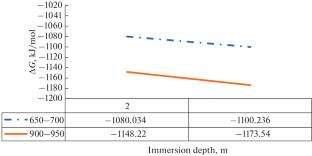
The processing of primary aluminum with boric acid in a ladle is subjected to thermodynamic analysis. The HSC Chemistry 9.0 (Outotec Technologies) software was used for calculations. The temperature range investigated in the calculations (650–950°C) corresponds to the production conditions of the Kazakhstan Electrolysis Plant. The pressure range is determined using the technological conditions of flux treatment of aluminum in a crane ladle with a working height of 2 m and ranged from 101.33 to 148.99 kPa. The presence of a solid phase and low process kinetics are characterized by the lower limit of the temperature range. The upper limit of temperatures demonstrates the conditions closest to the actual working conditions during electrolysis. The pressure at the metal melt surface is represented by the lower limit in the pressure range, and the pressure at the depth of flux immersion equivalent to 2 m is represented by the upper limit. The depth of the suspension immersion in the calculations is varied in the range 0.5–2 m. The thermodynamic analysis in the investigated range of temperatures and pressures unequivocally indicates that vanadium borides are more stable compared to aluminum borides; therefore, they will predominantly form in this temperature range. The stability order also suggests that vanadium can be easily removed from aluminum melts by adding boron.
期刊介绍:
Russian Metallurgy (Metally) publishes results of original experimental and theoretical research in the form of reviews and regular articles devoted to topical problems of metallurgy, physical metallurgy, and treatment of ferrous, nonferrous, rare, and other metals and alloys, intermetallic compounds, and metallic composite materials. The journal focuses on physicochemical properties of metallurgical materials (ores, slags, matters, and melts of metals and alloys); physicochemical processes (thermodynamics and kinetics of pyrometallurgical, hydrometallurgical, electrochemical, and other processes); theoretical metallurgy; metal forming; thermoplastic and thermochemical treatment; computation and experimental determination of phase diagrams and thermokinetic diagrams; mechanisms and kinetics of phase transitions in metallic materials; relations between the chemical composition, phase and structural states of materials and their physicochemical and service properties; interaction between metallic materials and external media; and effects of radiation on these materials.




 京公网安备 11010802042870号
京ICP备2023020795号-1
京公网安备 11010802042870号
京ICP备2023020795号-1

 分享
分享
 求助内容:
求助内容: 应助结果提醒方式:
 扫码关注我们
