{"title":"熔融LiCl-KCl共晶中Cd和Ga电极上铀的电化学萃取","authors":"A. V. Novoselova, V. V. Smolenski, A. L. Bovet","doi":"10.1134/S0036029524701775","DOIUrl":null,"url":null,"abstract":"<p><b>Abstract</b>—The electrochemical reduction of U(III) ions to the metal in molten LiCl–KCl eutectic in a temperature range of 673–793 K on cadmium and gallium electrodes under an inert gas atmosphere is studied by cyclic voltammetry, square-wave voltammetry, and zero current potentiometry. Reagents containing no traces of moisture, oxygen, and products of their interaction are used in the experiments. All main procedures are carried out in a dry glove box under a purified argon atmosphere. As shown by cyclic and square-wave voltammetry, the cathodic reduction of uranium(III) ions on the active cadmium and gallium electrodes in the “electrochemical window” under study occurs with a depolarization of 0.2–0.4 V and depends on the cathode material. The potential shift to the electropositive range is found to be related to the formation of intermetallic compounds of uranium with the material of the active electrodes. The potentiostatic electrolysis of the melt at the potentials of the current peaks observed on the cyclic voltammograms using the active electrodes is conducted to identify the compositions of the cathodic deposits. The X-ray diffraction (XRD) data show that the intermetallic compound UCd<sub>11</sub> is formed on the cadmium electrode and UGa<sub>3</sub> and UGa<sub>2</sub> are formed on the gallium electrode. SEM image and EDS analysis of the sample surface confirm the presence of fine fragments of the U–Cd and U–Ga intermetallic compounds. The conditions for the formation of alloys of a specified composition are determined by potentiostatic electrolysis. The equilibrium potentials of the U–Cd and U–Ga alloys are measured by zero current potentiometry, and the temperature dependences of the apparent standard potentials of the alloys are calculated. The electrochemical extraction of uranium from the LiCl–KCl–UCl<sub>3</sub> melt is studied. The determined degree of extraction of uranium from the electrolyte on the active liquid electrodes at various electrolysis times exceeds 97%.</p>","PeriodicalId":769,"journal":{"name":"Russian Metallurgy (Metally)","volume":"2024 4","pages":"876 - 882"},"PeriodicalIF":0.3000,"publicationDate":"2025-01-23","publicationTypes":"Journal Article","fieldsOfStudy":null,"isOpenAccess":false,"openAccessPdf":"","citationCount":"0","resultStr":"{\"title\":\"Electrochemical Extraction of Uranium on Cd and Ga Electrodes in Molten LiCl–KCl Eutectic\",\"authors\":\"A. V. Novoselova, V. V. Smolenski, A. L. Bovet\",\"doi\":\"10.1134/S0036029524701775\",\"DOIUrl\":null,\"url\":null,\"abstract\":\"<p><b>Abstract</b>—The electrochemical reduction of U(III) ions to the metal in molten LiCl–KCl eutectic in a temperature range of 673–793 K on cadmium and gallium electrodes under an inert gas atmosphere is studied by cyclic voltammetry, square-wave voltammetry, and zero current potentiometry. Reagents containing no traces of moisture, oxygen, and products of their interaction are used in the experiments. All main procedures are carried out in a dry glove box under a purified argon atmosphere. As shown by cyclic and square-wave voltammetry, the cathodic reduction of uranium(III) ions on the active cadmium and gallium electrodes in the “electrochemical window” under study occurs with a depolarization of 0.2–0.4 V and depends on the cathode material. The potential shift to the electropositive range is found to be related to the formation of intermetallic compounds of uranium with the material of the active electrodes. The potentiostatic electrolysis of the melt at the potentials of the current peaks observed on the cyclic voltammograms using the active electrodes is conducted to identify the compositions of the cathodic deposits. The X-ray diffraction (XRD) data show that the intermetallic compound UCd<sub>11</sub> is formed on the cadmium electrode and UGa<sub>3</sub> and UGa<sub>2</sub> are formed on the gallium electrode. SEM image and EDS analysis of the sample surface confirm the presence of fine fragments of the U–Cd and U–Ga intermetallic compounds. The conditions for the formation of alloys of a specified composition are determined by potentiostatic electrolysis. The equilibrium potentials of the U–Cd and U–Ga alloys are measured by zero current potentiometry, and the temperature dependences of the apparent standard potentials of the alloys are calculated. The electrochemical extraction of uranium from the LiCl–KCl–UCl<sub>3</sub> melt is studied. The determined degree of extraction of uranium from the electrolyte on the active liquid electrodes at various electrolysis times exceeds 97%.</p>\",\"PeriodicalId\":769,\"journal\":{\"name\":\"Russian Metallurgy (Metally)\",\"volume\":\"2024 4\",\"pages\":\"876 - 882\"},\"PeriodicalIF\":0.3000,\"publicationDate\":\"2025-01-23\",\"publicationTypes\":\"Journal Article\",\"fieldsOfStudy\":null,\"isOpenAccess\":false,\"openAccessPdf\":\"\",\"citationCount\":\"0\",\"resultStr\":null,\"platform\":\"Semanticscholar\",\"paperid\":null,\"PeriodicalName\":\"Russian Metallurgy (Metally)\",\"FirstCategoryId\":\"5\",\"ListUrlMain\":\"https://link.springer.com/article/10.1134/S0036029524701775\",\"RegionNum\":0,\"RegionCategory\":null,\"ArticlePicture\":[],\"TitleCN\":null,\"AbstractTextCN\":null,\"PMCID\":null,\"EPubDate\":\"\",\"PubModel\":\"\",\"JCR\":\"Q4\",\"JCRName\":\"METALLURGY & METALLURGICAL ENGINEERING\",\"Score\":null,\"Total\":0}","platform":"Semanticscholar","paperid":null,"PeriodicalName":"Russian Metallurgy (Metally)","FirstCategoryId":"5","ListUrlMain":"https://link.springer.com/article/10.1134/S0036029524701775","RegionNum":0,"RegionCategory":null,"ArticlePicture":[],"TitleCN":null,"AbstractTextCN":null,"PMCID":null,"EPubDate":"","PubModel":"","JCR":"Q4","JCRName":"METALLURGY & METALLURGICAL ENGINEERING","Score":null,"Total":0}
Electrochemical Extraction of Uranium on Cd and Ga Electrodes in Molten LiCl–KCl Eutectic
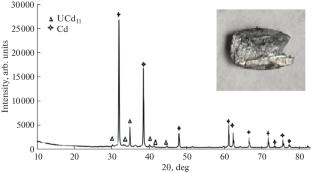
Abstract—The electrochemical reduction of U(III) ions to the metal in molten LiCl–KCl eutectic in a temperature range of 673–793 K on cadmium and gallium electrodes under an inert gas atmosphere is studied by cyclic voltammetry, square-wave voltammetry, and zero current potentiometry. Reagents containing no traces of moisture, oxygen, and products of their interaction are used in the experiments. All main procedures are carried out in a dry glove box under a purified argon atmosphere. As shown by cyclic and square-wave voltammetry, the cathodic reduction of uranium(III) ions on the active cadmium and gallium electrodes in the “electrochemical window” under study occurs with a depolarization of 0.2–0.4 V and depends on the cathode material. The potential shift to the electropositive range is found to be related to the formation of intermetallic compounds of uranium with the material of the active electrodes. The potentiostatic electrolysis of the melt at the potentials of the current peaks observed on the cyclic voltammograms using the active electrodes is conducted to identify the compositions of the cathodic deposits. The X-ray diffraction (XRD) data show that the intermetallic compound UCd11 is formed on the cadmium electrode and UGa3 and UGa2 are formed on the gallium electrode. SEM image and EDS analysis of the sample surface confirm the presence of fine fragments of the U–Cd and U–Ga intermetallic compounds. The conditions for the formation of alloys of a specified composition are determined by potentiostatic electrolysis. The equilibrium potentials of the U–Cd and U–Ga alloys are measured by zero current potentiometry, and the temperature dependences of the apparent standard potentials of the alloys are calculated. The electrochemical extraction of uranium from the LiCl–KCl–UCl3 melt is studied. The determined degree of extraction of uranium from the electrolyte on the active liquid electrodes at various electrolysis times exceeds 97%.
期刊介绍:
Russian Metallurgy (Metally) publishes results of original experimental and theoretical research in the form of reviews and regular articles devoted to topical problems of metallurgy, physical metallurgy, and treatment of ferrous, nonferrous, rare, and other metals and alloys, intermetallic compounds, and metallic composite materials. The journal focuses on physicochemical properties of metallurgical materials (ores, slags, matters, and melts of metals and alloys); physicochemical processes (thermodynamics and kinetics of pyrometallurgical, hydrometallurgical, electrochemical, and other processes); theoretical metallurgy; metal forming; thermoplastic and thermochemical treatment; computation and experimental determination of phase diagrams and thermokinetic diagrams; mechanisms and kinetics of phase transitions in metallic materials; relations between the chemical composition, phase and structural states of materials and their physicochemical and service properties; interaction between metallic materials and external media; and effects of radiation on these materials.




 京公网安备 11010802042870号
京ICP备2023020795号-1
京公网安备 11010802042870号
京ICP备2023020795号-1

 分享
分享
 求助内容:
求助内容: 应助结果提醒方式:
 扫码关注我们
