R. Preethi Rathna, S. Naveen Kishore, M. Kulandhaivel
{"title":"短杆菌sp. (PP989436)生产甘蔗渣多羟基丁酸酯(PHB)的统计设计优化","authors":"R. Preethi Rathna, S. Naveen Kishore, M. Kulandhaivel","doi":"10.1007/s10924-024-03450-y","DOIUrl":null,"url":null,"abstract":"<div><p>Cost-effective methods for producing Polyhydroxybutyrate (PHB) can make large-scale bioplastic manufacturing economically viable. This study aimed to optimize PHB synthesis using sugarcane bagasse, a renewable and inexpensive raw material, promoting sustainability by reducing waste and minimizing reliance on non-renewable resources. Soil organisms capable of PHB production were identified using Sudan Black B staining, and <i>Brevibacterium</i> sp. (PP989436) was selected for further study. The production process was optimized using Response Surface Methodology (RSM) and Central Composite Design (CCD) with the statistical analysis showing a significant effect of the optimized medium on PHB production (F-value: 5.17, p-value: <0.005) significantly enhancing PHB yield compared to an unoptimized medium. The optimized conditions resulted in a PHB yield of 7.4 g/L from 12.2 g/L dry biomass (60.65%). PHB characterization was performed using FTIR, NMR, and TGA, and a PHB film was synthesized for evaluation. No cytotoxic effects were observed in MTT and Brine Shrimp Lethality assays. This optimized, sustainable production process presents significant potential for industrial-scale applications, offering an environmentally friendly alternative to petroleum-based plastics.</p></div>","PeriodicalId":659,"journal":{"name":"Journal of Polymers and the Environment","volume":"33 2","pages":"910 - 927"},"PeriodicalIF":5.0000,"publicationDate":"2024-11-20","publicationTypes":"Journal Article","fieldsOfStudy":null,"isOpenAccess":false,"openAccessPdf":"","citationCount":"0","resultStr":"{\"title\":\"Statistical Design-Driven Optimization of Polyhydroxy-Butyrate (PHB) Production Using Sugarcane Bagasse by Brevibacterium sp. (PP989436) Strain\",\"authors\":\"R. Preethi Rathna, S. Naveen Kishore, M. Kulandhaivel\",\"doi\":\"10.1007/s10924-024-03450-y\",\"DOIUrl\":null,\"url\":null,\"abstract\":\"<div><p>Cost-effective methods for producing Polyhydroxybutyrate (PHB) can make large-scale bioplastic manufacturing economically viable. This study aimed to optimize PHB synthesis using sugarcane bagasse, a renewable and inexpensive raw material, promoting sustainability by reducing waste and minimizing reliance on non-renewable resources. Soil organisms capable of PHB production were identified using Sudan Black B staining, and <i>Brevibacterium</i> sp. (PP989436) was selected for further study. The production process was optimized using Response Surface Methodology (RSM) and Central Composite Design (CCD) with the statistical analysis showing a significant effect of the optimized medium on PHB production (F-value: 5.17, p-value: <0.005) significantly enhancing PHB yield compared to an unoptimized medium. The optimized conditions resulted in a PHB yield of 7.4 g/L from 12.2 g/L dry biomass (60.65%). PHB characterization was performed using FTIR, NMR, and TGA, and a PHB film was synthesized for evaluation. No cytotoxic effects were observed in MTT and Brine Shrimp Lethality assays. This optimized, sustainable production process presents significant potential for industrial-scale applications, offering an environmentally friendly alternative to petroleum-based plastics.</p></div>\",\"PeriodicalId\":659,\"journal\":{\"name\":\"Journal of Polymers and the Environment\",\"volume\":\"33 2\",\"pages\":\"910 - 927\"},\"PeriodicalIF\":5.0000,\"publicationDate\":\"2024-11-20\",\"publicationTypes\":\"Journal Article\",\"fieldsOfStudy\":null,\"isOpenAccess\":false,\"openAccessPdf\":\"\",\"citationCount\":\"0\",\"resultStr\":null,\"platform\":\"Semanticscholar\",\"paperid\":null,\"PeriodicalName\":\"Journal of Polymers and the Environment\",\"FirstCategoryId\":\"5\",\"ListUrlMain\":\"https://link.springer.com/article/10.1007/s10924-024-03450-y\",\"RegionNum\":3,\"RegionCategory\":\"工程技术\",\"ArticlePicture\":[],\"TitleCN\":null,\"AbstractTextCN\":null,\"PMCID\":null,\"EPubDate\":\"\",\"PubModel\":\"\",\"JCR\":\"Q2\",\"JCRName\":\"ENGINEERING, ENVIRONMENTAL\",\"Score\":null,\"Total\":0}","platform":"Semanticscholar","paperid":null,"PeriodicalName":"Journal of Polymers and the Environment","FirstCategoryId":"5","ListUrlMain":"https://link.springer.com/article/10.1007/s10924-024-03450-y","RegionNum":3,"RegionCategory":"工程技术","ArticlePicture":[],"TitleCN":null,"AbstractTextCN":null,"PMCID":null,"EPubDate":"","PubModel":"","JCR":"Q2","JCRName":"ENGINEERING, ENVIRONMENTAL","Score":null,"Total":0}
Statistical Design-Driven Optimization of Polyhydroxy-Butyrate (PHB) Production Using Sugarcane Bagasse by Brevibacterium sp. (PP989436) Strain
Cost-effective methods for producing Polyhydroxybutyrate (PHB) can make large-scale bioplastic manufacturing economically viable. This study aimed to optimize PHB synthesis using sugarcane bagasse, a renewable and inexpensive raw material, promoting sustainability by reducing waste and minimizing reliance on non-renewable resources. Soil organisms capable of PHB production were identified using Sudan Black B staining, and Brevibacterium sp. (PP989436) was selected for further study. The production process was optimized using Response Surface Methodology (RSM) and Central Composite Design (CCD) with the statistical analysis showing a significant effect of the optimized medium on PHB production (F-value: 5.17, p-value: <0.005) significantly enhancing PHB yield compared to an unoptimized medium. The optimized conditions resulted in a PHB yield of 7.4 g/L from 12.2 g/L dry biomass (60.65%). PHB characterization was performed using FTIR, NMR, and TGA, and a PHB film was synthesized for evaluation. No cytotoxic effects were observed in MTT and Brine Shrimp Lethality assays. This optimized, sustainable production process presents significant potential for industrial-scale applications, offering an environmentally friendly alternative to petroleum-based plastics.
期刊介绍:
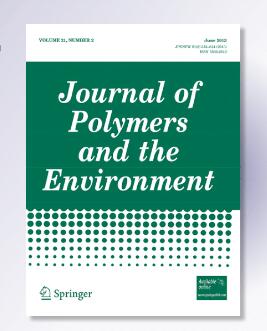
The Journal of Polymers and the Environment fills the need for an international forum in this diverse and rapidly expanding field. The journal serves a crucial role for the publication of information from a wide range of disciplines and is a central outlet for the publication of high-quality peer-reviewed original papers, review articles and short communications. The journal is intentionally interdisciplinary in regard to contributions and covers the following subjects - polymers, environmentally degradable polymers, and degradation pathways: biological, photochemical, oxidative and hydrolytic; new environmental materials: derived by chemical and biosynthetic routes; environmental blends and composites; developments in processing and reactive processing of environmental polymers; characterization of environmental materials: mechanical, physical, thermal, rheological, morphological, and others; recyclable polymers and plastics recycling environmental testing: in-laboratory simulations, outdoor exposures, and standardization of methodologies; environmental fate: end products and intermediates of biodegradation; microbiology and enzymology of polymer biodegradation; solid-waste management and public legislation specific to environmental polymers; and other related topics.





 京公网安备 11010802042870号
京ICP备2023020795号-1
京公网安备 11010802042870号
京ICP备2023020795号-1

 分享
分享
 求助内容:
求助内容: 应助结果提醒方式:
 扫码关注我们
