G. Fischer, U. Taubenschuss, D. Píša, M. Imai, W. S. Kurth
{"title":"卡西尼号和朱诺号探测到的木星宽带千米辐射的光谱结构","authors":"G. Fischer, U. Taubenschuss, D. Píša, M. Imai, W. S. Kurth","doi":"10.1029/2024JA032826","DOIUrl":null,"url":null,"abstract":"<p>Cassini flew past Jupiter in 2000/2001, and Juno has been orbiting the gas giant since mid-2016. Here we focus on the spectral properties of Jovian broadband kilometric radiation (bKOM), and we classified them according to their slope in the time–frequency spectrum and distinguish four categories with negative, positive, mixed, or no slope in frequency. These bKOM structures had mostly negative slopes during the inbound portion of the Cassini Jupiter flyby, whereas they were mostly positive for the outbound. The reason for this could be higher intensities of bKOM emissions from midnight to dawn local times. We interpret the semi-circles of the Jovian radio emission nicknamed “bullseyes” as negatively sloped bKOM connected with positively sloped bKOM, and we detected 40 bullseyes in Juno Waves data until the end of 2017. Cassini and Juno show similar distributions of bKOM with respect to the Jovian Central Meridian Longitude like the Voyagers and Ulysses. This means that bKOM has not changed over several decades and “rotates” with the system III period. Several features of the bKOM structures suggest emission cones with thick mantles and moderate beaming angles around <span></span><math>\n <semantics>\n <mrow>\n <mn>50</mn>\n <mo>°</mo>\n </mrow>\n <annotation> $50{}^{\\circ}$</annotation>\n </semantics></math>. We found an enhancement of the occurrence probability of southern bKOM for certain phases of Ganymede and Callisto.</p>","PeriodicalId":15894,"journal":{"name":"Journal of Geophysical Research: Space Physics","volume":"130 1","pages":""},"PeriodicalIF":2.9000,"publicationDate":"2025-01-07","publicationTypes":"Journal Article","fieldsOfStudy":null,"isOpenAccess":false,"openAccessPdf":"https://onlinelibrary.wiley.com/doi/epdf/10.1029/2024JA032826","citationCount":"0","resultStr":"{\"title\":\"Spectral Structures of Jovian Broadband Kilometric Radiation Revealed by Cassini and Juno\",\"authors\":\"G. Fischer, U. Taubenschuss, D. Píša, M. Imai, W. S. Kurth\",\"doi\":\"10.1029/2024JA032826\",\"DOIUrl\":null,\"url\":null,\"abstract\":\"<p>Cassini flew past Jupiter in 2000/2001, and Juno has been orbiting the gas giant since mid-2016. Here we focus on the spectral properties of Jovian broadband kilometric radiation (bKOM), and we classified them according to their slope in the time–frequency spectrum and distinguish four categories with negative, positive, mixed, or no slope in frequency. These bKOM structures had mostly negative slopes during the inbound portion of the Cassini Jupiter flyby, whereas they were mostly positive for the outbound. The reason for this could be higher intensities of bKOM emissions from midnight to dawn local times. We interpret the semi-circles of the Jovian radio emission nicknamed “bullseyes” as negatively sloped bKOM connected with positively sloped bKOM, and we detected 40 bullseyes in Juno Waves data until the end of 2017. Cassini and Juno show similar distributions of bKOM with respect to the Jovian Central Meridian Longitude like the Voyagers and Ulysses. This means that bKOM has not changed over several decades and “rotates” with the system III period. Several features of the bKOM structures suggest emission cones with thick mantles and moderate beaming angles around <span></span><math>\\n <semantics>\\n <mrow>\\n <mn>50</mn>\\n <mo>°</mo>\\n </mrow>\\n <annotation> $50{}^{\\\\circ}$</annotation>\\n </semantics></math>. We found an enhancement of the occurrence probability of southern bKOM for certain phases of Ganymede and Callisto.</p>\",\"PeriodicalId\":15894,\"journal\":{\"name\":\"Journal of Geophysical Research: Space Physics\",\"volume\":\"130 1\",\"pages\":\"\"},\"PeriodicalIF\":2.9000,\"publicationDate\":\"2025-01-07\",\"publicationTypes\":\"Journal Article\",\"fieldsOfStudy\":null,\"isOpenAccess\":false,\"openAccessPdf\":\"https://onlinelibrary.wiley.com/doi/epdf/10.1029/2024JA032826\",\"citationCount\":\"0\",\"resultStr\":null,\"platform\":\"Semanticscholar\",\"paperid\":null,\"PeriodicalName\":\"Journal of Geophysical Research: Space Physics\",\"FirstCategoryId\":\"89\",\"ListUrlMain\":\"https://agupubs.onlinelibrary.wiley.com/doi/10.1029/2024JA032826\",\"RegionNum\":2,\"RegionCategory\":\"地球科学\",\"ArticlePicture\":[],\"TitleCN\":null,\"AbstractTextCN\":null,\"PMCID\":null,\"EPubDate\":\"\",\"PubModel\":\"\",\"JCR\":\"Q2\",\"JCRName\":\"ASTRONOMY & ASTROPHYSICS\",\"Score\":null,\"Total\":0}","platform":"Semanticscholar","paperid":null,"PeriodicalName":"Journal of Geophysical Research: Space Physics","FirstCategoryId":"89","ListUrlMain":"https://agupubs.onlinelibrary.wiley.com/doi/10.1029/2024JA032826","RegionNum":2,"RegionCategory":"地球科学","ArticlePicture":[],"TitleCN":null,"AbstractTextCN":null,"PMCID":null,"EPubDate":"","PubModel":"","JCR":"Q2","JCRName":"ASTRONOMY & ASTROPHYSICS","Score":null,"Total":0}
Spectral Structures of Jovian Broadband Kilometric Radiation Revealed by Cassini and Juno
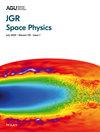
Cassini flew past Jupiter in 2000/2001, and Juno has been orbiting the gas giant since mid-2016. Here we focus on the spectral properties of Jovian broadband kilometric radiation (bKOM), and we classified them according to their slope in the time–frequency spectrum and distinguish four categories with negative, positive, mixed, or no slope in frequency. These bKOM structures had mostly negative slopes during the inbound portion of the Cassini Jupiter flyby, whereas they were mostly positive for the outbound. The reason for this could be higher intensities of bKOM emissions from midnight to dawn local times. We interpret the semi-circles of the Jovian radio emission nicknamed “bullseyes” as negatively sloped bKOM connected with positively sloped bKOM, and we detected 40 bullseyes in Juno Waves data until the end of 2017. Cassini and Juno show similar distributions of bKOM with respect to the Jovian Central Meridian Longitude like the Voyagers and Ulysses. This means that bKOM has not changed over several decades and “rotates” with the system III period. Several features of the bKOM structures suggest emission cones with thick mantles and moderate beaming angles around . We found an enhancement of the occurrence probability of southern bKOM for certain phases of Ganymede and Callisto.






 京公网安备 11010802042870号
京ICP备2023020795号-1
京公网安备 11010802042870号
京ICP备2023020795号-1

 分享
分享
 求助内容:
求助内容: 应助结果提醒方式:
 扫码关注我们
