{"title":"软段分子量对低温多重形状记忆可回收聚氨酯性能的影响","authors":"Hairui Wang, Yongxu Li, Hongyu Zhang, Xiurui Lang, Xiaolei Wang, Lan Cao, Chengzhong Zong","doi":"10.1002/pol.20240696","DOIUrl":null,"url":null,"abstract":"<p>Thermoplastic polyurethane (TPU) with shape memory characteristics exhibits excellent comprehensive performance and structural design flexibility, wherein the composition and structure of the soft segment play a crucial role. We synthesized four linear-structured polyurethanes (PUs) using 4,4′-methylene diphenyl diisocyanate (MDI), polytetramethylene ether glycol (PTMG), and 1,4-butanediol (BDO) in identical molar ratios and systematically investigated the impact of soft segment molecular weight on hydrogen bonding, thermal properties, microphase separation, and mechanical performance of TPU. The results show that an increase in soft segment molecular weight leads to a reduction in hydrogen bonding, microphase separation, and modulus, while the tensile strength initially increases and then decreases. PU650 exhibits the highest hydrogen bonding index of 5.17 and the maximum microphase separation. Additionally, all TPU materials exhibit low-temperature multiple shape memory behavior and excellent recyclability. This work provides valuable insights into the structural design and performance optimization of recyclable PU materials.</p>","PeriodicalId":16888,"journal":{"name":"Journal of Polymer Science","volume":"63 1","pages":"121-132"},"PeriodicalIF":3.6000,"publicationDate":"2024-10-17","publicationTypes":"Journal Article","fieldsOfStudy":null,"isOpenAccess":false,"openAccessPdf":"","citationCount":"0","resultStr":"{\"title\":\"Effects of soft segment molecular weight on the properties of recyclable polyurethanes with low-temperature multiple shape memory\",\"authors\":\"Hairui Wang, Yongxu Li, Hongyu Zhang, Xiurui Lang, Xiaolei Wang, Lan Cao, Chengzhong Zong\",\"doi\":\"10.1002/pol.20240696\",\"DOIUrl\":null,\"url\":null,\"abstract\":\"<p>Thermoplastic polyurethane (TPU) with shape memory characteristics exhibits excellent comprehensive performance and structural design flexibility, wherein the composition and structure of the soft segment play a crucial role. We synthesized four linear-structured polyurethanes (PUs) using 4,4′-methylene diphenyl diisocyanate (MDI), polytetramethylene ether glycol (PTMG), and 1,4-butanediol (BDO) in identical molar ratios and systematically investigated the impact of soft segment molecular weight on hydrogen bonding, thermal properties, microphase separation, and mechanical performance of TPU. The results show that an increase in soft segment molecular weight leads to a reduction in hydrogen bonding, microphase separation, and modulus, while the tensile strength initially increases and then decreases. PU650 exhibits the highest hydrogen bonding index of 5.17 and the maximum microphase separation. Additionally, all TPU materials exhibit low-temperature multiple shape memory behavior and excellent recyclability. This work provides valuable insights into the structural design and performance optimization of recyclable PU materials.</p>\",\"PeriodicalId\":16888,\"journal\":{\"name\":\"Journal of Polymer Science\",\"volume\":\"63 1\",\"pages\":\"121-132\"},\"PeriodicalIF\":3.6000,\"publicationDate\":\"2024-10-17\",\"publicationTypes\":\"Journal Article\",\"fieldsOfStudy\":null,\"isOpenAccess\":false,\"openAccessPdf\":\"\",\"citationCount\":\"0\",\"resultStr\":null,\"platform\":\"Semanticscholar\",\"paperid\":null,\"PeriodicalName\":\"Journal of Polymer Science\",\"FirstCategoryId\":\"92\",\"ListUrlMain\":\"https://onlinelibrary.wiley.com/doi/10.1002/pol.20240696\",\"RegionNum\":3,\"RegionCategory\":\"化学\",\"ArticlePicture\":[],\"TitleCN\":null,\"AbstractTextCN\":null,\"PMCID\":null,\"EPubDate\":\"\",\"PubModel\":\"\",\"JCR\":\"Q2\",\"JCRName\":\"POLYMER SCIENCE\",\"Score\":null,\"Total\":0}","platform":"Semanticscholar","paperid":null,"PeriodicalName":"Journal of Polymer Science","FirstCategoryId":"92","ListUrlMain":"https://onlinelibrary.wiley.com/doi/10.1002/pol.20240696","RegionNum":3,"RegionCategory":"化学","ArticlePicture":[],"TitleCN":null,"AbstractTextCN":null,"PMCID":null,"EPubDate":"","PubModel":"","JCR":"Q2","JCRName":"POLYMER SCIENCE","Score":null,"Total":0}
Effects of soft segment molecular weight on the properties of recyclable polyurethanes with low-temperature multiple shape memory
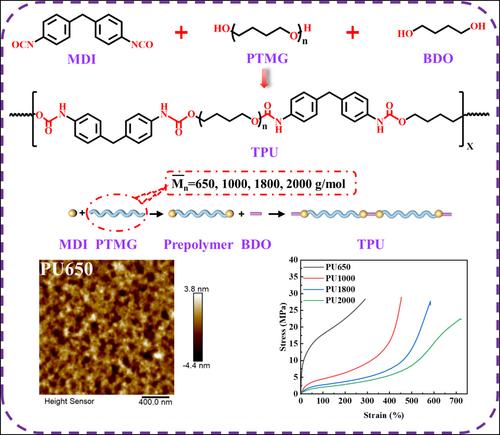
Thermoplastic polyurethane (TPU) with shape memory characteristics exhibits excellent comprehensive performance and structural design flexibility, wherein the composition and structure of the soft segment play a crucial role. We synthesized four linear-structured polyurethanes (PUs) using 4,4′-methylene diphenyl diisocyanate (MDI), polytetramethylene ether glycol (PTMG), and 1,4-butanediol (BDO) in identical molar ratios and systematically investigated the impact of soft segment molecular weight on hydrogen bonding, thermal properties, microphase separation, and mechanical performance of TPU. The results show that an increase in soft segment molecular weight leads to a reduction in hydrogen bonding, microphase separation, and modulus, while the tensile strength initially increases and then decreases. PU650 exhibits the highest hydrogen bonding index of 5.17 and the maximum microphase separation. Additionally, all TPU materials exhibit low-temperature multiple shape memory behavior and excellent recyclability. This work provides valuable insights into the structural design and performance optimization of recyclable PU materials.
期刊介绍:
Journal of Polymer Research provides a forum for the prompt publication of articles concerning the fundamental and applied research of polymers. Its great feature lies in the diversity of content which it encompasses, drawing together results from all aspects of polymer science and technology.
As polymer research is rapidly growing around the globe, the aim of this journal is to establish itself as a significant information tool not only for the international polymer researchers in academia but also for those working in industry. The scope of the journal covers a wide range of the highly interdisciplinary field of polymer science and technology.




 京公网安备 11010802042870号
京ICP备2023020795号-1
京公网安备 11010802042870号
京ICP备2023020795号-1

 分享
分享
 求助内容:
求助内容: 应助结果提醒方式:
 扫码关注我们
