Sithara Radhakrishnan, Mohan Monisha, Sree Raj KA, Manav Saxena, Sang Mun Jeong, Chandra Sekhar Rout
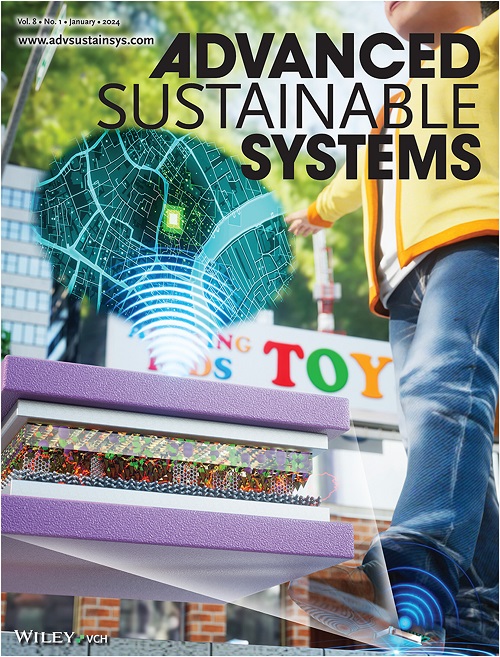
{"title":"开发高性能微型超级电容器的三维VTe2/MXene/CNT三元结构","authors":"Sithara Radhakrishnan, Mohan Monisha, Sree Raj KA, Manav Saxena, Sang Mun Jeong, Chandra Sekhar Rout","doi":"10.1002/adsu.202400529","DOIUrl":null,"url":null,"abstract":"<p>Rapid advancements in portable electronics have created a demand for ultrathin power sources. Microsupercapacitors (MSCs) are becoming a competitive and advantageous option for these applications. It is widely recognized that to develop MSCs with exceptional performance, electrode materials having two-dimensonal (2D) permeable channels, structural scaffolds with high-conductivity and large surface area are suitable. Vanadium ditelluride (VTe<sub>2</sub>) stands out as an ideal material platform in this context. Its unique combination of metallic properties and exfoliative characteristics-stemming from the conducting Te–V–Te layers held together by weak van der Waals interlayer interactions- renders it highly promising for high-performance MSCs. This study is the first to report that the restacking issues and electrochemical performance of VTe<sub>2</sub> can be successfully avoided by the simultaneous incorporation of MXene and CNT to form a ternary hybrid. Here, a laser-induced graphene (LIG)-based MSC utilizing VTe<sub>2</sub>/MXene/CNT as the active electrode material is fabricated. This MSC achieve fabrications an outstanding maximum energy density of 6.84 µWh cm<sup>−2</sup> and a power density of 304.7 µW cm<sup>−2</sup>. This significant achievement demonstrates the potential of this LIG-based MSC to advance the design of high-performance micro-energy storage devices.</p>","PeriodicalId":7294,"journal":{"name":"Advanced Sustainable Systems","volume":"9 1","pages":""},"PeriodicalIF":6.1000,"publicationDate":"2024-10-22","publicationTypes":"Journal Article","fieldsOfStudy":null,"isOpenAccess":false,"openAccessPdf":"https://onlinelibrary.wiley.com/doi/epdf/10.1002/adsu.202400529","citationCount":"0","resultStr":"{\"title\":\"Three-Dimensional VTe2/MXene/CNT Ternary Architectures for the Development of High Performance Microsupercapacitors\",\"authors\":\"Sithara Radhakrishnan, Mohan Monisha, Sree Raj KA, Manav Saxena, Sang Mun Jeong, Chandra Sekhar Rout\",\"doi\":\"10.1002/adsu.202400529\",\"DOIUrl\":null,\"url\":null,\"abstract\":\"<p>Rapid advancements in portable electronics have created a demand for ultrathin power sources. Microsupercapacitors (MSCs) are becoming a competitive and advantageous option for these applications. It is widely recognized that to develop MSCs with exceptional performance, electrode materials having two-dimensonal (2D) permeable channels, structural scaffolds with high-conductivity and large surface area are suitable. Vanadium ditelluride (VTe<sub>2</sub>) stands out as an ideal material platform in this context. Its unique combination of metallic properties and exfoliative characteristics-stemming from the conducting Te–V–Te layers held together by weak van der Waals interlayer interactions- renders it highly promising for high-performance MSCs. This study is the first to report that the restacking issues and electrochemical performance of VTe<sub>2</sub> can be successfully avoided by the simultaneous incorporation of MXene and CNT to form a ternary hybrid. Here, a laser-induced graphene (LIG)-based MSC utilizing VTe<sub>2</sub>/MXene/CNT as the active electrode material is fabricated. This MSC achieve fabrications an outstanding maximum energy density of 6.84 µWh cm<sup>−2</sup> and a power density of 304.7 µW cm<sup>−2</sup>. This significant achievement demonstrates the potential of this LIG-based MSC to advance the design of high-performance micro-energy storage devices.</p>\",\"PeriodicalId\":7294,\"journal\":{\"name\":\"Advanced Sustainable Systems\",\"volume\":\"9 1\",\"pages\":\"\"},\"PeriodicalIF\":6.1000,\"publicationDate\":\"2024-10-22\",\"publicationTypes\":\"Journal Article\",\"fieldsOfStudy\":null,\"isOpenAccess\":false,\"openAccessPdf\":\"https://onlinelibrary.wiley.com/doi/epdf/10.1002/adsu.202400529\",\"citationCount\":\"0\",\"resultStr\":null,\"platform\":\"Semanticscholar\",\"paperid\":null,\"PeriodicalName\":\"Advanced Sustainable Systems\",\"FirstCategoryId\":\"88\",\"ListUrlMain\":\"https://advanced.onlinelibrary.wiley.com/doi/10.1002/adsu.202400529\",\"RegionNum\":3,\"RegionCategory\":\"材料科学\",\"ArticlePicture\":[],\"TitleCN\":null,\"AbstractTextCN\":null,\"PMCID\":null,\"EPubDate\":\"\",\"PubModel\":\"\",\"JCR\":\"Q2\",\"JCRName\":\"GREEN & SUSTAINABLE SCIENCE & TECHNOLOGY\",\"Score\":null,\"Total\":0}","platform":"Semanticscholar","paperid":null,"PeriodicalName":"Advanced Sustainable Systems","FirstCategoryId":"88","ListUrlMain":"https://advanced.onlinelibrary.wiley.com/doi/10.1002/adsu.202400529","RegionNum":3,"RegionCategory":"材料科学","ArticlePicture":[],"TitleCN":null,"AbstractTextCN":null,"PMCID":null,"EPubDate":"","PubModel":"","JCR":"Q2","JCRName":"GREEN & SUSTAINABLE SCIENCE & TECHNOLOGY","Score":null,"Total":0}
引用次数: 0
摘要
便携式电子产品的快速发展产生了对超薄电源的需求。微型超级电容器(MSCs)正在成为这些应用中具有竞争力和优势的选择。人们普遍认为,为了开发具有优异性能的间充质干细胞,具有二维可渗透通道的电极材料、具有高导电性和大表面积的结构支架是合适的。在这种情况下,二碲化钒(VTe2)作为一种理想的材料平台脱颖而出。其独特的金属性能和剥离特性的结合——源于导电的Te-V-Te层通过弱范德华层间相互作用结合在一起——使其成为高性能MSCs非常有前途。这项研究首次报道了MXene和碳纳米管同时掺入形成三元杂化物可以成功地避免VTe2的再堆积问题和电化学性能。本文利用VTe2/MXene/CNT作为活性电极材料,制备了激光诱导石墨烯(LIG)基MSC。该MSC实现了6.84µWh cm - 2的最大能量密度和304.7µW cm - 2的功率密度。这一重大成就证明了这种基于ligs的MSC在推进高性能微储能设备设计方面的潜力。
Three-Dimensional VTe2/MXene/CNT Ternary Architectures for the Development of High Performance Microsupercapacitors
Rapid advancements in portable electronics have created a demand for ultrathin power sources. Microsupercapacitors (MSCs) are becoming a competitive and advantageous option for these applications. It is widely recognized that to develop MSCs with exceptional performance, electrode materials having two-dimensonal (2D) permeable channels, structural scaffolds with high-conductivity and large surface area are suitable. Vanadium ditelluride (VTe2) stands out as an ideal material platform in this context. Its unique combination of metallic properties and exfoliative characteristics-stemming from the conducting Te–V–Te layers held together by weak van der Waals interlayer interactions- renders it highly promising for high-performance MSCs. This study is the first to report that the restacking issues and electrochemical performance of VTe2 can be successfully avoided by the simultaneous incorporation of MXene and CNT to form a ternary hybrid. Here, a laser-induced graphene (LIG)-based MSC utilizing VTe2/MXene/CNT as the active electrode material is fabricated. This MSC achieve fabrications an outstanding maximum energy density of 6.84 µWh cm−2 and a power density of 304.7 µW cm−2. This significant achievement demonstrates the potential of this LIG-based MSC to advance the design of high-performance micro-energy storage devices.
期刊介绍:
Advanced Sustainable Systems, a part of the esteemed Advanced portfolio, serves as an interdisciplinary sustainability science journal. It focuses on impactful research in the advancement of sustainable, efficient, and less wasteful systems and technologies. Aligned with the UN's Sustainable Development Goals, the journal bridges knowledge gaps between fundamental research, implementation, and policy-making. Covering diverse topics such as climate change, food sustainability, environmental science, renewable energy, water, urban development, and socio-economic challenges, it contributes to the understanding and promotion of sustainable systems.






 京公网安备 11010802042870号
京ICP备2023020795号-1
京公网安备 11010802042870号
京ICP备2023020795号-1

 分享
分享
 求助内容:
求助内容: 应助结果提醒方式:
 扫码关注我们
