Marius Matusevicius MD, PhD, Malin Säflund MD, Maurizio Balestrino MD, Manuel Cappellari MD, Delfina Ferrandi MD, Abdoreza Ghoreishi MD, André Peeters MD, Viiu-Marika Rand MD, Manuela De Michele MD, PhD, Aleksandras Vilionskis MD, Andrea Zini MD, Niaz Ahmed MD, PhD
{"title":"卒中发生前直接口服抗凝治疗的患者静脉溶栓:来自卒中治疗安全实施的结果。","authors":"Marius Matusevicius MD, PhD, Malin Säflund MD, Maurizio Balestrino MD, Manuel Cappellari MD, Delfina Ferrandi MD, Abdoreza Ghoreishi MD, André Peeters MD, Viiu-Marika Rand MD, Manuela De Michele MD, PhD, Aleksandras Vilionskis MD, Andrea Zini MD, Niaz Ahmed MD, PhD","doi":"10.1002/ana.27189","DOIUrl":null,"url":null,"abstract":"<div>\n \n <section>\n \n <h3> Objectives</h3>\n \n <p>Intravenous thrombolysis (IVT) is contraindicated for acute ischemic stroke (AIS) patients taking direct oral anticoagulants (DOACs) within 48 hours before index stroke. Limited data exist on off-label use of IVT for these patients. We compared the safety and outcomes of IVT in AIS patients with DOAC treatment and patients with no OAC before index stroke.</p>\n </section>\n \n <section>\n \n <h3> Methods</h3>\n \n <p>We analyzed data from the Safe Implementations of Treatments in Stroke (SITS) International Stroke Thrombolysis Registry during 2013–2024. Outcomes were symptomatic intracerebral hemorrhage (SICH) by the SITS Monitoring Study and European Cooperative Acute Stroke Study II definitions, functional independency (modified Rankin Scale score 0–2), and death by 3 months. Propensity score matching with a nearest neighbor matching algorithm with a ratio of 1:2 was used for relevant clinical variables. We also analyzed the time from last DOAC dose to IVT treatment.</p>\n </section>\n \n <section>\n \n <h3> Results</h3>\n \n <p>A total of 1,311 DOAC and 129,384 no OAC patients were included. We matched 894 patients with DOAC to 1,788 with no OAC. The mean age was 75 years versus 76 years, and the median National Institutes of Health Stroke Scale score 11 versus 12, respectively. Patients with DOAC had a similar proportion of outcomes compared with patients with no OAC: SICH per SITS Monitoring Study (1.1 vs 1.5%, <i>p</i> = 0.50), SICH per European Cooperative Acute Stroke Study II (4.0 vs 4.3%, <i>p</i> = 0.82), any parenchymal hematoma (6.3 vs 7.8, <i>p</i> = 0.22), and functional independency (47.9 vs 46.4%, <i>p</i> = 0.59) and death (25.1 vs 24.0%, <i>p</i> = 0.65) at 3-month follow-up. The time from last DOAC dose to IVT did not affect outcomes.</p>\n </section>\n \n <section>\n \n <h3> Interpretation</h3>\n \n <p>In this observational study, we did not find any difference in outcomes after IVT therapy in AIS patients with DOAC compared with no OAC treatment before index stroke. ANN NEUROL 2025;97:1205–1214</p>\n </section>\n </div>","PeriodicalId":127,"journal":{"name":"Annals of Neurology","volume":"97 6","pages":"1205-1214"},"PeriodicalIF":7.5000,"publicationDate":"2025-02-04","publicationTypes":"Journal Article","fieldsOfStudy":null,"isOpenAccess":false,"openAccessPdf":"https://onlinelibrary.wiley.com/doi/epdf/10.1002/ana.27189","citationCount":"0","resultStr":"{\"title\":\"Intravenous Thrombolysis in Patients Taking Direct Oral Anticoagulation Treatment Before Stroke Onset: Results from the Safe Implementations of Treatments in Stroke International Stroke Registry\",\"authors\":\"Marius Matusevicius MD, PhD, Malin Säflund MD, Maurizio Balestrino MD, Manuel Cappellari MD, Delfina Ferrandi MD, Abdoreza Ghoreishi MD, André Peeters MD, Viiu-Marika Rand MD, Manuela De Michele MD, PhD, Aleksandras Vilionskis MD, Andrea Zini MD, Niaz Ahmed MD, PhD\",\"doi\":\"10.1002/ana.27189\",\"DOIUrl\":null,\"url\":null,\"abstract\":\"<div>\\n \\n <section>\\n \\n <h3> Objectives</h3>\\n \\n <p>Intravenous thrombolysis (IVT) is contraindicated for acute ischemic stroke (AIS) patients taking direct oral anticoagulants (DOACs) within 48 hours before index stroke. Limited data exist on off-label use of IVT for these patients. We compared the safety and outcomes of IVT in AIS patients with DOAC treatment and patients with no OAC before index stroke.</p>\\n </section>\\n \\n <section>\\n \\n <h3> Methods</h3>\\n \\n <p>We analyzed data from the Safe Implementations of Treatments in Stroke (SITS) International Stroke Thrombolysis Registry during 2013–2024. Outcomes were symptomatic intracerebral hemorrhage (SICH) by the SITS Monitoring Study and European Cooperative Acute Stroke Study II definitions, functional independency (modified Rankin Scale score 0–2), and death by 3 months. Propensity score matching with a nearest neighbor matching algorithm with a ratio of 1:2 was used for relevant clinical variables. We also analyzed the time from last DOAC dose to IVT treatment.</p>\\n </section>\\n \\n <section>\\n \\n <h3> Results</h3>\\n \\n <p>A total of 1,311 DOAC and 129,384 no OAC patients were included. We matched 894 patients with DOAC to 1,788 with no OAC. The mean age was 75 years versus 76 years, and the median National Institutes of Health Stroke Scale score 11 versus 12, respectively. Patients with DOAC had a similar proportion of outcomes compared with patients with no OAC: SICH per SITS Monitoring Study (1.1 vs 1.5%, <i>p</i> = 0.50), SICH per European Cooperative Acute Stroke Study II (4.0 vs 4.3%, <i>p</i> = 0.82), any parenchymal hematoma (6.3 vs 7.8, <i>p</i> = 0.22), and functional independency (47.9 vs 46.4%, <i>p</i> = 0.59) and death (25.1 vs 24.0%, <i>p</i> = 0.65) at 3-month follow-up. The time from last DOAC dose to IVT did not affect outcomes.</p>\\n </section>\\n \\n <section>\\n \\n <h3> Interpretation</h3>\\n \\n <p>In this observational study, we did not find any difference in outcomes after IVT therapy in AIS patients with DOAC compared with no OAC treatment before index stroke. ANN NEUROL 2025;97:1205–1214</p>\\n </section>\\n </div>\",\"PeriodicalId\":127,\"journal\":{\"name\":\"Annals of Neurology\",\"volume\":\"97 6\",\"pages\":\"1205-1214\"},\"PeriodicalIF\":7.5000,\"publicationDate\":\"2025-02-04\",\"publicationTypes\":\"Journal Article\",\"fieldsOfStudy\":null,\"isOpenAccess\":false,\"openAccessPdf\":\"https://onlinelibrary.wiley.com/doi/epdf/10.1002/ana.27189\",\"citationCount\":\"0\",\"resultStr\":null,\"platform\":\"Semanticscholar\",\"paperid\":null,\"PeriodicalName\":\"Annals of Neurology\",\"FirstCategoryId\":\"3\",\"ListUrlMain\":\"https://onlinelibrary.wiley.com/doi/10.1002/ana.27189\",\"RegionNum\":1,\"RegionCategory\":\"医学\",\"ArticlePicture\":[],\"TitleCN\":null,\"AbstractTextCN\":null,\"PMCID\":null,\"EPubDate\":\"\",\"PubModel\":\"\",\"JCR\":\"Q1\",\"JCRName\":\"CLINICAL NEUROLOGY\",\"Score\":null,\"Total\":0}","platform":"Semanticscholar","paperid":null,"PeriodicalName":"Annals of Neurology","FirstCategoryId":"3","ListUrlMain":"https://onlinelibrary.wiley.com/doi/10.1002/ana.27189","RegionNum":1,"RegionCategory":"医学","ArticlePicture":[],"TitleCN":null,"AbstractTextCN":null,"PMCID":null,"EPubDate":"","PubModel":"","JCR":"Q1","JCRName":"CLINICAL NEUROLOGY","Score":null,"Total":0}
引用次数: 0
摘要
目的:静脉溶栓(IVT)是急性缺血性脑卒中(AIS)患者在指数脑卒中前48小时内直接口服抗凝剂(DOACs)的禁忌症。这些患者在说明书外使用IVT的数据有限。我们比较了在指数卒中前接受DOAC治疗的AIS患者和未接受OAC治疗的患者的IVT的安全性和结果。方法:我们分析了2013-2024年卒中治疗安全实施(SITS)国际卒中溶栓登记的数据。结果是有症状的脑出血(SICH),符合sit监测研究和欧洲急性卒中合作研究II的定义,功能独立性(修正Rankin量表评分0-2),3个月死亡。相关临床变量采用最近邻匹配算法进行倾向评分匹配,匹配比例为1:2。我们还分析了从最后一次DOAC剂量到IVT治疗的时间。结果:共纳入1311例DOAC患者和129384例无OAC患者。我们将894例DOAC患者与1788例无OAC患者进行了配对。他们的平均年龄分别为75岁和76岁,美国国立卫生研究院卒中量表的中位数分别为11分和12分。与无OAC患者相比,DOAC患者的结局比例相似:在3个月的随访中,sit监测研究中siich (1.1 vs 1.5%, p = 0.50),欧洲急性卒中合作研究II中siich (4.0 vs 4.3%, p = 0.82),任何实质血肿(6.3 vs 7.8, p = 0.22),功能独立性(47.9 vs 46.4%, p = 0.59)和死亡(25.1 vs 24.0%, p = 0.65)。从最后一次DOAC剂量到IVT的时间不影响结果。解释:在这项观察性研究中,我们没有发现伴有DOAC的AIS患者在指数卒中前接受IVT治疗与未接受OAC治疗的结果有任何差异。Ann neurol 2025。
Intravenous Thrombolysis in Patients Taking Direct Oral Anticoagulation Treatment Before Stroke Onset: Results from the Safe Implementations of Treatments in Stroke International Stroke Registry
Objectives
Intravenous thrombolysis (IVT) is contraindicated for acute ischemic stroke (AIS) patients taking direct oral anticoagulants (DOACs) within 48 hours before index stroke. Limited data exist on off-label use of IVT for these patients. We compared the safety and outcomes of IVT in AIS patients with DOAC treatment and patients with no OAC before index stroke.
Methods
We analyzed data from the Safe Implementations of Treatments in Stroke (SITS) International Stroke Thrombolysis Registry during 2013–2024. Outcomes were symptomatic intracerebral hemorrhage (SICH) by the SITS Monitoring Study and European Cooperative Acute Stroke Study II definitions, functional independency (modified Rankin Scale score 0–2), and death by 3 months. Propensity score matching with a nearest neighbor matching algorithm with a ratio of 1:2 was used for relevant clinical variables. We also analyzed the time from last DOAC dose to IVT treatment.
Results
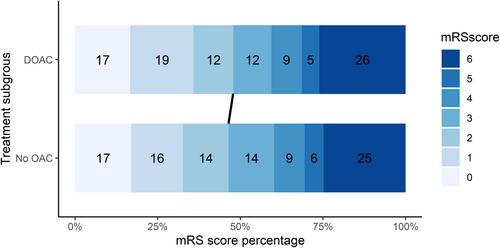
A total of 1,311 DOAC and 129,384 no OAC patients were included. We matched 894 patients with DOAC to 1,788 with no OAC. The mean age was 75 years versus 76 years, and the median National Institutes of Health Stroke Scale score 11 versus 12, respectively. Patients with DOAC had a similar proportion of outcomes compared with patients with no OAC: SICH per SITS Monitoring Study (1.1 vs 1.5%, p = 0.50), SICH per European Cooperative Acute Stroke Study II (4.0 vs 4.3%, p = 0.82), any parenchymal hematoma (6.3 vs 7.8, p = 0.22), and functional independency (47.9 vs 46.4%, p = 0.59) and death (25.1 vs 24.0%, p = 0.65) at 3-month follow-up. The time from last DOAC dose to IVT did not affect outcomes.
Interpretation
In this observational study, we did not find any difference in outcomes after IVT therapy in AIS patients with DOAC compared with no OAC treatment before index stroke. ANN NEUROL 2025;97:1205–1214
期刊介绍:
Annals of Neurology publishes original articles with potential for high impact in understanding the pathogenesis, clinical and laboratory features, diagnosis, treatment, outcomes and science underlying diseases of the human nervous system. Articles should ideally be of broad interest to the academic neurological community rather than solely to subspecialists in a particular field. Studies involving experimental model system, including those in cell and organ cultures and animals, of direct translational relevance to the understanding of neurological disease are also encouraged.




 京公网安备 11010802042870号
京ICP备2023020795号-1
京公网安备 11010802042870号
京ICP备2023020795号-1

 分享
分享
 求助内容:
求助内容: 应助结果提醒方式:
 扫码关注我们
