Wesam Rjoop, Anwar Rjoop, Alia Almohtaseb, Lama Bataineh, Zeina Nser Joubi, Maha Gharaibeh, Abdalrahman Al-Qwabah, Yousef Alasheh, Ismail Matalka
{"title":"BIRADS IVc/V亚型乳腺良性病变的病理和放射学评价。我们要重复活检吗?","authors":"Wesam Rjoop, Anwar Rjoop, Alia Almohtaseb, Lama Bataineh, Zeina Nser Joubi, Maha Gharaibeh, Abdalrahman Al-Qwabah, Yousef Alasheh, Ismail Matalka","doi":"10.1186/s12905-025-03569-7","DOIUrl":null,"url":null,"abstract":"<p><strong>Background: </strong>Timely diagnosis is a crucial factor in decreasing the death rate of patients with breast cancer. BI-RADS categories IVc and V indicate a strong suspicion of cancer. The categorisation of each group is determined by the characteristics of the lesion. Certain benign breast lesions might have radiological features indicative of malignancy; thus, biopsy is mandatory. This study aimed to identify the histopathological diagnosis of benign breast masses classified into BIRADS IVc and V subgroups, investigate the radiological characteristics of these masses, and identify ultrasound features that could lead to false positive results (benign lesions that mimic malignancy on imaging).</p><p><strong>Methods: </strong>This was a retrospective cross-sectional study at a single facility. Breast lesions reported as BIRADS IVc and V that underwent needle core/stereotactic vacuum-assisted biopsy were reviewed. Patients with benign pathologic diagnoses were analysed, delineating pathological diagnoses. Radiological descriptors were compared to those of a matched control of 50 malignant cases with BIRADS IVc.</p><p><strong>Results: </strong>A total of 828 breast lesions classified as BIRADS IVc or V were detected during the period spanning from 2015 to 2022. Forty-four lesions (44/828, 5.3%) were benign at initial biopsy, while 784 lesions (784/828, 94.7%) were malignant. After histopathological testing and repeat biopsy, 26/828 (3.14%) patients had discordant benign diagnosis. Half of the repeated biopsies (10/20, 50%) showed malignant pathology. Compared to that in the control group, the presence of an oval shape of the mass was significantly more common in patients with benign pathology (p = 0.035). Conversely, the presence of posterior shadowing was significantly less common (p = 0.050) in benign lesions. No significant differences were observed for the other radiological characteristics. The most common histopathological diagnosis was fibrocystic change.</p><p><strong>Conclusion: </strong>This study highlights key findings regarding the sonographic imaging descriptors and histopathological diagnoses of benign breast lesions categorised as BIRADS IVc/V. The study recommends a correlation between clinical and radiological findings and encourages multidisciplinary decision-making among radiologists, pathologists, and clinicians to determine if a repeat biopsy is warranted. There is a need for continuous research to improve the diagnosis and treatment of breast lesions and reduce false-positive rates by incorporating other methodologies such as sonoelastography and incorporating deep learning and artificial intelligence in the decision-making to eliminate unnecessary procedures.</p>","PeriodicalId":9204,"journal":{"name":"BMC Women's Health","volume":"25 1","pages":"47"},"PeriodicalIF":2.7000,"publicationDate":"2025-02-03","publicationTypes":"Journal Article","fieldsOfStudy":null,"isOpenAccess":false,"openAccessPdf":"https://www.ncbi.nlm.nih.gov/pmc/articles/PMC11789374/pdf/","citationCount":"0","resultStr":"{\"title\":\"Pathological and radiological assessment of benign breast lesions with BIRADS IVc/V subtypes. should we repeat the biopsy?\",\"authors\":\"Wesam Rjoop, Anwar Rjoop, Alia Almohtaseb, Lama Bataineh, Zeina Nser Joubi, Maha Gharaibeh, Abdalrahman Al-Qwabah, Yousef Alasheh, Ismail Matalka\",\"doi\":\"10.1186/s12905-025-03569-7\",\"DOIUrl\":null,\"url\":null,\"abstract\":\"<p><strong>Background: </strong>Timely diagnosis is a crucial factor in decreasing the death rate of patients with breast cancer. BI-RADS categories IVc and V indicate a strong suspicion of cancer. The categorisation of each group is determined by the characteristics of the lesion. Certain benign breast lesions might have radiological features indicative of malignancy; thus, biopsy is mandatory. This study aimed to identify the histopathological diagnosis of benign breast masses classified into BIRADS IVc and V subgroups, investigate the radiological characteristics of these masses, and identify ultrasound features that could lead to false positive results (benign lesions that mimic malignancy on imaging).</p><p><strong>Methods: </strong>This was a retrospective cross-sectional study at a single facility. Breast lesions reported as BIRADS IVc and V that underwent needle core/stereotactic vacuum-assisted biopsy were reviewed. Patients with benign pathologic diagnoses were analysed, delineating pathological diagnoses. Radiological descriptors were compared to those of a matched control of 50 malignant cases with BIRADS IVc.</p><p><strong>Results: </strong>A total of 828 breast lesions classified as BIRADS IVc or V were detected during the period spanning from 2015 to 2022. Forty-four lesions (44/828, 5.3%) were benign at initial biopsy, while 784 lesions (784/828, 94.7%) were malignant. After histopathological testing and repeat biopsy, 26/828 (3.14%) patients had discordant benign diagnosis. Half of the repeated biopsies (10/20, 50%) showed malignant pathology. Compared to that in the control group, the presence of an oval shape of the mass was significantly more common in patients with benign pathology (p = 0.035). Conversely, the presence of posterior shadowing was significantly less common (p = 0.050) in benign lesions. No significant differences were observed for the other radiological characteristics. The most common histopathological diagnosis was fibrocystic change.</p><p><strong>Conclusion: </strong>This study highlights key findings regarding the sonographic imaging descriptors and histopathological diagnoses of benign breast lesions categorised as BIRADS IVc/V. The study recommends a correlation between clinical and radiological findings and encourages multidisciplinary decision-making among radiologists, pathologists, and clinicians to determine if a repeat biopsy is warranted. There is a need for continuous research to improve the diagnosis and treatment of breast lesions and reduce false-positive rates by incorporating other methodologies such as sonoelastography and incorporating deep learning and artificial intelligence in the decision-making to eliminate unnecessary procedures.</p>\",\"PeriodicalId\":9204,\"journal\":{\"name\":\"BMC Women's Health\",\"volume\":\"25 1\",\"pages\":\"47\"},\"PeriodicalIF\":2.7000,\"publicationDate\":\"2025-02-03\",\"publicationTypes\":\"Journal Article\",\"fieldsOfStudy\":null,\"isOpenAccess\":false,\"openAccessPdf\":\"https://www.ncbi.nlm.nih.gov/pmc/articles/PMC11789374/pdf/\",\"citationCount\":\"0\",\"resultStr\":null,\"platform\":\"Semanticscholar\",\"paperid\":null,\"PeriodicalName\":\"BMC Women's Health\",\"FirstCategoryId\":\"3\",\"ListUrlMain\":\"https://doi.org/10.1186/s12905-025-03569-7\",\"RegionNum\":3,\"RegionCategory\":\"医学\",\"ArticlePicture\":[],\"TitleCN\":null,\"AbstractTextCN\":null,\"PMCID\":null,\"EPubDate\":\"\",\"PubModel\":\"\",\"JCR\":\"Q2\",\"JCRName\":\"OBSTETRICS & GYNECOLOGY\",\"Score\":null,\"Total\":0}","platform":"Semanticscholar","paperid":null,"PeriodicalName":"BMC Women's Health","FirstCategoryId":"3","ListUrlMain":"https://doi.org/10.1186/s12905-025-03569-7","RegionNum":3,"RegionCategory":"医学","ArticlePicture":[],"TitleCN":null,"AbstractTextCN":null,"PMCID":null,"EPubDate":"","PubModel":"","JCR":"Q2","JCRName":"OBSTETRICS & GYNECOLOGY","Score":null,"Total":0}
Pathological and radiological assessment of benign breast lesions with BIRADS IVc/V subtypes. should we repeat the biopsy?
Background: Timely diagnosis is a crucial factor in decreasing the death rate of patients with breast cancer. BI-RADS categories IVc and V indicate a strong suspicion of cancer. The categorisation of each group is determined by the characteristics of the lesion. Certain benign breast lesions might have radiological features indicative of malignancy; thus, biopsy is mandatory. This study aimed to identify the histopathological diagnosis of benign breast masses classified into BIRADS IVc and V subgroups, investigate the radiological characteristics of these masses, and identify ultrasound features that could lead to false positive results (benign lesions that mimic malignancy on imaging).
Methods: This was a retrospective cross-sectional study at a single facility. Breast lesions reported as BIRADS IVc and V that underwent needle core/stereotactic vacuum-assisted biopsy were reviewed. Patients with benign pathologic diagnoses were analysed, delineating pathological diagnoses. Radiological descriptors were compared to those of a matched control of 50 malignant cases with BIRADS IVc.
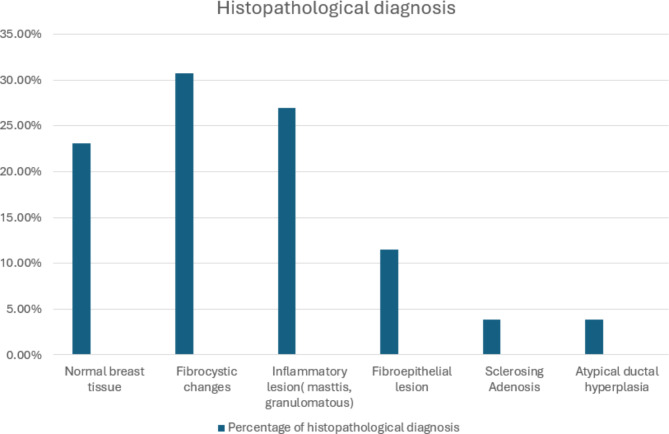
Results: A total of 828 breast lesions classified as BIRADS IVc or V were detected during the period spanning from 2015 to 2022. Forty-four lesions (44/828, 5.3%) were benign at initial biopsy, while 784 lesions (784/828, 94.7%) were malignant. After histopathological testing and repeat biopsy, 26/828 (3.14%) patients had discordant benign diagnosis. Half of the repeated biopsies (10/20, 50%) showed malignant pathology. Compared to that in the control group, the presence of an oval shape of the mass was significantly more common in patients with benign pathology (p = 0.035). Conversely, the presence of posterior shadowing was significantly less common (p = 0.050) in benign lesions. No significant differences were observed for the other radiological characteristics. The most common histopathological diagnosis was fibrocystic change.
Conclusion: This study highlights key findings regarding the sonographic imaging descriptors and histopathological diagnoses of benign breast lesions categorised as BIRADS IVc/V. The study recommends a correlation between clinical and radiological findings and encourages multidisciplinary decision-making among radiologists, pathologists, and clinicians to determine if a repeat biopsy is warranted. There is a need for continuous research to improve the diagnosis and treatment of breast lesions and reduce false-positive rates by incorporating other methodologies such as sonoelastography and incorporating deep learning and artificial intelligence in the decision-making to eliminate unnecessary procedures.
期刊介绍:
BMC Women''s Health is an open access, peer-reviewed journal that considers articles on all aspects of the health and wellbeing of adolescent girls and women, with a particular focus on the physical, mental, and emotional health of women in developed and developing nations. The journal welcomes submissions on women''s public health issues, health behaviours, breast cancer, gynecological diseases, mental health and health promotion.





 京公网安备 11010802042870号
京ICP备2023020795号-1
京公网安备 11010802042870号
京ICP备2023020795号-1

 分享
分享
 求助内容:
求助内容: 应助结果提醒方式:
 扫码关注我们
