{"title":"埃塞俄比亚东部新生儿先天性异常趋势及相关因素:克尔萨健康和人口监测系统8年开放队列分析","authors":"Muluken Kumera Didisa, Yohannes Baye, Eyerusalem Tamiru, Gezaheng Mengesha, Lencho Kajela Solbana, Tesfaye Assebe Yadeta","doi":"10.1136/bmjopen-2024-089984","DOIUrl":null,"url":null,"abstract":"<p><strong>Objective: </strong>This study aimed to investigate the trends and factors associated with congenital anomalies (CAs) among newborns in Eastern Ethiopia from 2015 to 2022.</p><p><strong>Design: </strong>Open cohort study.</p><p><strong>Setting: </strong>The Kersa Health and Demographic Surveillance System (KHDSS), which is located in the Kersa district of the Oromia region in Eastern Ethiopia, covering 24 kebeles.</p><p><strong>Population: </strong>Newborns registered at birth in the database of the KHDSS site in Eastern Ethiopia.</p><p><strong>Methods: </strong>The KHDSS tracks demographic and health changes in the community. Newborn data were extracted using a checklist. Trends in CAs over time (in years) were analysed and the associated factors were identified through logistic regression analysis.</p><p><strong>Outcome measure: </strong>Newborn CAs, which are structural or functional abnormalities present at birth, were assessed through thorough physical examinations and detailed interviews conducted by trained data collectors using a standardised questionnaire.</p><p><strong>Results: </strong>Between 2015 and 2022, a total of 27 350 newborns were recorded in the KHDSS, 104 of whom had CAs. The overall rate of CAs was 3.83 per 1000 live births (95% CI 3.19, 4.61). There was a significant increase in the trend of CAs over the study period, with a Mantel-Haenszel χ<sup>2</sup> of 82.76 (p=0.001). Factors associated with CA included maternal age over 35 years (adjusted OR (AOR)=1.68, 95% CI 1.07, 2.62), place of birth (AOR=2.04, 95% CI 1.04, 4.02) and normal birth weight (AOR=0.14, 95% CI 0.04, 0.47).</p><p><strong>Conclusion: </strong>The data from the KHDSS revealed a rising trend in CAs. CA was associated with factors such as the mother's age, place of birth and the baby's birth weight. It is crucial for healthcare providers and stakeholders to consider these factors in efforts to reduce the prevalence of CAs.</p>","PeriodicalId":9158,"journal":{"name":"BMJ Open","volume":"15 2","pages":"e089984"},"PeriodicalIF":2.3000,"publicationDate":"2025-02-03","publicationTypes":"Journal Article","fieldsOfStudy":null,"isOpenAccess":false,"openAccessPdf":"https://www.ncbi.nlm.nih.gov/pmc/articles/PMC11795409/pdf/","citationCount":"0","resultStr":"{\"title\":\"Trends in congenital anomalies and associated factors among newborns in Eastern Ethiopia: an 8-year open cohort analysis of the Kersa Health and Demographic Surveillance System.\",\"authors\":\"Muluken Kumera Didisa, Yohannes Baye, Eyerusalem Tamiru, Gezaheng Mengesha, Lencho Kajela Solbana, Tesfaye Assebe Yadeta\",\"doi\":\"10.1136/bmjopen-2024-089984\",\"DOIUrl\":null,\"url\":null,\"abstract\":\"<p><strong>Objective: </strong>This study aimed to investigate the trends and factors associated with congenital anomalies (CAs) among newborns in Eastern Ethiopia from 2015 to 2022.</p><p><strong>Design: </strong>Open cohort study.</p><p><strong>Setting: </strong>The Kersa Health and Demographic Surveillance System (KHDSS), which is located in the Kersa district of the Oromia region in Eastern Ethiopia, covering 24 kebeles.</p><p><strong>Population: </strong>Newborns registered at birth in the database of the KHDSS site in Eastern Ethiopia.</p><p><strong>Methods: </strong>The KHDSS tracks demographic and health changes in the community. Newborn data were extracted using a checklist. Trends in CAs over time (in years) were analysed and the associated factors were identified through logistic regression analysis.</p><p><strong>Outcome measure: </strong>Newborn CAs, which are structural or functional abnormalities present at birth, were assessed through thorough physical examinations and detailed interviews conducted by trained data collectors using a standardised questionnaire.</p><p><strong>Results: </strong>Between 2015 and 2022, a total of 27 350 newborns were recorded in the KHDSS, 104 of whom had CAs. The overall rate of CAs was 3.83 per 1000 live births (95% CI 3.19, 4.61). There was a significant increase in the trend of CAs over the study period, with a Mantel-Haenszel χ<sup>2</sup> of 82.76 (p=0.001). Factors associated with CA included maternal age over 35 years (adjusted OR (AOR)=1.68, 95% CI 1.07, 2.62), place of birth (AOR=2.04, 95% CI 1.04, 4.02) and normal birth weight (AOR=0.14, 95% CI 0.04, 0.47).</p><p><strong>Conclusion: </strong>The data from the KHDSS revealed a rising trend in CAs. CA was associated with factors such as the mother's age, place of birth and the baby's birth weight. It is crucial for healthcare providers and stakeholders to consider these factors in efforts to reduce the prevalence of CAs.</p>\",\"PeriodicalId\":9158,\"journal\":{\"name\":\"BMJ Open\",\"volume\":\"15 2\",\"pages\":\"e089984\"},\"PeriodicalIF\":2.3000,\"publicationDate\":\"2025-02-03\",\"publicationTypes\":\"Journal Article\",\"fieldsOfStudy\":null,\"isOpenAccess\":false,\"openAccessPdf\":\"https://www.ncbi.nlm.nih.gov/pmc/articles/PMC11795409/pdf/\",\"citationCount\":\"0\",\"resultStr\":null,\"platform\":\"Semanticscholar\",\"paperid\":null,\"PeriodicalName\":\"BMJ Open\",\"FirstCategoryId\":\"3\",\"ListUrlMain\":\"https://doi.org/10.1136/bmjopen-2024-089984\",\"RegionNum\":3,\"RegionCategory\":\"医学\",\"ArticlePicture\":[],\"TitleCN\":null,\"AbstractTextCN\":null,\"PMCID\":null,\"EPubDate\":\"\",\"PubModel\":\"\",\"JCR\":\"Q1\",\"JCRName\":\"MEDICINE, GENERAL & INTERNAL\",\"Score\":null,\"Total\":0}","platform":"Semanticscholar","paperid":null,"PeriodicalName":"BMJ Open","FirstCategoryId":"3","ListUrlMain":"https://doi.org/10.1136/bmjopen-2024-089984","RegionNum":3,"RegionCategory":"医学","ArticlePicture":[],"TitleCN":null,"AbstractTextCN":null,"PMCID":null,"EPubDate":"","PubModel":"","JCR":"Q1","JCRName":"MEDICINE, GENERAL & INTERNAL","Score":null,"Total":0}
引用次数: 0
摘要
目的:本研究旨在探讨2015 - 2022年埃塞俄比亚东部新生儿先天性异常(CAs)的趋势及相关因素。设计:开放式队列研究。环境:克尔萨卫生和人口监测系统(KHDSS),位于埃塞俄比亚东部奥罗米亚地区的克尔萨区,覆盖24个科贝勒。人口:出生时在埃塞俄比亚东部KHDSS站点数据库中登记的新生儿。方法:KHDSS追踪社区人口和健康变化。使用检查表提取新生儿数据。分析了CAs随时间(以年为单位)的趋势,并通过逻辑回归分析确定了相关因素。结果测量:新生儿ca,即出生时存在的结构或功能异常,通过全面的体格检查和由训练有素的数据收集人员使用标准化问卷进行的详细访谈进行评估。结果:2015 - 2022年,KHDSS共记录27350例新生儿,其中104例发生CAs。总死亡率为3.83 / 1000活产(95% CI 3.19, 4.61)。在研究期间,ca的趋势显著增加,Mantel-Haenszel χ2为82.76 (p=0.001)。与CA相关的因素包括母亲年龄超过35岁(调整后比值比(AOR)=1.68, 95% CI 1.07, 2.62)、出生地点(AOR=2.04, 95% CI 1.04, 4.02)和正常出生体重(AOR=0.14, 95% CI 0.04, 0.47)。结论:KHDSS数据显示ca呈上升趋势。CA与母亲的年龄、出生地点和婴儿的出生体重等因素有关。对于医疗保健提供者和利益相关者来说,在努力降低ca患病率时考虑这些因素是至关重要的。
Trends in congenital anomalies and associated factors among newborns in Eastern Ethiopia: an 8-year open cohort analysis of the Kersa Health and Demographic Surveillance System.
Objective: This study aimed to investigate the trends and factors associated with congenital anomalies (CAs) among newborns in Eastern Ethiopia from 2015 to 2022.
Design: Open cohort study.
Setting: The Kersa Health and Demographic Surveillance System (KHDSS), which is located in the Kersa district of the Oromia region in Eastern Ethiopia, covering 24 kebeles.
Population: Newborns registered at birth in the database of the KHDSS site in Eastern Ethiopia.
Methods: The KHDSS tracks demographic and health changes in the community. Newborn data were extracted using a checklist. Trends in CAs over time (in years) were analysed and the associated factors were identified through logistic regression analysis.
Outcome measure: Newborn CAs, which are structural or functional abnormalities present at birth, were assessed through thorough physical examinations and detailed interviews conducted by trained data collectors using a standardised questionnaire.
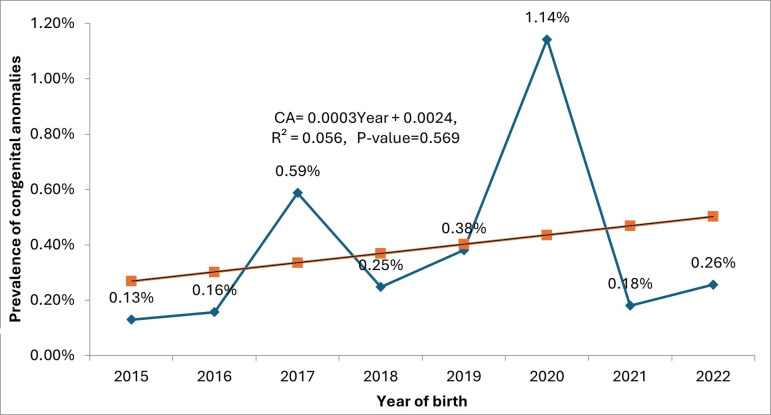
Results: Between 2015 and 2022, a total of 27 350 newborns were recorded in the KHDSS, 104 of whom had CAs. The overall rate of CAs was 3.83 per 1000 live births (95% CI 3.19, 4.61). There was a significant increase in the trend of CAs over the study period, with a Mantel-Haenszel χ2 of 82.76 (p=0.001). Factors associated with CA included maternal age over 35 years (adjusted OR (AOR)=1.68, 95% CI 1.07, 2.62), place of birth (AOR=2.04, 95% CI 1.04, 4.02) and normal birth weight (AOR=0.14, 95% CI 0.04, 0.47).
Conclusion: The data from the KHDSS revealed a rising trend in CAs. CA was associated with factors such as the mother's age, place of birth and the baby's birth weight. It is crucial for healthcare providers and stakeholders to consider these factors in efforts to reduce the prevalence of CAs.
期刊介绍:
BMJ Open is an online, open access journal, dedicated to publishing medical research from all disciplines and therapeutic areas. The journal publishes all research study types, from study protocols to phase I trials to meta-analyses, including small or specialist studies. Publishing procedures are built around fully open peer review and continuous publication, publishing research online as soon as the article is ready.





 京公网安备 11010802042870号
京ICP备2023020795号-1
京公网安备 11010802042870号
京ICP备2023020795号-1

 分享
分享
 求助内容:
求助内容: 应助结果提醒方式:
 扫码关注我们
