Amy Shakeshaft, Jessica R Mundy, Emil M Pedersen, Charlotte A Dennison, Lucy Riglin, Daniela Bragantini, Elizabeth C Corfield, Ajay K Thapar, Ole A Andreassen, Evie Stergiakouli, George Davey Smith, Laurie Hannigan, Katherine L Musliner, Alexandra Havdahl, Anita Thapar
{"title":"长期身体健康状况与青少年焦虑和抑郁:有因果关系吗?","authors":"Amy Shakeshaft, Jessica R Mundy, Emil M Pedersen, Charlotte A Dennison, Lucy Riglin, Daniela Bragantini, Elizabeth C Corfield, Ajay K Thapar, Ole A Andreassen, Evie Stergiakouli, George Davey Smith, Laurie Hannigan, Katherine L Musliner, Alexandra Havdahl, Anita Thapar","doi":"10.1017/S0033291724003271","DOIUrl":null,"url":null,"abstract":"<p><strong>Background: </strong>The prevalence of youth anxiety and depression has increased globally, with limited causal explanations. Long-term physical health conditions (LTCs) affect 20-40% of youth, with rates also rising. LTCs are associated with higher rates of youth depression and anxiety; however, it is uncertain whether observed associations are causal or explained by unmeasured confounding or reverse causation.</p><p><strong>Methods: </strong>Using data from the Norwegian Mother, Father, and Child Cohort Study (MoBa) and Norwegian National Patient Registry, we investigated phenotypic associations between childhood LTCs, and depression and anxiety diagnoses in youth (<19 years), defined using ICD-10 diagnoses and self-rated measures. We then conducted two-sample Mendelian Randomization (MR) analyses using SNPs associated with childhood LTCs from existing genome-wide association studies (GWAS) as instrumental variables. Outcomes were: (i) diagnoses of major depressive disorder (MDD) and anxiety disorders or elevated symptoms in MoBa, and (ii) youth-onset MDD using summary statistics from a GWAS in iPSYCH2015 cohort.</p><p><strong>Results: </strong>Having any childhood LTC phenotype was associated with elevated youth MDD (OR = 1.48 [95% CIs 1.19, 1.85], p = 4.2×10<sup>-4</sup>) and anxiety disorder risk (OR = 1.44 [1.20, 1.73], p = 7.9×10<sup>-5</sup>). Observational and MR analyses in MoBa were consistent with a causal relationship between migraine and depression (IVW OR = 1.38 [1.19, 1.60], p<sub>FDR</sub> = 1.8x10<sup>-4</sup>). MR analyses using iPSYCH2015 did not support a causal link between LTC genetic liabilities and youth-onset depression or in the reverse direction.</p><p><strong>Conclusions: </strong>Childhood LTCs are associated with depression and anxiety in youth, however, little evidence of causation between LTCs genetic liability and youth depression/anxiety was identified from MR analyses, except for migraine.</p>","PeriodicalId":20891,"journal":{"name":"Psychological Medicine","volume":"55 ","pages":"e7"},"PeriodicalIF":5.2000,"publicationDate":"2025-02-04","publicationTypes":"Journal Article","fieldsOfStudy":null,"isOpenAccess":false,"openAccessPdf":"https://www.ncbi.nlm.nih.gov/pmc/articles/PMC11968126/pdf/","citationCount":"0","resultStr":"{\"title\":\"Long-term physical health conditions and youth anxiety and depression: Is there a causal link?\",\"authors\":\"Amy Shakeshaft, Jessica R Mundy, Emil M Pedersen, Charlotte A Dennison, Lucy Riglin, Daniela Bragantini, Elizabeth C Corfield, Ajay K Thapar, Ole A Andreassen, Evie Stergiakouli, George Davey Smith, Laurie Hannigan, Katherine L Musliner, Alexandra Havdahl, Anita Thapar\",\"doi\":\"10.1017/S0033291724003271\",\"DOIUrl\":null,\"url\":null,\"abstract\":\"<p><strong>Background: </strong>The prevalence of youth anxiety and depression has increased globally, with limited causal explanations. Long-term physical health conditions (LTCs) affect 20-40% of youth, with rates also rising. LTCs are associated with higher rates of youth depression and anxiety; however, it is uncertain whether observed associations are causal or explained by unmeasured confounding or reverse causation.</p><p><strong>Methods: </strong>Using data from the Norwegian Mother, Father, and Child Cohort Study (MoBa) and Norwegian National Patient Registry, we investigated phenotypic associations between childhood LTCs, and depression and anxiety diagnoses in youth (<19 years), defined using ICD-10 diagnoses and self-rated measures. We then conducted two-sample Mendelian Randomization (MR) analyses using SNPs associated with childhood LTCs from existing genome-wide association studies (GWAS) as instrumental variables. Outcomes were: (i) diagnoses of major depressive disorder (MDD) and anxiety disorders or elevated symptoms in MoBa, and (ii) youth-onset MDD using summary statistics from a GWAS in iPSYCH2015 cohort.</p><p><strong>Results: </strong>Having any childhood LTC phenotype was associated with elevated youth MDD (OR = 1.48 [95% CIs 1.19, 1.85], p = 4.2×10<sup>-4</sup>) and anxiety disorder risk (OR = 1.44 [1.20, 1.73], p = 7.9×10<sup>-5</sup>). Observational and MR analyses in MoBa were consistent with a causal relationship between migraine and depression (IVW OR = 1.38 [1.19, 1.60], p<sub>FDR</sub> = 1.8x10<sup>-4</sup>). MR analyses using iPSYCH2015 did not support a causal link between LTC genetic liabilities and youth-onset depression or in the reverse direction.</p><p><strong>Conclusions: </strong>Childhood LTCs are associated with depression and anxiety in youth, however, little evidence of causation between LTCs genetic liability and youth depression/anxiety was identified from MR analyses, except for migraine.</p>\",\"PeriodicalId\":20891,\"journal\":{\"name\":\"Psychological Medicine\",\"volume\":\"55 \",\"pages\":\"e7\"},\"PeriodicalIF\":5.2000,\"publicationDate\":\"2025-02-04\",\"publicationTypes\":\"Journal Article\",\"fieldsOfStudy\":null,\"isOpenAccess\":false,\"openAccessPdf\":\"https://www.ncbi.nlm.nih.gov/pmc/articles/PMC11968126/pdf/\",\"citationCount\":\"0\",\"resultStr\":null,\"platform\":\"Semanticscholar\",\"paperid\":null,\"PeriodicalName\":\"Psychological Medicine\",\"FirstCategoryId\":\"3\",\"ListUrlMain\":\"https://doi.org/10.1017/S0033291724003271\",\"RegionNum\":2,\"RegionCategory\":\"医学\",\"ArticlePicture\":[],\"TitleCN\":null,\"AbstractTextCN\":null,\"PMCID\":null,\"EPubDate\":\"\",\"PubModel\":\"\",\"JCR\":\"Q1\",\"JCRName\":\"PSYCHIATRY\",\"Score\":null,\"Total\":0}","platform":"Semanticscholar","paperid":null,"PeriodicalName":"Psychological Medicine","FirstCategoryId":"3","ListUrlMain":"https://doi.org/10.1017/S0033291724003271","RegionNum":2,"RegionCategory":"医学","ArticlePicture":[],"TitleCN":null,"AbstractTextCN":null,"PMCID":null,"EPubDate":"","PubModel":"","JCR":"Q1","JCRName":"PSYCHIATRY","Score":null,"Total":0}
引用次数: 0
摘要
背景:青少年焦虑和抑郁的患病率在全球范围内有所增加,但因果解释有限。长期身体健康状况(LTCs)影响着20-40%的年轻人,而且这一比例还在上升。LTCs与青少年抑郁和焦虑的高发率相关;然而,尚不确定观察到的关联是因果关系还是由未测量的混杂或反向因果关系解释。方法:使用挪威母亲,父亲和儿童队列研究(MoBa)和挪威国家患者登记处的数据,我们调查了儿童LTC与青少年抑郁和焦虑诊断之间的表型关联(结果:任何儿童LTC表型与青少年MDD升高相关(OR = 1.48 [95% ci 1.19, 1.85], p = 4.2×10⁻⁴)和焦虑障碍风险相关(OR = 1.44 [1.20, 1.73], p = 7.9×10⁻⁵)。MoBa的观察和MR分析与偏头痛和抑郁症之间的因果关系一致(IVW OR = 1.38 [1.19, 1.60], pFDR = 1.8x10⁻⁴)。使用iPSYCH2015的MR分析不支持LTC遗传负担与青年发病抑郁症之间的因果关系或相反的方向。结论:儿童期LTCs与青年期抑郁和焦虑相关,然而,除了偏头痛外,很少有证据表明LTCs遗传倾向与青年期抑郁/焦虑之间存在因果关系。
Long-term physical health conditions and youth anxiety and depression: Is there a causal link?
Background: The prevalence of youth anxiety and depression has increased globally, with limited causal explanations. Long-term physical health conditions (LTCs) affect 20-40% of youth, with rates also rising. LTCs are associated with higher rates of youth depression and anxiety; however, it is uncertain whether observed associations are causal or explained by unmeasured confounding or reverse causation.
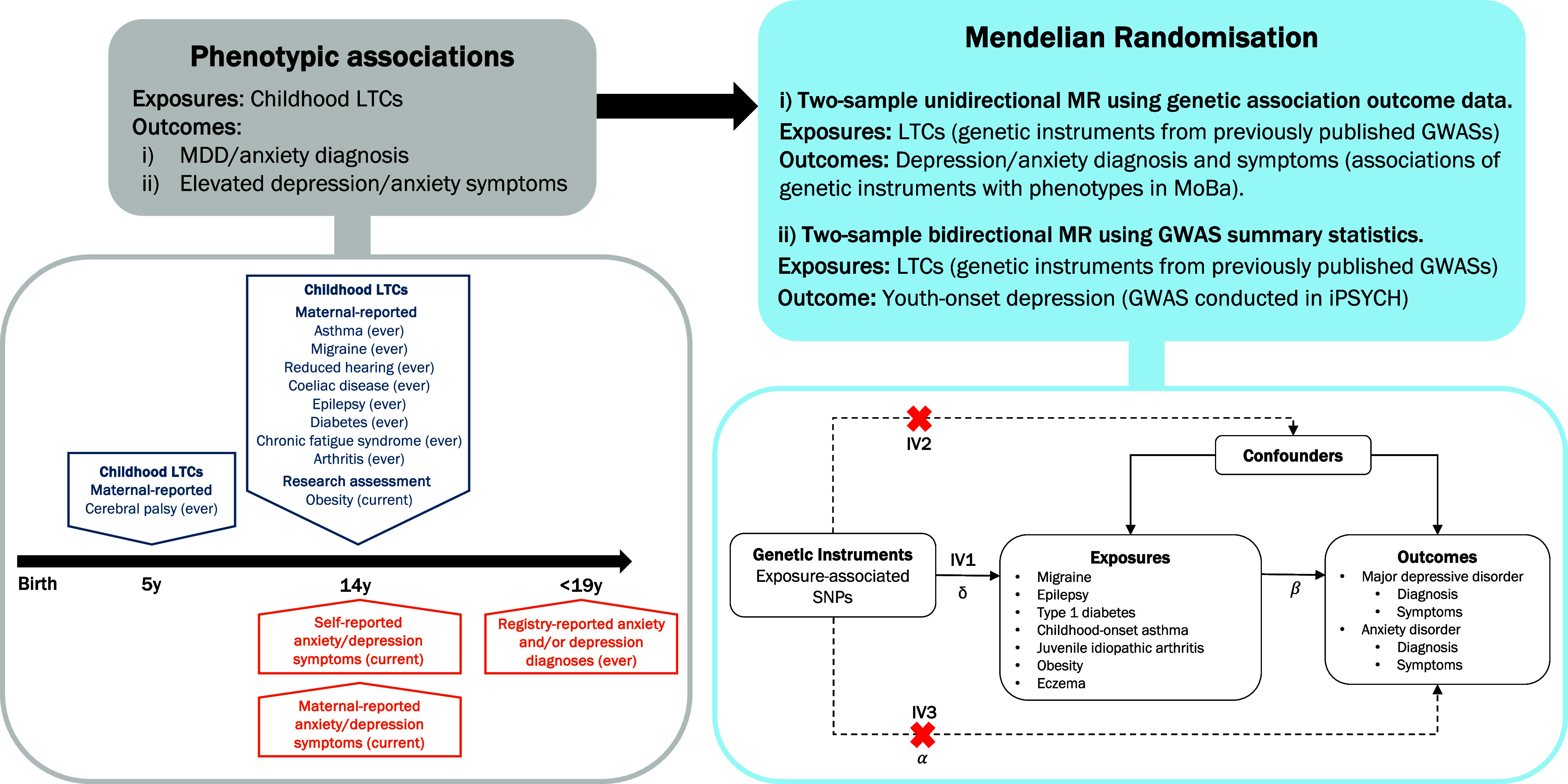
Methods: Using data from the Norwegian Mother, Father, and Child Cohort Study (MoBa) and Norwegian National Patient Registry, we investigated phenotypic associations between childhood LTCs, and depression and anxiety diagnoses in youth (<19 years), defined using ICD-10 diagnoses and self-rated measures. We then conducted two-sample Mendelian Randomization (MR) analyses using SNPs associated with childhood LTCs from existing genome-wide association studies (GWAS) as instrumental variables. Outcomes were: (i) diagnoses of major depressive disorder (MDD) and anxiety disorders or elevated symptoms in MoBa, and (ii) youth-onset MDD using summary statistics from a GWAS in iPSYCH2015 cohort.
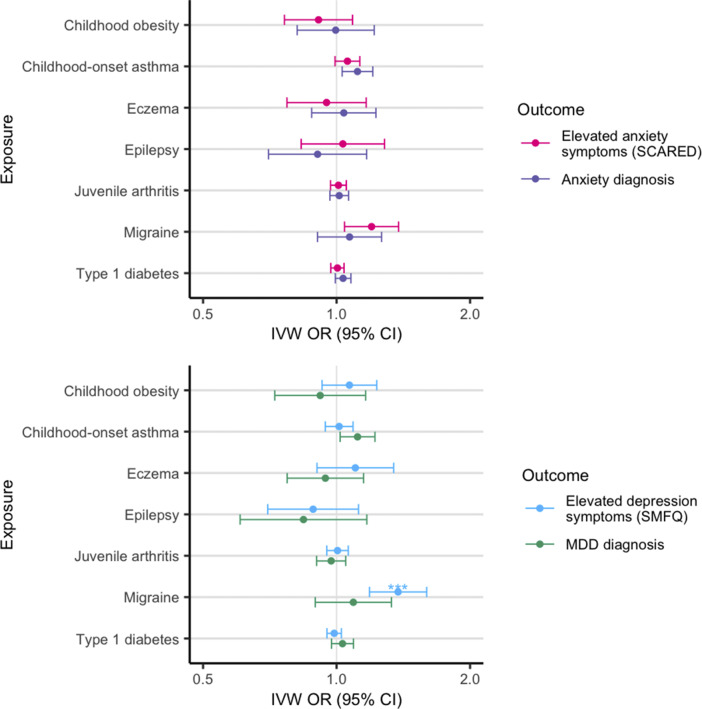
Results: Having any childhood LTC phenotype was associated with elevated youth MDD (OR = 1.48 [95% CIs 1.19, 1.85], p = 4.2×10⁻⁴) and anxiety disorder risk (OR = 1.44 [1.20, 1.73], p = 7.9×10⁻⁵). Observational and MR analyses in MoBa were consistent with a causal relationship between migraine and depression (IVW OR = 1.38 [1.19, 1.60], pFDR = 1.8x10⁻⁴). MR analyses using iPSYCH2015 did not support a causal link between LTC genetic liabilities and youth-onset depression or in the reverse direction.
Conclusions: Childhood LTCs are associated with depression and anxiety in youth, however, little evidence of causation between LTCs genetic liability and youth depression/anxiety was identified from MR analyses, except for migraine.
期刊介绍:
Now in its fifth decade of publication, Psychological Medicine is a leading international journal in the fields of psychiatry, related aspects of psychology and basic sciences. From 2014, there are 16 issues a year, each featuring original articles reporting key research being undertaken worldwide, together with shorter editorials by distinguished scholars and an important book review section. The journal''s success is clearly demonstrated by a consistently high impact factor.





 京公网安备 11010802042870号
京ICP备2023020795号-1
京公网安备 11010802042870号
京ICP备2023020795号-1

 分享
分享
 求助内容:
求助内容: 应助结果提醒方式:
 扫码关注我们
