{"title":"一种机制与数据融合的热轧带钢厚度分步预测框架","authors":"Yu Wen, Yafeng Ji, Borun Wu, Weijian Wang","doi":"10.1016/j.jmapro.2024.12.073","DOIUrl":null,"url":null,"abstract":"<div><div>In the hot-rolled process, the accurate hitting of strip thickness is key to production quality control. In this paper, a novel fusion strategy is proposed to address the problem that traditional thickness mechanism (TM) models and machine learning (ML) models have their own advantages and problems. A step-wise prediction framework for the fusion of mechanism and data is built by introducing the production requirements of enterprises. The construction of the framework begins with parsing the rolling mechanism and analyzing the data influence law. In order to ensure the model accuracy, the methods of model self-learning and feature engineering are individually introduced to construct TM and ML models, and they are stored in the model library. Subsequently, a kind of performance evaluation rule base is developed, based on practical applications in the industrial field. According to the order of importance of the accuracy, stability and timeliness indicators of the enterprise production requirement scheduling model, a step-wise prediction model (MCT) of ML compensation correction TM is established. In addition, considering the “black box” characteristic of ML, eXplainable Artificial Intelligence (XAI), especially the SHapley Additive exPlanations (SHAP) method, is adopted to explain the prediction results of ML. Through the influence mechanism of transparent process parameters on strip thickness deviation, the key parameters are identified and the subsequent decision deployment is optimized. At the same time, the reasons for the appearance of anomalous prediction points of the model are diagnosed, and the improvement means are proposed by combining the rolling process mechanism and ML modeling. The experimental results show that compared with other traditional methods, the framework can better meet the production quality requirements and can provide a reference for practical industrial applications.</div></div>","PeriodicalId":16148,"journal":{"name":"Journal of Manufacturing Processes","volume":"134 ","pages":"Pages 680-696"},"PeriodicalIF":6.8000,"publicationDate":"2025-01-31","publicationTypes":"Journal Article","fieldsOfStudy":null,"isOpenAccess":false,"openAccessPdf":"","citationCount":"0","resultStr":"{\"title\":\"A mechanism and data fusion step-wise prediction framework for hot-rolled strip thickness\",\"authors\":\"Yu Wen, Yafeng Ji, Borun Wu, Weijian Wang\",\"doi\":\"10.1016/j.jmapro.2024.12.073\",\"DOIUrl\":null,\"url\":null,\"abstract\":\"<div><div>In the hot-rolled process, the accurate hitting of strip thickness is key to production quality control. In this paper, a novel fusion strategy is proposed to address the problem that traditional thickness mechanism (TM) models and machine learning (ML) models have their own advantages and problems. A step-wise prediction framework for the fusion of mechanism and data is built by introducing the production requirements of enterprises. The construction of the framework begins with parsing the rolling mechanism and analyzing the data influence law. In order to ensure the model accuracy, the methods of model self-learning and feature engineering are individually introduced to construct TM and ML models, and they are stored in the model library. Subsequently, a kind of performance evaluation rule base is developed, based on practical applications in the industrial field. According to the order of importance of the accuracy, stability and timeliness indicators of the enterprise production requirement scheduling model, a step-wise prediction model (MCT) of ML compensation correction TM is established. In addition, considering the “black box” characteristic of ML, eXplainable Artificial Intelligence (XAI), especially the SHapley Additive exPlanations (SHAP) method, is adopted to explain the prediction results of ML. Through the influence mechanism of transparent process parameters on strip thickness deviation, the key parameters are identified and the subsequent decision deployment is optimized. At the same time, the reasons for the appearance of anomalous prediction points of the model are diagnosed, and the improvement means are proposed by combining the rolling process mechanism and ML modeling. The experimental results show that compared with other traditional methods, the framework can better meet the production quality requirements and can provide a reference for practical industrial applications.</div></div>\",\"PeriodicalId\":16148,\"journal\":{\"name\":\"Journal of Manufacturing Processes\",\"volume\":\"134 \",\"pages\":\"Pages 680-696\"},\"PeriodicalIF\":6.8000,\"publicationDate\":\"2025-01-31\",\"publicationTypes\":\"Journal Article\",\"fieldsOfStudy\":null,\"isOpenAccess\":false,\"openAccessPdf\":\"\",\"citationCount\":\"0\",\"resultStr\":null,\"platform\":\"Semanticscholar\",\"paperid\":null,\"PeriodicalName\":\"Journal of Manufacturing Processes\",\"FirstCategoryId\":\"5\",\"ListUrlMain\":\"https://www.sciencedirect.com/science/article/pii/S1526612524013513\",\"RegionNum\":1,\"RegionCategory\":\"工程技术\",\"ArticlePicture\":[],\"TitleCN\":null,\"AbstractTextCN\":null,\"PMCID\":null,\"EPubDate\":\"2025/1/8 0:00:00\",\"PubModel\":\"Epub\",\"JCR\":\"Q1\",\"JCRName\":\"ENGINEERING, MANUFACTURING\",\"Score\":null,\"Total\":0}","platform":"Semanticscholar","paperid":null,"PeriodicalName":"Journal of Manufacturing Processes","FirstCategoryId":"5","ListUrlMain":"https://www.sciencedirect.com/science/article/pii/S1526612524013513","RegionNum":1,"RegionCategory":"工程技术","ArticlePicture":[],"TitleCN":null,"AbstractTextCN":null,"PMCID":null,"EPubDate":"2025/1/8 0:00:00","PubModel":"Epub","JCR":"Q1","JCRName":"ENGINEERING, MANUFACTURING","Score":null,"Total":0}
A mechanism and data fusion step-wise prediction framework for hot-rolled strip thickness
In the hot-rolled process, the accurate hitting of strip thickness is key to production quality control. In this paper, a novel fusion strategy is proposed to address the problem that traditional thickness mechanism (TM) models and machine learning (ML) models have their own advantages and problems. A step-wise prediction framework for the fusion of mechanism and data is built by introducing the production requirements of enterprises. The construction of the framework begins with parsing the rolling mechanism and analyzing the data influence law. In order to ensure the model accuracy, the methods of model self-learning and feature engineering are individually introduced to construct TM and ML models, and they are stored in the model library. Subsequently, a kind of performance evaluation rule base is developed, based on practical applications in the industrial field. According to the order of importance of the accuracy, stability and timeliness indicators of the enterprise production requirement scheduling model, a step-wise prediction model (MCT) of ML compensation correction TM is established. In addition, considering the “black box” characteristic of ML, eXplainable Artificial Intelligence (XAI), especially the SHapley Additive exPlanations (SHAP) method, is adopted to explain the prediction results of ML. Through the influence mechanism of transparent process parameters on strip thickness deviation, the key parameters are identified and the subsequent decision deployment is optimized. At the same time, the reasons for the appearance of anomalous prediction points of the model are diagnosed, and the improvement means are proposed by combining the rolling process mechanism and ML modeling. The experimental results show that compared with other traditional methods, the framework can better meet the production quality requirements and can provide a reference for practical industrial applications.
期刊介绍:
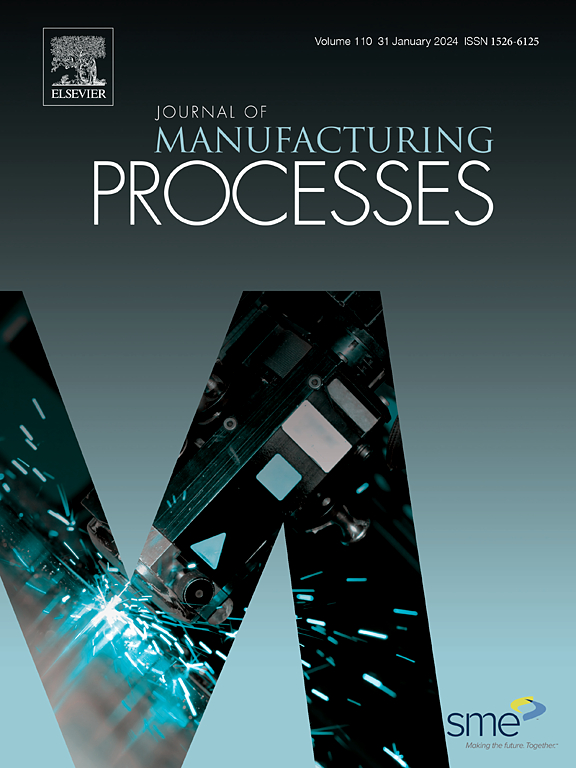
The aim of the Journal of Manufacturing Processes (JMP) is to exchange current and future directions of manufacturing processes research, development and implementation, and to publish archival scholarly literature with a view to advancing state-of-the-art manufacturing processes and encouraging innovation for developing new and efficient processes. The journal will also publish from other research communities for rapid communication of innovative new concepts. Special-topic issues on emerging technologies and invited papers will also be published.




 京公网安备 11010802042870号
京ICP备2023020795号-1
京公网安备 11010802042870号
京ICP备2023020795号-1

 分享
分享
 求助内容:
求助内容: 应助结果提醒方式:
 扫码关注我们
