Boxing Gao, Yanchao Hao, Chao Yu, Yuhua Wu, Hong Xiao
{"title":"移动感应加热差温轧制Ti/Al复合板的温度控制及结合性能研究","authors":"Boxing Gao, Yanchao Hao, Chao Yu, Yuhua Wu, Hong Xiao","doi":"10.1016/j.jmapro.2024.12.054","DOIUrl":null,"url":null,"abstract":"<div><div>To address the issue of non-uniform temperature distribution in titanium plates during electromagnetic induction heating, this study proposes an innovative coil structure designed to enhance induced eddy current density in the center of the titanium plate. By employing moving induction heating, a uniform temperature distribution across the plate width is achieved. By conducting differential temperature rolling composite experiments, titanium/aluminum composite plates with high bonding strength and excellent flatness can be prepared. The results show that by moving induction heating, high and low temperature regions during stationary heating can complement each other, thereby promoting uniform distribution of temperature in the width direction of the titanium plate. When the titanium plate is heated to 800 °C and room-temperature aluminum plate rolled, greater rolling reduction improved interfacial bonding strength, reaching an interfacial shear strength of 117.3 MPa at a 38.7 % reduction. Additionally, increased reduction facilitated sub-grain and grain refinement at the interface, enhancing the plasticity and toughness of the titanium layer, mitigating dislocation movement, and reducing interfacial stress concentration. Furthermore, brittle precipitates of Al<sub>9</sub>Si formed in the aluminum matrix near the bonding interface, resulting in shear fractures within the aluminum matrix near the interface.</div></div>","PeriodicalId":16148,"journal":{"name":"Journal of Manufacturing Processes","volume":"134 ","pages":"Pages 348-359"},"PeriodicalIF":7.8000,"publicationDate":"2025-01-31","publicationTypes":"Journal Article","fieldsOfStudy":null,"isOpenAccess":false,"openAccessPdf":"","citationCount":"0","resultStr":"{\"title\":\"Study on temperature control and bonding properties of Ti/Al composite plates rolled by differential temperature rolling with mobile induction heating\",\"authors\":\"Boxing Gao, Yanchao Hao, Chao Yu, Yuhua Wu, Hong Xiao\",\"doi\":\"10.1016/j.jmapro.2024.12.054\",\"DOIUrl\":null,\"url\":null,\"abstract\":\"<div><div>To address the issue of non-uniform temperature distribution in titanium plates during electromagnetic induction heating, this study proposes an innovative coil structure designed to enhance induced eddy current density in the center of the titanium plate. By employing moving induction heating, a uniform temperature distribution across the plate width is achieved. By conducting differential temperature rolling composite experiments, titanium/aluminum composite plates with high bonding strength and excellent flatness can be prepared. The results show that by moving induction heating, high and low temperature regions during stationary heating can complement each other, thereby promoting uniform distribution of temperature in the width direction of the titanium plate. When the titanium plate is heated to 800 °C and room-temperature aluminum plate rolled, greater rolling reduction improved interfacial bonding strength, reaching an interfacial shear strength of 117.3 MPa at a 38.7 % reduction. Additionally, increased reduction facilitated sub-grain and grain refinement at the interface, enhancing the plasticity and toughness of the titanium layer, mitigating dislocation movement, and reducing interfacial stress concentration. Furthermore, brittle precipitates of Al<sub>9</sub>Si formed in the aluminum matrix near the bonding interface, resulting in shear fractures within the aluminum matrix near the interface.</div></div>\",\"PeriodicalId\":16148,\"journal\":{\"name\":\"Journal of Manufacturing Processes\",\"volume\":\"134 \",\"pages\":\"Pages 348-359\"},\"PeriodicalIF\":7.8000,\"publicationDate\":\"2025-01-31\",\"publicationTypes\":\"Journal Article\",\"fieldsOfStudy\":null,\"isOpenAccess\":false,\"openAccessPdf\":\"\",\"citationCount\":\"0\",\"resultStr\":null,\"platform\":\"Semanticscholar\",\"paperid\":null,\"PeriodicalName\":\"Journal of Manufacturing Processes\",\"FirstCategoryId\":\"5\",\"ListUrlMain\":\"https://www.sciencedirect.com/science/article/pii/S1526612524013343\",\"RegionNum\":1,\"RegionCategory\":\"工程技术\",\"ArticlePicture\":[],\"TitleCN\":null,\"AbstractTextCN\":null,\"PMCID\":null,\"EPubDate\":\"2025/1/3 0:00:00\",\"PubModel\":\"Epub\",\"JCR\":\"Q1\",\"JCRName\":\"ENGINEERING, MANUFACTURING\",\"Score\":null,\"Total\":0}","platform":"Semanticscholar","paperid":null,"PeriodicalName":"Journal of Manufacturing Processes","FirstCategoryId":"5","ListUrlMain":"https://www.sciencedirect.com/science/article/pii/S1526612524013343","RegionNum":1,"RegionCategory":"工程技术","ArticlePicture":[],"TitleCN":null,"AbstractTextCN":null,"PMCID":null,"EPubDate":"2025/1/3 0:00:00","PubModel":"Epub","JCR":"Q1","JCRName":"ENGINEERING, MANUFACTURING","Score":null,"Total":0}
Study on temperature control and bonding properties of Ti/Al composite plates rolled by differential temperature rolling with mobile induction heating
To address the issue of non-uniform temperature distribution in titanium plates during electromagnetic induction heating, this study proposes an innovative coil structure designed to enhance induced eddy current density in the center of the titanium plate. By employing moving induction heating, a uniform temperature distribution across the plate width is achieved. By conducting differential temperature rolling composite experiments, titanium/aluminum composite plates with high bonding strength and excellent flatness can be prepared. The results show that by moving induction heating, high and low temperature regions during stationary heating can complement each other, thereby promoting uniform distribution of temperature in the width direction of the titanium plate. When the titanium plate is heated to 800 °C and room-temperature aluminum plate rolled, greater rolling reduction improved interfacial bonding strength, reaching an interfacial shear strength of 117.3 MPa at a 38.7 % reduction. Additionally, increased reduction facilitated sub-grain and grain refinement at the interface, enhancing the plasticity and toughness of the titanium layer, mitigating dislocation movement, and reducing interfacial stress concentration. Furthermore, brittle precipitates of Al9Si formed in the aluminum matrix near the bonding interface, resulting in shear fractures within the aluminum matrix near the interface.
期刊介绍:
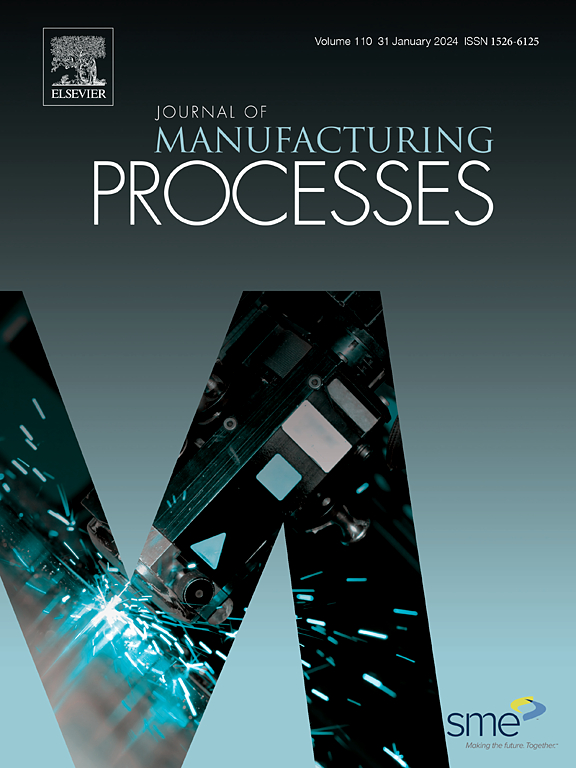
The aim of the Journal of Manufacturing Processes (JMP) is to exchange current and future directions of manufacturing processes research, development and implementation, and to publish archival scholarly literature with a view to advancing state-of-the-art manufacturing processes and encouraging innovation for developing new and efficient processes. The journal will also publish from other research communities for rapid communication of innovative new concepts. Special-topic issues on emerging technologies and invited papers will also be published.




 京公网安备 11010802042870号
京ICP备2023020795号-1
京公网安备 11010802042870号
京ICP备2023020795号-1

 分享
分享
 求助内容:
求助内容: 应助结果提醒方式:
 扫码关注我们
