{"title":"基于力-热集中效应和新型刀具结构设计的KFRP刀具加热钻孔研究","authors":"Fei Su, Xinzhe Zhang, Yan Che","doi":"10.1016/j.jmapro.2024.12.040","DOIUrl":null,"url":null,"abstract":"<div><div>Kevlar fiber reinforced plastic (KFRP) is widely used in military industry and aircraft field. Traditional mechanical drilling often leads to defects such as delamination and fiber drawing. The processing technology significantly influences the defects in hole drilling. In this paper, given the high thermal sensitivity of KFRP, a rotary cutting process with induction heating of the tool is proposed, and a corresponding tool structure is designed. Upon application of heat to the tool, the highest temperature of the tool tip is transferred instantaneously to the workpiece material in the cutting area. As the temperature of the material rises, its mechanical properties decline. There is a significant force-heat concentration effect in the advance of the tool. The application of force and heat results in a reduction of thermal damage in the cutting zone, accompanied by a notable decrease in the formation of fiber drawing and delamination. The best surface quality of the hole is achieved when the feed speed <em>V</em><sub>f</sub> = 210 mm/min, the heating temperature <em>T</em><sub>i</sub> = 250 °C.</div></div>","PeriodicalId":16148,"journal":{"name":"Journal of Manufacturing Processes","volume":"134 ","pages":"Pages 505-529"},"PeriodicalIF":7.8000,"publicationDate":"2025-01-31","publicationTypes":"Journal Article","fieldsOfStudy":null,"isOpenAccess":false,"openAccessPdf":"","citationCount":"0","resultStr":"{\"title\":\"Research of KFRP tool heating drilling based on the cutting-edge force-heat concentration effect and novel tool structure design\",\"authors\":\"Fei Su, Xinzhe Zhang, Yan Che\",\"doi\":\"10.1016/j.jmapro.2024.12.040\",\"DOIUrl\":null,\"url\":null,\"abstract\":\"<div><div>Kevlar fiber reinforced plastic (KFRP) is widely used in military industry and aircraft field. Traditional mechanical drilling often leads to defects such as delamination and fiber drawing. The processing technology significantly influences the defects in hole drilling. In this paper, given the high thermal sensitivity of KFRP, a rotary cutting process with induction heating of the tool is proposed, and a corresponding tool structure is designed. Upon application of heat to the tool, the highest temperature of the tool tip is transferred instantaneously to the workpiece material in the cutting area. As the temperature of the material rises, its mechanical properties decline. There is a significant force-heat concentration effect in the advance of the tool. The application of force and heat results in a reduction of thermal damage in the cutting zone, accompanied by a notable decrease in the formation of fiber drawing and delamination. The best surface quality of the hole is achieved when the feed speed <em>V</em><sub>f</sub> = 210 mm/min, the heating temperature <em>T</em><sub>i</sub> = 250 °C.</div></div>\",\"PeriodicalId\":16148,\"journal\":{\"name\":\"Journal of Manufacturing Processes\",\"volume\":\"134 \",\"pages\":\"Pages 505-529\"},\"PeriodicalIF\":7.8000,\"publicationDate\":\"2025-01-31\",\"publicationTypes\":\"Journal Article\",\"fieldsOfStudy\":null,\"isOpenAccess\":false,\"openAccessPdf\":\"\",\"citationCount\":\"0\",\"resultStr\":null,\"platform\":\"Semanticscholar\",\"paperid\":null,\"PeriodicalName\":\"Journal of Manufacturing Processes\",\"FirstCategoryId\":\"5\",\"ListUrlMain\":\"https://www.sciencedirect.com/science/article/pii/S1526612524013197\",\"RegionNum\":1,\"RegionCategory\":\"工程技术\",\"ArticlePicture\":[],\"TitleCN\":null,\"AbstractTextCN\":null,\"PMCID\":null,\"EPubDate\":\"2025/1/4 0:00:00\",\"PubModel\":\"Epub\",\"JCR\":\"Q1\",\"JCRName\":\"ENGINEERING, MANUFACTURING\",\"Score\":null,\"Total\":0}","platform":"Semanticscholar","paperid":null,"PeriodicalName":"Journal of Manufacturing Processes","FirstCategoryId":"5","ListUrlMain":"https://www.sciencedirect.com/science/article/pii/S1526612524013197","RegionNum":1,"RegionCategory":"工程技术","ArticlePicture":[],"TitleCN":null,"AbstractTextCN":null,"PMCID":null,"EPubDate":"2025/1/4 0:00:00","PubModel":"Epub","JCR":"Q1","JCRName":"ENGINEERING, MANUFACTURING","Score":null,"Total":0}
Research of KFRP tool heating drilling based on the cutting-edge force-heat concentration effect and novel tool structure design
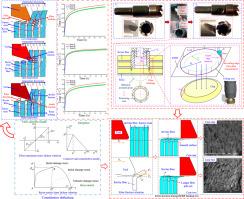
Kevlar fiber reinforced plastic (KFRP) is widely used in military industry and aircraft field. Traditional mechanical drilling often leads to defects such as delamination and fiber drawing. The processing technology significantly influences the defects in hole drilling. In this paper, given the high thermal sensitivity of KFRP, a rotary cutting process with induction heating of the tool is proposed, and a corresponding tool structure is designed. Upon application of heat to the tool, the highest temperature of the tool tip is transferred instantaneously to the workpiece material in the cutting area. As the temperature of the material rises, its mechanical properties decline. There is a significant force-heat concentration effect in the advance of the tool. The application of force and heat results in a reduction of thermal damage in the cutting zone, accompanied by a notable decrease in the formation of fiber drawing and delamination. The best surface quality of the hole is achieved when the feed speed Vf = 210 mm/min, the heating temperature Ti = 250 °C.
期刊介绍:
The aim of the Journal of Manufacturing Processes (JMP) is to exchange current and future directions of manufacturing processes research, development and implementation, and to publish archival scholarly literature with a view to advancing state-of-the-art manufacturing processes and encouraging innovation for developing new and efficient processes. The journal will also publish from other research communities for rapid communication of innovative new concepts. Special-topic issues on emerging technologies and invited papers will also be published.





 京公网安备 11010802042870号
京ICP备2023020795号-1
京公网安备 11010802042870号
京ICP备2023020795号-1

 分享
分享
 求助内容:
求助内容: 应助结果提醒方式:
 扫码关注我们
