{"title":"利用MALDI-TOF质谱法鉴定地理保护标志Edirne白奶酪中分离的乳酸菌:成熟时间和乳种对微生物多样性的影响","authors":"Fatmagül Halici Demir , Binnur Kaptan","doi":"10.1016/j.idairyj.2024.106156","DOIUrl":null,"url":null,"abstract":"<div><div>In this study, the diversity of lactic acid bacteria (LAB) in three different Edirne white cheeses produced using sheep, cow, and goat milk was investigated using MALDI-TOF/MS over a 180-day ripening period. In total, 201 LAB belonging to 15 different species were detected. <em>Enterococcus faecium</em>, which constituted 43.28% of the LAB, was the dominant species in all three types of cheese. However, its abundance decreased throughout storage in goat and cow cheeses, followed by <em>Lactococcus lactis</em> in sheep cheese, <em>Streptococcus macedonicus</em>, <em>Lactiplantibacillus plantarum</em>, <em>Leuconostoc mesenteroides</em> in cow cheese, and <em>L. plantarum</em> and <em>Latilactobacillus curvatus</em> in goat cheese. The type of milk and the ripening time affect the microbial diversity in cheese.</div></div>","PeriodicalId":13854,"journal":{"name":"International Dairy Journal","volume":"162 ","pages":"Article 106156"},"PeriodicalIF":3.1000,"publicationDate":"2025-03-01","publicationTypes":"Journal Article","fieldsOfStudy":null,"isOpenAccess":false,"openAccessPdf":"","citationCount":"0","resultStr":"{\"title\":\"Identification of lactic acid bacteria isolated from the protected geographical indication Edirne white cheese using MALDI-TOF MS: Impact of ripening time and type of milk on microbial diversity\",\"authors\":\"Fatmagül Halici Demir , Binnur Kaptan\",\"doi\":\"10.1016/j.idairyj.2024.106156\",\"DOIUrl\":null,\"url\":null,\"abstract\":\"<div><div>In this study, the diversity of lactic acid bacteria (LAB) in three different Edirne white cheeses produced using sheep, cow, and goat milk was investigated using MALDI-TOF/MS over a 180-day ripening period. In total, 201 LAB belonging to 15 different species were detected. <em>Enterococcus faecium</em>, which constituted 43.28% of the LAB, was the dominant species in all three types of cheese. However, its abundance decreased throughout storage in goat and cow cheeses, followed by <em>Lactococcus lactis</em> in sheep cheese, <em>Streptococcus macedonicus</em>, <em>Lactiplantibacillus plantarum</em>, <em>Leuconostoc mesenteroides</em> in cow cheese, and <em>L. plantarum</em> and <em>Latilactobacillus curvatus</em> in goat cheese. The type of milk and the ripening time affect the microbial diversity in cheese.</div></div>\",\"PeriodicalId\":13854,\"journal\":{\"name\":\"International Dairy Journal\",\"volume\":\"162 \",\"pages\":\"Article 106156\"},\"PeriodicalIF\":3.1000,\"publicationDate\":\"2025-03-01\",\"publicationTypes\":\"Journal Article\",\"fieldsOfStudy\":null,\"isOpenAccess\":false,\"openAccessPdf\":\"\",\"citationCount\":\"0\",\"resultStr\":null,\"platform\":\"Semanticscholar\",\"paperid\":null,\"PeriodicalName\":\"International Dairy Journal\",\"FirstCategoryId\":\"97\",\"ListUrlMain\":\"https://www.sciencedirect.com/science/article/pii/S0958694624002760\",\"RegionNum\":3,\"RegionCategory\":\"农林科学\",\"ArticlePicture\":[],\"TitleCN\":null,\"AbstractTextCN\":null,\"PMCID\":null,\"EPubDate\":\"2024/12/9 0:00:00\",\"PubModel\":\"Epub\",\"JCR\":\"Q2\",\"JCRName\":\"FOOD SCIENCE & TECHNOLOGY\",\"Score\":null,\"Total\":0}","platform":"Semanticscholar","paperid":null,"PeriodicalName":"International Dairy Journal","FirstCategoryId":"97","ListUrlMain":"https://www.sciencedirect.com/science/article/pii/S0958694624002760","RegionNum":3,"RegionCategory":"农林科学","ArticlePicture":[],"TitleCN":null,"AbstractTextCN":null,"PMCID":null,"EPubDate":"2024/12/9 0:00:00","PubModel":"Epub","JCR":"Q2","JCRName":"FOOD SCIENCE & TECHNOLOGY","Score":null,"Total":0}
Identification of lactic acid bacteria isolated from the protected geographical indication Edirne white cheese using MALDI-TOF MS: Impact of ripening time and type of milk on microbial diversity
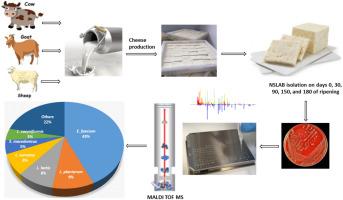
In this study, the diversity of lactic acid bacteria (LAB) in three different Edirne white cheeses produced using sheep, cow, and goat milk was investigated using MALDI-TOF/MS over a 180-day ripening period. In total, 201 LAB belonging to 15 different species were detected. Enterococcus faecium, which constituted 43.28% of the LAB, was the dominant species in all three types of cheese. However, its abundance decreased throughout storage in goat and cow cheeses, followed by Lactococcus lactis in sheep cheese, Streptococcus macedonicus, Lactiplantibacillus plantarum, Leuconostoc mesenteroides in cow cheese, and L. plantarum and Latilactobacillus curvatus in goat cheese. The type of milk and the ripening time affect the microbial diversity in cheese.
期刊介绍:
The International Dairy Journal publishes significant advancements in dairy science and technology in the form of research articles and critical reviews that are of relevance to the broader international dairy community. Within this scope, research on the science and technology of milk and dairy products and the nutritional and health aspects of dairy foods are included; the journal pays particular attention to applied research and its interface with the dairy industry.
The journal''s coverage includes the following, where directly applicable to dairy science and technology:
• Chemistry and physico-chemical properties of milk constituents
• Microbiology, food safety, enzymology, biotechnology
• Processing and engineering
• Emulsion science, food structure, and texture
• Raw material quality and effect on relevant products
• Flavour and off-flavour development
• Technological functionality and applications of dairy ingredients
• Sensory and consumer sciences
• Nutrition and substantiation of human health implications of milk components or dairy products
International Dairy Journal does not publish papers related to milk production, animal health and other aspects of on-farm milk production unless there is a clear relationship to dairy technology, human health or final product quality.




 京公网安备 11010802042870号
京ICP备2023020795号-1
京公网安备 11010802042870号
京ICP备2023020795号-1

 分享
分享
 求助内容:
求助内容: 应助结果提醒方式:
 扫码关注我们
