Sungjun Lim , Taero Kim , Hyeonjeong Lee , Yewon Kim , Minhoi Park , Kwang-Yong Kim , Minseong Kim , Kyu Hyung Kim , Jiyoung Jung , Kyungwoo Song
{"title":"基于ppg的血压估计鲁棒优化","authors":"Sungjun Lim , Taero Kim , Hyeonjeong Lee , Yewon Kim , Minhoi Park , Kwang-Yong Kim , Minseong Kim , Kyu Hyung Kim , Jiyoung Jung , Kyungwoo Song","doi":"10.1016/j.bspc.2025.107585","DOIUrl":null,"url":null,"abstract":"<div><div>Machine learning-based estimation of blood pressure (BP) using photoplethysmography (PPG) signals has gained significant attention for its non-invasive nature and potential for continuous monitoring. However, challenges remain in real-world applications, where performance can vary widely across different BP groups, especially among high-risk groups. This study is the first to propose a PPG-based BP estimation approach that specifically accounts for BP group disparities, aiming to improve robustness for high-risk BP groups.We present a comprehensive approach from the perspectives of data, model, and loss to enhance overall accuracy and reduce performance degradation for specific groups, referred to as “worst groups.” At the data level, we introduce in-group augmentation using Time-Cutmix to mitigate group imbalance severity. From a model perspective, we adopt a hybrid structure of convolutional and Transformer layers to integrate local and global information, improving average model performance. Additionally, we propose robust optimization techniques that consider data quantity and label distributions within each group. These methods effectively minimize performance loss for high-risk groups without compromising average and worst-group performance. Experimental results demonstrate the effectiveness of our methods in developing a robust BP estimation model tailored to handle group-based performance disparities.</div></div>","PeriodicalId":55362,"journal":{"name":"Biomedical Signal Processing and Control","volume":"105 ","pages":"Article 107585"},"PeriodicalIF":4.9000,"publicationDate":"2025-07-01","publicationTypes":"Journal Article","fieldsOfStudy":null,"isOpenAccess":false,"openAccessPdf":"","citationCount":"0","resultStr":"{\"title\":\"Robust optimization for PPG-based blood pressure estimation\",\"authors\":\"Sungjun Lim , Taero Kim , Hyeonjeong Lee , Yewon Kim , Minhoi Park , Kwang-Yong Kim , Minseong Kim , Kyu Hyung Kim , Jiyoung Jung , Kyungwoo Song\",\"doi\":\"10.1016/j.bspc.2025.107585\",\"DOIUrl\":null,\"url\":null,\"abstract\":\"<div><div>Machine learning-based estimation of blood pressure (BP) using photoplethysmography (PPG) signals has gained significant attention for its non-invasive nature and potential for continuous monitoring. However, challenges remain in real-world applications, where performance can vary widely across different BP groups, especially among high-risk groups. This study is the first to propose a PPG-based BP estimation approach that specifically accounts for BP group disparities, aiming to improve robustness for high-risk BP groups.We present a comprehensive approach from the perspectives of data, model, and loss to enhance overall accuracy and reduce performance degradation for specific groups, referred to as “worst groups.” At the data level, we introduce in-group augmentation using Time-Cutmix to mitigate group imbalance severity. From a model perspective, we adopt a hybrid structure of convolutional and Transformer layers to integrate local and global information, improving average model performance. Additionally, we propose robust optimization techniques that consider data quantity and label distributions within each group. These methods effectively minimize performance loss for high-risk groups without compromising average and worst-group performance. Experimental results demonstrate the effectiveness of our methods in developing a robust BP estimation model tailored to handle group-based performance disparities.</div></div>\",\"PeriodicalId\":55362,\"journal\":{\"name\":\"Biomedical Signal Processing and Control\",\"volume\":\"105 \",\"pages\":\"Article 107585\"},\"PeriodicalIF\":4.9000,\"publicationDate\":\"2025-07-01\",\"publicationTypes\":\"Journal Article\",\"fieldsOfStudy\":null,\"isOpenAccess\":false,\"openAccessPdf\":\"\",\"citationCount\":\"0\",\"resultStr\":null,\"platform\":\"Semanticscholar\",\"paperid\":null,\"PeriodicalName\":\"Biomedical Signal Processing and Control\",\"FirstCategoryId\":\"5\",\"ListUrlMain\":\"https://www.sciencedirect.com/science/article/pii/S1746809425000965\",\"RegionNum\":2,\"RegionCategory\":\"医学\",\"ArticlePicture\":[],\"TitleCN\":null,\"AbstractTextCN\":null,\"PMCID\":null,\"EPubDate\":\"2025/2/3 0:00:00\",\"PubModel\":\"Epub\",\"JCR\":\"Q1\",\"JCRName\":\"ENGINEERING, BIOMEDICAL\",\"Score\":null,\"Total\":0}","platform":"Semanticscholar","paperid":null,"PeriodicalName":"Biomedical Signal Processing and Control","FirstCategoryId":"5","ListUrlMain":"https://www.sciencedirect.com/science/article/pii/S1746809425000965","RegionNum":2,"RegionCategory":"医学","ArticlePicture":[],"TitleCN":null,"AbstractTextCN":null,"PMCID":null,"EPubDate":"2025/2/3 0:00:00","PubModel":"Epub","JCR":"Q1","JCRName":"ENGINEERING, BIOMEDICAL","Score":null,"Total":0}
Robust optimization for PPG-based blood pressure estimation
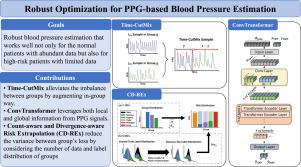
Machine learning-based estimation of blood pressure (BP) using photoplethysmography (PPG) signals has gained significant attention for its non-invasive nature and potential for continuous monitoring. However, challenges remain in real-world applications, where performance can vary widely across different BP groups, especially among high-risk groups. This study is the first to propose a PPG-based BP estimation approach that specifically accounts for BP group disparities, aiming to improve robustness for high-risk BP groups.We present a comprehensive approach from the perspectives of data, model, and loss to enhance overall accuracy and reduce performance degradation for specific groups, referred to as “worst groups.” At the data level, we introduce in-group augmentation using Time-Cutmix to mitigate group imbalance severity. From a model perspective, we adopt a hybrid structure of convolutional and Transformer layers to integrate local and global information, improving average model performance. Additionally, we propose robust optimization techniques that consider data quantity and label distributions within each group. These methods effectively minimize performance loss for high-risk groups without compromising average and worst-group performance. Experimental results demonstrate the effectiveness of our methods in developing a robust BP estimation model tailored to handle group-based performance disparities.
期刊介绍:
Biomedical Signal Processing and Control aims to provide a cross-disciplinary international forum for the interchange of information on research in the measurement and analysis of signals and images in clinical medicine and the biological sciences. Emphasis is placed on contributions dealing with the practical, applications-led research on the use of methods and devices in clinical diagnosis, patient monitoring and management.
Biomedical Signal Processing and Control reflects the main areas in which these methods are being used and developed at the interface of both engineering and clinical science. The scope of the journal is defined to include relevant review papers, technical notes, short communications and letters. Tutorial papers and special issues will also be published.




 京公网安备 11010802042870号
京ICP备2023020795号-1
京公网安备 11010802042870号
京ICP备2023020795号-1

 分享
分享
 求助内容:
求助内容: 应助结果提醒方式:
 扫码关注我们
