{"title":"利用DFT研究了过渡金属原子掺杂C7N3对H2S、SO2、NO和NO2的吸附和传感","authors":"Linian Li","doi":"10.1016/j.comptc.2025.115074","DOIUrl":null,"url":null,"abstract":"<div><div>This study examines the sensing performance of transition metal doped C<sub>7</sub>N<sub>3</sub> sensor structures for four toxic gases (H<sub>2</sub>S, SO<sub>2</sub>, NO<sub>2</sub>, and NO). A series of sensor configurations with single transition metal atoms doped with C<sub>7</sub>N<sub>3</sub> (TM-C<sub>7</sub>N<sub>3</sub>) are constructed. The results of the stability analysis indicate that, with the exception of Ni-C<sub>7</sub>N<sub>3</sub>, all sensor configurations demonstrate excellent structural stability. Notably, Os-C<sub>7</sub>N<sub>3</sub> exhibits a high adsorption strength for four toxic gases. Furthermore, the adsorption strength of TM-C<sub>7</sub>N<sub>3</sub> towards NO consistently surpasses that of the other gases investigated. Ultimately, by comparing recovery times, the most effective gas sensor is identified. At 298 K, Pd-C<sub>7</sub>N<sub>3</sub> is a suitable H<sub>2</sub>S gas sensor, and Fe-C<sub>7</sub>N<sub>3</sub> and Co-C<sub>7</sub>N<sub>3</sub> are suitable SO<sub>2</sub> gas sensors. At 398 K and above temperatures, Fe- and Rh-C<sub>7</sub>N<sub>3</sub> are promising H<sub>2</sub>S gas sensors, and Pt-C<sub>7</sub>N<sub>3</sub> is a promising SO<sub>2</sub> and NO<sub>2</sub> gas sensor.</div></div>","PeriodicalId":284,"journal":{"name":"Computational and Theoretical Chemistry","volume":"1244 ","pages":"Article 115074"},"PeriodicalIF":3.0000,"publicationDate":"2025-02-01","publicationTypes":"Journal Article","fieldsOfStudy":null,"isOpenAccess":false,"openAccessPdf":"","citationCount":"0","resultStr":"{\"title\":\"Investigating the adsorption and sensing of H2S, SO2, NO, and NO2 on transition metal atom doped C7N3 using DFT\",\"authors\":\"Linian Li\",\"doi\":\"10.1016/j.comptc.2025.115074\",\"DOIUrl\":null,\"url\":null,\"abstract\":\"<div><div>This study examines the sensing performance of transition metal doped C<sub>7</sub>N<sub>3</sub> sensor structures for four toxic gases (H<sub>2</sub>S, SO<sub>2</sub>, NO<sub>2</sub>, and NO). A series of sensor configurations with single transition metal atoms doped with C<sub>7</sub>N<sub>3</sub> (TM-C<sub>7</sub>N<sub>3</sub>) are constructed. The results of the stability analysis indicate that, with the exception of Ni-C<sub>7</sub>N<sub>3</sub>, all sensor configurations demonstrate excellent structural stability. Notably, Os-C<sub>7</sub>N<sub>3</sub> exhibits a high adsorption strength for four toxic gases. Furthermore, the adsorption strength of TM-C<sub>7</sub>N<sub>3</sub> towards NO consistently surpasses that of the other gases investigated. Ultimately, by comparing recovery times, the most effective gas sensor is identified. At 298 K, Pd-C<sub>7</sub>N<sub>3</sub> is a suitable H<sub>2</sub>S gas sensor, and Fe-C<sub>7</sub>N<sub>3</sub> and Co-C<sub>7</sub>N<sub>3</sub> are suitable SO<sub>2</sub> gas sensors. At 398 K and above temperatures, Fe- and Rh-C<sub>7</sub>N<sub>3</sub> are promising H<sub>2</sub>S gas sensors, and Pt-C<sub>7</sub>N<sub>3</sub> is a promising SO<sub>2</sub> and NO<sub>2</sub> gas sensor.</div></div>\",\"PeriodicalId\":284,\"journal\":{\"name\":\"Computational and Theoretical Chemistry\",\"volume\":\"1244 \",\"pages\":\"Article 115074\"},\"PeriodicalIF\":3.0000,\"publicationDate\":\"2025-02-01\",\"publicationTypes\":\"Journal Article\",\"fieldsOfStudy\":null,\"isOpenAccess\":false,\"openAccessPdf\":\"\",\"citationCount\":\"0\",\"resultStr\":null,\"platform\":\"Semanticscholar\",\"paperid\":null,\"PeriodicalName\":\"Computational and Theoretical Chemistry\",\"FirstCategoryId\":\"92\",\"ListUrlMain\":\"https://www.sciencedirect.com/science/article/pii/S2210271X25000106\",\"RegionNum\":3,\"RegionCategory\":\"化学\",\"ArticlePicture\":[],\"TitleCN\":null,\"AbstractTextCN\":null,\"PMCID\":null,\"EPubDate\":\"2025/1/6 0:00:00\",\"PubModel\":\"Epub\",\"JCR\":\"Q3\",\"JCRName\":\"CHEMISTRY, PHYSICAL\",\"Score\":null,\"Total\":0}","platform":"Semanticscholar","paperid":null,"PeriodicalName":"Computational and Theoretical Chemistry","FirstCategoryId":"92","ListUrlMain":"https://www.sciencedirect.com/science/article/pii/S2210271X25000106","RegionNum":3,"RegionCategory":"化学","ArticlePicture":[],"TitleCN":null,"AbstractTextCN":null,"PMCID":null,"EPubDate":"2025/1/6 0:00:00","PubModel":"Epub","JCR":"Q3","JCRName":"CHEMISTRY, PHYSICAL","Score":null,"Total":0}
Investigating the adsorption and sensing of H2S, SO2, NO, and NO2 on transition metal atom doped C7N3 using DFT
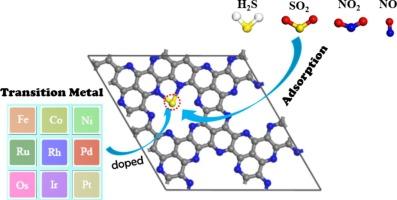
This study examines the sensing performance of transition metal doped C7N3 sensor structures for four toxic gases (H2S, SO2, NO2, and NO). A series of sensor configurations with single transition metal atoms doped with C7N3 (TM-C7N3) are constructed. The results of the stability analysis indicate that, with the exception of Ni-C7N3, all sensor configurations demonstrate excellent structural stability. Notably, Os-C7N3 exhibits a high adsorption strength for four toxic gases. Furthermore, the adsorption strength of TM-C7N3 towards NO consistently surpasses that of the other gases investigated. Ultimately, by comparing recovery times, the most effective gas sensor is identified. At 298 K, Pd-C7N3 is a suitable H2S gas sensor, and Fe-C7N3 and Co-C7N3 are suitable SO2 gas sensors. At 398 K and above temperatures, Fe- and Rh-C7N3 are promising H2S gas sensors, and Pt-C7N3 is a promising SO2 and NO2 gas sensor.
期刊介绍:
Computational and Theoretical Chemistry publishes high quality, original reports of significance in computational and theoretical chemistry including those that deal with problems of structure, properties, energetics, weak interactions, reaction mechanisms, catalysis, and reaction rates involving atoms, molecules, clusters, surfaces, and bulk matter.




 京公网安备 11010802042870号
京ICP备2023020795号-1
京公网安备 11010802042870号
京ICP备2023020795号-1

 分享
分享
 求助内容:
求助内容: 应助结果提醒方式:
 扫码关注我们
