Victoria Chebotaeva, Anish Srinivasan, Paula A Vasquez
{"title":"SEIR流行病模型中区分有症状和无症状感染个体的接触","authors":"Victoria Chebotaeva, Anish Srinivasan, Paula A Vasquez","doi":"10.1007/s11538-025-01416-2","DOIUrl":null,"url":null,"abstract":"<p><p>This manuscript introduces a new Erlang-distributed SEIR model. The model incorporates asymptomatic spread through a subdivided exposed class, distinguishing between asymptomatic ( <math><msub><mtext>E</mtext> <mi>a</mi></msub> </math> ) and symptomatic ( <math><msub><mtext>E</mtext> <mi>s</mi></msub> </math> ) cases. The model identifies two key parameters: relative infectiousness, <math><msub><mi>β</mi> <mrow><mi>SA</mi></mrow> </msub> </math> , and the percentage of people who become asymptomatic after being infected by a symptomatic individual, <math><mi>κ</mi></math> . Lower values of these parameters reduce the peak magnitude and duration of the infectious period, highlighting the importance of isolation measures. Additionally, the model underscores the need for strategies addressing both symptomatic and asymptomatic transmissions.</p>","PeriodicalId":9372,"journal":{"name":"Bulletin of Mathematical Biology","volume":"87 3","pages":"38"},"PeriodicalIF":2.3000,"publicationDate":"2025-02-04","publicationTypes":"Journal Article","fieldsOfStudy":null,"isOpenAccess":false,"openAccessPdf":"https://www.ncbi.nlm.nih.gov/pmc/articles/PMC11794362/pdf/","citationCount":"0","resultStr":"{\"title\":\"Differentiating Contact with Symptomatic and Asymptomatic Infectious Individuals in a SEIR Epidemic Model.\",\"authors\":\"Victoria Chebotaeva, Anish Srinivasan, Paula A Vasquez\",\"doi\":\"10.1007/s11538-025-01416-2\",\"DOIUrl\":null,\"url\":null,\"abstract\":\"<p><p>This manuscript introduces a new Erlang-distributed SEIR model. The model incorporates asymptomatic spread through a subdivided exposed class, distinguishing between asymptomatic ( <math><msub><mtext>E</mtext> <mi>a</mi></msub> </math> ) and symptomatic ( <math><msub><mtext>E</mtext> <mi>s</mi></msub> </math> ) cases. The model identifies two key parameters: relative infectiousness, <math><msub><mi>β</mi> <mrow><mi>SA</mi></mrow> </msub> </math> , and the percentage of people who become asymptomatic after being infected by a symptomatic individual, <math><mi>κ</mi></math> . Lower values of these parameters reduce the peak magnitude and duration of the infectious period, highlighting the importance of isolation measures. Additionally, the model underscores the need for strategies addressing both symptomatic and asymptomatic transmissions.</p>\",\"PeriodicalId\":9372,\"journal\":{\"name\":\"Bulletin of Mathematical Biology\",\"volume\":\"87 3\",\"pages\":\"38\"},\"PeriodicalIF\":2.3000,\"publicationDate\":\"2025-02-04\",\"publicationTypes\":\"Journal Article\",\"fieldsOfStudy\":null,\"isOpenAccess\":false,\"openAccessPdf\":\"https://www.ncbi.nlm.nih.gov/pmc/articles/PMC11794362/pdf/\",\"citationCount\":\"0\",\"resultStr\":null,\"platform\":\"Semanticscholar\",\"paperid\":null,\"PeriodicalName\":\"Bulletin of Mathematical Biology\",\"FirstCategoryId\":\"100\",\"ListUrlMain\":\"https://doi.org/10.1007/s11538-025-01416-2\",\"RegionNum\":4,\"RegionCategory\":\"数学\",\"ArticlePicture\":[],\"TitleCN\":null,\"AbstractTextCN\":null,\"PMCID\":null,\"EPubDate\":\"\",\"PubModel\":\"\",\"JCR\":\"Q2\",\"JCRName\":\"BIOLOGY\",\"Score\":null,\"Total\":0}","platform":"Semanticscholar","paperid":null,"PeriodicalName":"Bulletin of Mathematical Biology","FirstCategoryId":"100","ListUrlMain":"https://doi.org/10.1007/s11538-025-01416-2","RegionNum":4,"RegionCategory":"数学","ArticlePicture":[],"TitleCN":null,"AbstractTextCN":null,"PMCID":null,"EPubDate":"","PubModel":"","JCR":"Q2","JCRName":"BIOLOGY","Score":null,"Total":0}
Differentiating Contact with Symptomatic and Asymptomatic Infectious Individuals in a SEIR Epidemic Model.
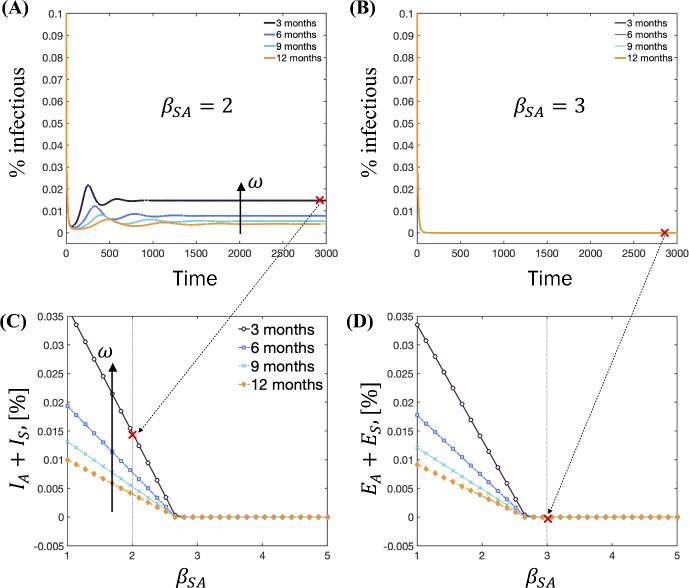
This manuscript introduces a new Erlang-distributed SEIR model. The model incorporates asymptomatic spread through a subdivided exposed class, distinguishing between asymptomatic ( ) and symptomatic ( ) cases. The model identifies two key parameters: relative infectiousness, , and the percentage of people who become asymptomatic after being infected by a symptomatic individual, . Lower values of these parameters reduce the peak magnitude and duration of the infectious period, highlighting the importance of isolation measures. Additionally, the model underscores the need for strategies addressing both symptomatic and asymptomatic transmissions.
期刊介绍:
The Bulletin of Mathematical Biology, the official journal of the Society for Mathematical Biology, disseminates original research findings and other information relevant to the interface of biology and the mathematical sciences. Contributions should have relevance to both fields. In order to accommodate the broad scope of new developments, the journal accepts a variety of contributions, including:
Original research articles focused on new biological insights gained with the help of tools from the mathematical sciences or new mathematical tools and methods with demonstrated applicability to biological investigations
Research in mathematical biology education
Reviews
Commentaries
Perspectives, and contributions that discuss issues important to the profession
All contributions are peer-reviewed.





 京公网安备 11010802042870号
京ICP备2023020795号-1
京公网安备 11010802042870号
京ICP备2023020795号-1

 分享
分享
 求助内容:
求助内容: 应助结果提醒方式:
 扫码关注我们
