Zhen Zhang, Chen Li, Zhen-Zhen Xu, Jia-Hui Ma, Dong-Xin Wang
{"title":"周围神经阻滞对胸腹大手术围手术期恢复的影响:一项倾向评分匹配的回顾性队列研究。","authors":"Zhen Zhang, Chen Li, Zhen-Zhen Xu, Jia-Hui Ma, Dong-Xin Wang","doi":"10.1097/SLA.0000000000006652","DOIUrl":null,"url":null,"abstract":"<p><strong>Objective: </strong>To test the hypothesis that peripheral nerve block (PNB) use might be associated with improved perioperative outcomes after major surgery.</p><p><strong>Background: </strong>PNB has been used to improve postoperative analgesia.</p><p><strong>Methods: </strong>This was a retrospective cohort study with propensity score matching. We included patients aged ≥65 years who underwent major (≥2 hours) non-cardiac thoracic and abdominal surgery under general anesthesia. Data were analyzed according to whether patients received PNB or not during anesthesia. Our primary outcome was the length of hospital stay; secondary outcomes included occurrence of major complications in hospital after surgery.</p><p><strong>Results: </strong>A total of 1915 patients were included in the full cohort, of whom 1316 received PNB and 599 did not; 1174 patients remained in the cohort after matching, with 587 in each group. Length of hospital stay after surgery was shorter in patients who received PNB than in those who did not [7 days (5-9) with PNB vs 7 days (5-11) without PNB: hazard ratio: 1.15, 95% CI: 1.02-1.29, P = 0.012]. When compared with patients who did not receive PNB, those who received PNB developed fewer major complications during hospital stay (relative risk: 0.41, 95% CI: 0.30-0.58, P < 0.001). Patients with PNB required less supplemental analgesia within 72 h (relative risk: 0.70, 95% CI: 0.59-0.84, P < 0.001).</p><p><strong>Conclusions: </strong>The use of PNB was associated with shortened length of hospital stay and reduced major complications in older patients after major non-cardiac thoracic and abdominal surgery, possibly due to improved analgesia.</p>","PeriodicalId":8017,"journal":{"name":"Annals of surgery","volume":" ","pages":"212-220"},"PeriodicalIF":7.4000,"publicationDate":"2026-07-01","publicationTypes":"Journal Article","fieldsOfStudy":null,"isOpenAccess":false,"openAccessPdf":"","citationCount":"0","resultStr":"{\"title\":\"Effects of Peripheral Nerve Block on Perioperative Recovery following Major Thoracic and Abdominal Surgery: A Retrospective Cohort Study With Propensity-score Matching.\",\"authors\":\"Zhen Zhang, Chen Li, Zhen-Zhen Xu, Jia-Hui Ma, Dong-Xin Wang\",\"doi\":\"10.1097/SLA.0000000000006652\",\"DOIUrl\":null,\"url\":null,\"abstract\":\"<p><strong>Objective: </strong>To test the hypothesis that peripheral nerve block (PNB) use might be associated with improved perioperative outcomes after major surgery.</p><p><strong>Background: </strong>PNB has been used to improve postoperative analgesia.</p><p><strong>Methods: </strong>This was a retrospective cohort study with propensity score matching. We included patients aged ≥65 years who underwent major (≥2 hours) non-cardiac thoracic and abdominal surgery under general anesthesia. Data were analyzed according to whether patients received PNB or not during anesthesia. Our primary outcome was the length of hospital stay; secondary outcomes included occurrence of major complications in hospital after surgery.</p><p><strong>Results: </strong>A total of 1915 patients were included in the full cohort, of whom 1316 received PNB and 599 did not; 1174 patients remained in the cohort after matching, with 587 in each group. Length of hospital stay after surgery was shorter in patients who received PNB than in those who did not [7 days (5-9) with PNB vs 7 days (5-11) without PNB: hazard ratio: 1.15, 95% CI: 1.02-1.29, P = 0.012]. When compared with patients who did not receive PNB, those who received PNB developed fewer major complications during hospital stay (relative risk: 0.41, 95% CI: 0.30-0.58, P < 0.001). Patients with PNB required less supplemental analgesia within 72 h (relative risk: 0.70, 95% CI: 0.59-0.84, P < 0.001).</p><p><strong>Conclusions: </strong>The use of PNB was associated with shortened length of hospital stay and reduced major complications in older patients after major non-cardiac thoracic and abdominal surgery, possibly due to improved analgesia.</p>\",\"PeriodicalId\":8017,\"journal\":{\"name\":\"Annals of surgery\",\"volume\":\" \",\"pages\":\"212-220\"},\"PeriodicalIF\":7.4000,\"publicationDate\":\"2026-07-01\",\"publicationTypes\":\"Journal Article\",\"fieldsOfStudy\":null,\"isOpenAccess\":false,\"openAccessPdf\":\"\",\"citationCount\":\"0\",\"resultStr\":null,\"platform\":\"Semanticscholar\",\"paperid\":null,\"PeriodicalName\":\"Annals of surgery\",\"FirstCategoryId\":\"3\",\"ListUrlMain\":\"https://doi.org/10.1097/SLA.0000000000006652\",\"RegionNum\":1,\"RegionCategory\":\"医学\",\"ArticlePicture\":[],\"TitleCN\":null,\"AbstractTextCN\":null,\"PMCID\":null,\"EPubDate\":\"2025/2/5 0:00:00\",\"PubModel\":\"Epub\",\"JCR\":\"Q1\",\"JCRName\":\"SURGERY\",\"Score\":null,\"Total\":0}","platform":"Semanticscholar","paperid":null,"PeriodicalName":"Annals of surgery","FirstCategoryId":"3","ListUrlMain":"https://doi.org/10.1097/SLA.0000000000006652","RegionNum":1,"RegionCategory":"医学","ArticlePicture":[],"TitleCN":null,"AbstractTextCN":null,"PMCID":null,"EPubDate":"2025/2/5 0:00:00","PubModel":"Epub","JCR":"Q1","JCRName":"SURGERY","Score":null,"Total":0}
引用次数: 0
摘要
目的:验证周围神经阻滞(PNB)的使用可能与大手术后围手术期预后改善相关的假设。背景资料总结:PNB已被用于改善术后镇痛。方法:采用倾向评分匹配的回顾性队列研究。我们纳入了年龄≥65岁、在全身麻醉下接受重大(≥2小时)非心脏胸腹手术的患者。根据麻醉过程中患者是否接受PNB进行数据分析。我们的主要观察指标是住院时间;次要结局包括术后住院主要并发症的发生。结果:全队列共纳入1915例患者,其中1316例接受PNB治疗,599例未接受PNB治疗;配对后,1174名患者仍留在队列中,每组587名。接受PNB治疗的患者术后住院时间短于未接受PNB治疗的患者(接受PNB治疗的7天[5 ~ 9]vs.未接受PNB治疗的7天[5 ~ 11]:HR 1.15, 95% CI 1.02 ~ 1.29, P=0.012)。与未接受PNB的患者相比,接受PNB的患者在住院期间发生的主要并发症较少(RR 0.41, 95% CI 0.30至0.58)。结论:PNB的使用与非心源性胸腹大手术后老年患者住院时间缩短和主要并发症减少相关,可能是由于镇痛效果的改善。
Effects of Peripheral Nerve Block on Perioperative Recovery following Major Thoracic and Abdominal Surgery: A Retrospective Cohort Study With Propensity-score Matching.
Objective: To test the hypothesis that peripheral nerve block (PNB) use might be associated with improved perioperative outcomes after major surgery.
Background: PNB has been used to improve postoperative analgesia.
Methods: This was a retrospective cohort study with propensity score matching. We included patients aged ≥65 years who underwent major (≥2 hours) non-cardiac thoracic and abdominal surgery under general anesthesia. Data were analyzed according to whether patients received PNB or not during anesthesia. Our primary outcome was the length of hospital stay; secondary outcomes included occurrence of major complications in hospital after surgery.
Results: A total of 1915 patients were included in the full cohort, of whom 1316 received PNB and 599 did not; 1174 patients remained in the cohort after matching, with 587 in each group. Length of hospital stay after surgery was shorter in patients who received PNB than in those who did not [7 days (5-9) with PNB vs 7 days (5-11) without PNB: hazard ratio: 1.15, 95% CI: 1.02-1.29, P = 0.012]. When compared with patients who did not receive PNB, those who received PNB developed fewer major complications during hospital stay (relative risk: 0.41, 95% CI: 0.30-0.58, P < 0.001). Patients with PNB required less supplemental analgesia within 72 h (relative risk: 0.70, 95% CI: 0.59-0.84, P < 0.001).
Conclusions: The use of PNB was associated with shortened length of hospital stay and reduced major complications in older patients after major non-cardiac thoracic and abdominal surgery, possibly due to improved analgesia.
期刊介绍:
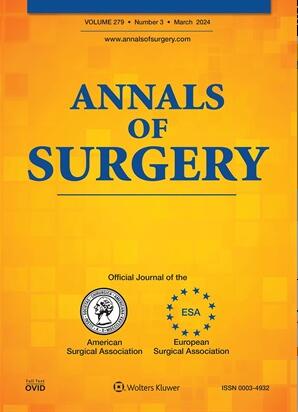
The Annals of Surgery is a renowned surgery journal, recognized globally for its extensive scholarly references. It serves as a valuable resource for the international medical community by disseminating knowledge regarding important developments in surgical science and practice. Surgeons regularly turn to the Annals of Surgery to stay updated on innovative practices and techniques. The journal also offers special editorial features such as "Advances in Surgical Technique," offering timely coverage of ongoing clinical issues. Additionally, the journal publishes monthly review articles that address the latest concerns in surgical practice.




 京公网安备 11010802042870号
京ICP备2023020795号-1
京公网安备 11010802042870号
京ICP备2023020795号-1

 分享
分享
 求助内容:
求助内容: 应助结果提醒方式:
 扫码关注我们
