{"title":"预注射外泌体可通过激活小鼠免疫系统显著抑制卵巢癌的生长。","authors":"Yuanyuan Wang, Changyi Zhang, Huimin Zeng, Liangliang Wang, Zanhong Wang, Zhiqiang Han","doi":"10.1007/s00262-025-03951-2","DOIUrl":null,"url":null,"abstract":"<p><p>As a type of \"cold tumor\" with limited immune cell infiltration, ovarian cancer has historically shown limited efficacy in immunotherapy. In this study, we report that exosomes from ovarian cancer can specifically target omentum which is the predilection site for ovarian cancer to metastasize and combat subsequently implanted tumor. Furthermore, we found a substantial increase in the proportion of CD3 + T cells, particularly CD8 + T cells, within the omental tissue where exosomes homed. This increase was accompanied by a significant enhancement in granzyme B levels within CD8 + T cells. Additionally, there was a notable elevation in the concentration of interferon-gamma (IFN-γ) in peripheral blood. In vitro results indicated that exosomes could be internalized by dendritic cells (DCs), promote DC differentiation, and subsequently induce the production of granzyme B and IFN-γ in T cells. Surprisingly, we also observed high expression of programmed death ligand 1 (PD-L1) in the omentum. Therefore, we discovered whether combining PD-L1 blockade led to further tumor regression. However, although the combination group showed complete tumor regression, this difference did not reach statistical significance. But in general, we emphasize that in the case of pre-injection, exosomes have great potential to combat the famous \"cold tumor\", ovarian cancer, via targeting omentum and activating anti-tumor immunity, offering a novel avenue for overcoming ovarian cancer.</p>","PeriodicalId":9595,"journal":{"name":"Cancer Immunology, Immunotherapy","volume":"74 3","pages":"103"},"PeriodicalIF":5.8000,"publicationDate":"2025-02-04","publicationTypes":"Journal Article","fieldsOfStudy":null,"isOpenAccess":false,"openAccessPdf":"https://www.ncbi.nlm.nih.gov/pmc/articles/PMC11794933/pdf/","citationCount":"0","resultStr":"{\"title\":\"Pre-injection of exosomes can significantly suppress ovarian cancer growth by activating the immune system in mice.\",\"authors\":\"Yuanyuan Wang, Changyi Zhang, Huimin Zeng, Liangliang Wang, Zanhong Wang, Zhiqiang Han\",\"doi\":\"10.1007/s00262-025-03951-2\",\"DOIUrl\":null,\"url\":null,\"abstract\":\"<p><p>As a type of \\\"cold tumor\\\" with limited immune cell infiltration, ovarian cancer has historically shown limited efficacy in immunotherapy. In this study, we report that exosomes from ovarian cancer can specifically target omentum which is the predilection site for ovarian cancer to metastasize and combat subsequently implanted tumor. Furthermore, we found a substantial increase in the proportion of CD3 + T cells, particularly CD8 + T cells, within the omental tissue where exosomes homed. This increase was accompanied by a significant enhancement in granzyme B levels within CD8 + T cells. Additionally, there was a notable elevation in the concentration of interferon-gamma (IFN-γ) in peripheral blood. In vitro results indicated that exosomes could be internalized by dendritic cells (DCs), promote DC differentiation, and subsequently induce the production of granzyme B and IFN-γ in T cells. Surprisingly, we also observed high expression of programmed death ligand 1 (PD-L1) in the omentum. Therefore, we discovered whether combining PD-L1 blockade led to further tumor regression. However, although the combination group showed complete tumor regression, this difference did not reach statistical significance. But in general, we emphasize that in the case of pre-injection, exosomes have great potential to combat the famous \\\"cold tumor\\\", ovarian cancer, via targeting omentum and activating anti-tumor immunity, offering a novel avenue for overcoming ovarian cancer.</p>\",\"PeriodicalId\":9595,\"journal\":{\"name\":\"Cancer Immunology, Immunotherapy\",\"volume\":\"74 3\",\"pages\":\"103\"},\"PeriodicalIF\":5.8000,\"publicationDate\":\"2025-02-04\",\"publicationTypes\":\"Journal Article\",\"fieldsOfStudy\":null,\"isOpenAccess\":false,\"openAccessPdf\":\"https://www.ncbi.nlm.nih.gov/pmc/articles/PMC11794933/pdf/\",\"citationCount\":\"0\",\"resultStr\":null,\"platform\":\"Semanticscholar\",\"paperid\":null,\"PeriodicalName\":\"Cancer Immunology, Immunotherapy\",\"FirstCategoryId\":\"3\",\"ListUrlMain\":\"https://doi.org/10.1007/s00262-025-03951-2\",\"RegionNum\":2,\"RegionCategory\":\"医学\",\"ArticlePicture\":[],\"TitleCN\":null,\"AbstractTextCN\":null,\"PMCID\":null,\"EPubDate\":\"\",\"PubModel\":\"\",\"JCR\":\"Q2\",\"JCRName\":\"IMMUNOLOGY\",\"Score\":null,\"Total\":0}","platform":"Semanticscholar","paperid":null,"PeriodicalName":"Cancer Immunology, Immunotherapy","FirstCategoryId":"3","ListUrlMain":"https://doi.org/10.1007/s00262-025-03951-2","RegionNum":2,"RegionCategory":"医学","ArticlePicture":[],"TitleCN":null,"AbstractTextCN":null,"PMCID":null,"EPubDate":"","PubModel":"","JCR":"Q2","JCRName":"IMMUNOLOGY","Score":null,"Total":0}
Pre-injection of exosomes can significantly suppress ovarian cancer growth by activating the immune system in mice.
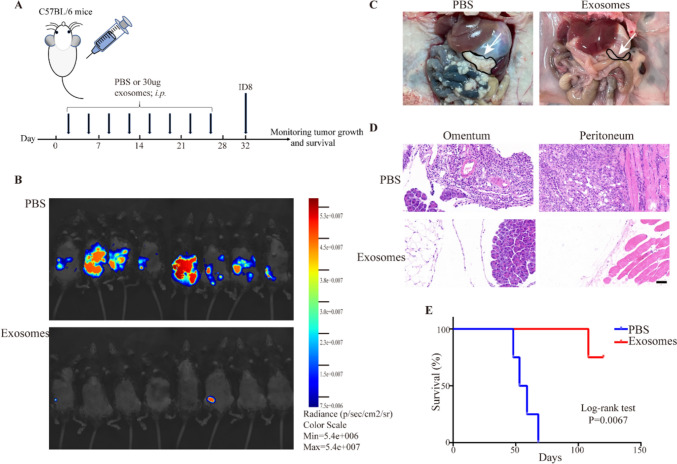
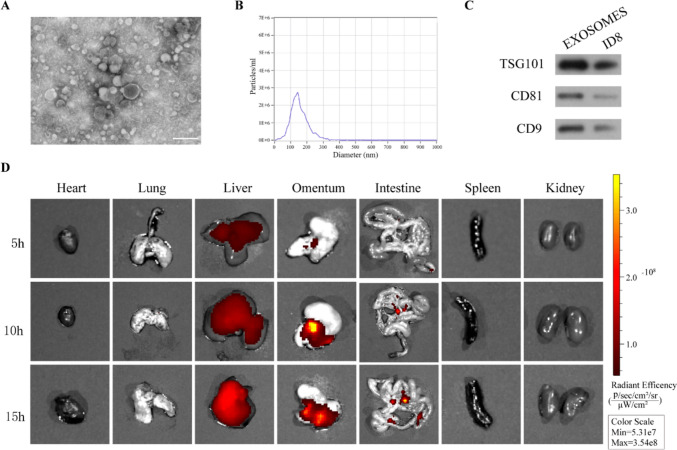
As a type of "cold tumor" with limited immune cell infiltration, ovarian cancer has historically shown limited efficacy in immunotherapy. In this study, we report that exosomes from ovarian cancer can specifically target omentum which is the predilection site for ovarian cancer to metastasize and combat subsequently implanted tumor. Furthermore, we found a substantial increase in the proportion of CD3 + T cells, particularly CD8 + T cells, within the omental tissue where exosomes homed. This increase was accompanied by a significant enhancement in granzyme B levels within CD8 + T cells. Additionally, there was a notable elevation in the concentration of interferon-gamma (IFN-γ) in peripheral blood. In vitro results indicated that exosomes could be internalized by dendritic cells (DCs), promote DC differentiation, and subsequently induce the production of granzyme B and IFN-γ in T cells. Surprisingly, we also observed high expression of programmed death ligand 1 (PD-L1) in the omentum. Therefore, we discovered whether combining PD-L1 blockade led to further tumor regression. However, although the combination group showed complete tumor regression, this difference did not reach statistical significance. But in general, we emphasize that in the case of pre-injection, exosomes have great potential to combat the famous "cold tumor", ovarian cancer, via targeting omentum and activating anti-tumor immunity, offering a novel avenue for overcoming ovarian cancer.
期刊介绍:
Cancer Immunology, Immunotherapy has the basic aim of keeping readers informed of the latest research results in the fields of oncology and immunology. As knowledge expands, the scope of the journal has broadened to include more of the progress being made in the areas of biology concerned with biological response modifiers. This helps keep readers up to date on the latest advances in our understanding of tumor-host interactions.
The journal publishes short editorials including "position papers," general reviews, original articles, and short communications, providing a forum for the most current experimental and clinical advances in tumor immunology.





 京公网安备 11010802042870号
京ICP备2023020795号-1
京公网安备 11010802042870号
京ICP备2023020795号-1

 分享
分享
 求助内容:
求助内容: 应助结果提醒方式:
 扫码关注我们
