Marjolein R A Vink, Barbara A Hutten, Nienke van Olst, Sterre C P de Vet, Max Nieuwdorp, Arnold W van de Laar, Jeroen A W Tielbeek, Victor E A Gerdes
{"title":"腹部CT扫描对腹腔镜胃旁路术后排除内部疝的新认识:手术研究。","authors":"Marjolein R A Vink, Barbara A Hutten, Nienke van Olst, Sterre C P de Vet, Max Nieuwdorp, Arnold W van de Laar, Jeroen A W Tielbeek, Victor E A Gerdes","doi":"10.1007/s11695-025-07715-w","DOIUrl":null,"url":null,"abstract":"<p><strong>Background: </strong>Internal herniation (IH) is a potentially life-threatening complication after gastric bypass. Accurate diagnosis of IH remains challenging. This study aims to validate the Eindhoven2020 (EHV20) scoring system for ruling out IH and seeks to improve its diagnostic accuracy through additional radiologic parameters.</p><p><strong>Methods: </strong>Patients participating in a prospective study on abdominal pain after gastric bypass surgery were selected if a CT scan was performed. CT scans were scored following the EHV20 scoring system containing ten signs of IH to confirm the individual and collective accuracy of these signs. Also, we evaluated the diagnostic value of additional radiologic parameters: delayed passage of contrast, dilated intestinal loops, and free fluid.</p><p><strong>Results: </strong>A total of 375 patients with abdominal pain were included. IH was confirmed during laparoscopy in 27 patients. On CT, the highest sensitivity was achieved by the swirl sign (66.7%) and the highest specificity by a small bowel behind the superior mesenteric artery (99.7%). The area under the receiver operating characteristic curve (AUC) based on the EHV20 scoring system for ruling out IH was 0.845 (95% CI 0.730-0.959). The AUC could be improved to 0.905 (95% CI 0.825-0.985) (p = 0.088) through the incorporation of several additional signs. Overall, this new scoring system included swirl sign, small bowel obstruction, enlarged nodes, venous congestion, mesenteric edema, dilated alimentary or biliary loop, free fluid, and backward flow in the biliary loop with possible backflow in the residual stomach.</p><p><strong>Conclusions: </strong>Incorporation of additional CT signs into an existing scoring system can help clinicians to safely rule out IH in patients with abdominal pain after bariatric surgery.</p>","PeriodicalId":19460,"journal":{"name":"Obesity Surgery","volume":" ","pages":"715-724"},"PeriodicalIF":3.1000,"publicationDate":"2025-03-01","publicationTypes":"Journal Article","fieldsOfStudy":null,"isOpenAccess":false,"openAccessPdf":"https://www.ncbi.nlm.nih.gov/pmc/articles/PMC11906499/pdf/","citationCount":"0","resultStr":"{\"title\":\"New Insights into Ruling Out Internal Herniations After Laparoscopic Gastric Bypass on the Abdominal CT Scan: The OPERATE study.\",\"authors\":\"Marjolein R A Vink, Barbara A Hutten, Nienke van Olst, Sterre C P de Vet, Max Nieuwdorp, Arnold W van de Laar, Jeroen A W Tielbeek, Victor E A Gerdes\",\"doi\":\"10.1007/s11695-025-07715-w\",\"DOIUrl\":null,\"url\":null,\"abstract\":\"<p><strong>Background: </strong>Internal herniation (IH) is a potentially life-threatening complication after gastric bypass. Accurate diagnosis of IH remains challenging. This study aims to validate the Eindhoven2020 (EHV20) scoring system for ruling out IH and seeks to improve its diagnostic accuracy through additional radiologic parameters.</p><p><strong>Methods: </strong>Patients participating in a prospective study on abdominal pain after gastric bypass surgery were selected if a CT scan was performed. CT scans were scored following the EHV20 scoring system containing ten signs of IH to confirm the individual and collective accuracy of these signs. Also, we evaluated the diagnostic value of additional radiologic parameters: delayed passage of contrast, dilated intestinal loops, and free fluid.</p><p><strong>Results: </strong>A total of 375 patients with abdominal pain were included. IH was confirmed during laparoscopy in 27 patients. On CT, the highest sensitivity was achieved by the swirl sign (66.7%) and the highest specificity by a small bowel behind the superior mesenteric artery (99.7%). The area under the receiver operating characteristic curve (AUC) based on the EHV20 scoring system for ruling out IH was 0.845 (95% CI 0.730-0.959). The AUC could be improved to 0.905 (95% CI 0.825-0.985) (p = 0.088) through the incorporation of several additional signs. Overall, this new scoring system included swirl sign, small bowel obstruction, enlarged nodes, venous congestion, mesenteric edema, dilated alimentary or biliary loop, free fluid, and backward flow in the biliary loop with possible backflow in the residual stomach.</p><p><strong>Conclusions: </strong>Incorporation of additional CT signs into an existing scoring system can help clinicians to safely rule out IH in patients with abdominal pain after bariatric surgery.</p>\",\"PeriodicalId\":19460,\"journal\":{\"name\":\"Obesity Surgery\",\"volume\":\" \",\"pages\":\"715-724\"},\"PeriodicalIF\":3.1000,\"publicationDate\":\"2025-03-01\",\"publicationTypes\":\"Journal Article\",\"fieldsOfStudy\":null,\"isOpenAccess\":false,\"openAccessPdf\":\"https://www.ncbi.nlm.nih.gov/pmc/articles/PMC11906499/pdf/\",\"citationCount\":\"0\",\"resultStr\":null,\"platform\":\"Semanticscholar\",\"paperid\":null,\"PeriodicalName\":\"Obesity Surgery\",\"FirstCategoryId\":\"3\",\"ListUrlMain\":\"https://doi.org/10.1007/s11695-025-07715-w\",\"RegionNum\":3,\"RegionCategory\":\"医学\",\"ArticlePicture\":[],\"TitleCN\":null,\"AbstractTextCN\":null,\"PMCID\":null,\"EPubDate\":\"2025/2/4 0:00:00\",\"PubModel\":\"Epub\",\"JCR\":\"Q1\",\"JCRName\":\"SURGERY\",\"Score\":null,\"Total\":0}","platform":"Semanticscholar","paperid":null,"PeriodicalName":"Obesity Surgery","FirstCategoryId":"3","ListUrlMain":"https://doi.org/10.1007/s11695-025-07715-w","RegionNum":3,"RegionCategory":"医学","ArticlePicture":[],"TitleCN":null,"AbstractTextCN":null,"PMCID":null,"EPubDate":"2025/2/4 0:00:00","PubModel":"Epub","JCR":"Q1","JCRName":"SURGERY","Score":null,"Total":0}
引用次数: 0
摘要
背景:胃内疝(IH)是胃旁路术后潜在的危及生命的并发症。IH的准确诊断仍然具有挑战性。本研究旨在验证Eindhoven2020 (EHV20)评分系统对IH的排除作用,并试图通过额外的放射学参数提高其诊断准确性。方法:选择行CT扫描的胃旁路手术后腹痛的前瞻性研究患者。根据EHV20评分系统对CT扫描进行评分,该评分系统包含10个IH体征,以确认这些体征的个人和集体准确性。此外,我们还评估了其他放射学参数的诊断价值:造影剂延迟通过、肠袢扩张和游离液体。结果:共纳入375例腹痛患者。27例患者在腹腔镜下确诊IH。在CT上,漩涡征的敏感性最高(66.7%),肠系膜上动脉后的小肠的特异性最高(99.7%)。基于EHV20评分系统排除IH的受试者工作特征曲线下面积(AUC)为0.845 (95% CI 0.730 ~ 0.959)。通过合并几个附加标志,AUC可以提高到0.905 (95% CI 0.825-0.985) (p = 0.088)。总的来说,这个新的评分系统包括漩涡征、小肠梗阻、淋巴结肿大、静脉充血、肠系膜水肿、消化道或胆道扩张、游离液体、胆道返流并可能在残胃返流。结论:将额外的CT征象纳入现有的评分系统可以帮助临床医生安全地排除减肥手术后腹痛患者的IH。
New Insights into Ruling Out Internal Herniations After Laparoscopic Gastric Bypass on the Abdominal CT Scan: The OPERATE study.
Background: Internal herniation (IH) is a potentially life-threatening complication after gastric bypass. Accurate diagnosis of IH remains challenging. This study aims to validate the Eindhoven2020 (EHV20) scoring system for ruling out IH and seeks to improve its diagnostic accuracy through additional radiologic parameters.
Methods: Patients participating in a prospective study on abdominal pain after gastric bypass surgery were selected if a CT scan was performed. CT scans were scored following the EHV20 scoring system containing ten signs of IH to confirm the individual and collective accuracy of these signs. Also, we evaluated the diagnostic value of additional radiologic parameters: delayed passage of contrast, dilated intestinal loops, and free fluid.
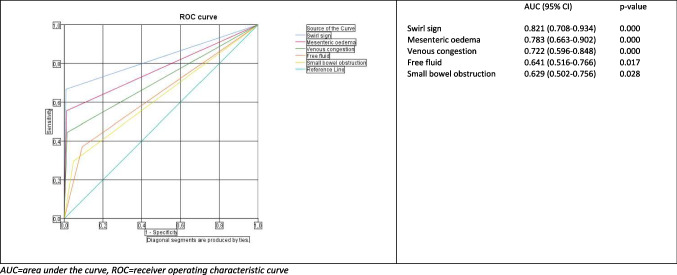
Results: A total of 375 patients with abdominal pain were included. IH was confirmed during laparoscopy in 27 patients. On CT, the highest sensitivity was achieved by the swirl sign (66.7%) and the highest specificity by a small bowel behind the superior mesenteric artery (99.7%). The area under the receiver operating characteristic curve (AUC) based on the EHV20 scoring system for ruling out IH was 0.845 (95% CI 0.730-0.959). The AUC could be improved to 0.905 (95% CI 0.825-0.985) (p = 0.088) through the incorporation of several additional signs. Overall, this new scoring system included swirl sign, small bowel obstruction, enlarged nodes, venous congestion, mesenteric edema, dilated alimentary or biliary loop, free fluid, and backward flow in the biliary loop with possible backflow in the residual stomach.
Conclusions: Incorporation of additional CT signs into an existing scoring system can help clinicians to safely rule out IH in patients with abdominal pain after bariatric surgery.
期刊介绍:
Obesity Surgery is the official journal of the International Federation for the Surgery of Obesity and metabolic disorders (IFSO). A journal for bariatric/metabolic surgeons, Obesity Surgery provides an international, interdisciplinary forum for communicating the latest research, surgical and laparoscopic techniques, for treatment of massive obesity and metabolic disorders. Topics covered include original research, clinical reports, current status, guidelines, historical notes, invited commentaries, letters to the editor, medicolegal issues, meeting abstracts, modern surgery/technical innovations, new concepts, reviews, scholarly presentations and opinions.
Obesity Surgery benefits surgeons performing obesity/metabolic surgery, general surgeons and surgical residents, endoscopists, anesthetists, support staff, nurses, dietitians, psychiatrists, psychologists, plastic surgeons, internists including endocrinologists and diabetologists, nutritional scientists, and those dealing with eating disorders.






 京公网安备 11010802042870号
京ICP备2023020795号-1
京公网安备 11010802042870号
京ICP备2023020795号-1

 分享
分享
 求助内容:
求助内容: 应助结果提醒方式:
 扫码关注我们
