Adam Paul Yan, Lin Lawrence Guo, Jiro Inoue, Santiago Eduardo Arciniegas, Emily Vettese, Agata Wolochacz, Nicole Crellin-Parsons, Brandon Purves, Steven Wallace, Azaz Patel, Medhat Roshdi, Karim Jessa, Bren Cardiff, Lillian Sung
{"title":"在医疗保健中实施机器学习的路线图:从概念到实践。","authors":"Adam Paul Yan, Lin Lawrence Guo, Jiro Inoue, Santiago Eduardo Arciniegas, Emily Vettese, Agata Wolochacz, Nicole Crellin-Parsons, Brandon Purves, Steven Wallace, Azaz Patel, Medhat Roshdi, Karim Jessa, Bren Cardiff, Lillian Sung","doi":"10.3389/fdgth.2025.1462751","DOIUrl":null,"url":null,"abstract":"<p><strong>Background: </strong>The adoption of machine learning (ML) has been slow within the healthcare setting. We launched Pediatric Real-world Evaluative Data sciences for Clinical Transformation (PREDICT) at a pediatric hospital. Its goal was to develop, deploy, evaluate and maintain clinical ML models to improve pediatric patient outcomes using electronic health records data.</p><p><strong>Objective: </strong>To provide examples from the PREDICT experience illustrating how common challenges with clinical ML deployment were addressed.</p><p><strong>Materials and methods: </strong>We present common challenges in developing and deploying models in healthcare related to the following: identify clinical scenarios, establish data infrastructure and utilization, create machine learning operations and integrate into clinical workflows.</p><p><strong>Results: </strong>We show examples of how these challenges were overcome and provide suggestions for pragmatic solutions while maintaining best practices.</p><p><strong>Discussion: </strong>These approaches will require refinement over time as the number of deployments and experience increase.</p>","PeriodicalId":73078,"journal":{"name":"Frontiers in digital health","volume":"7 ","pages":"1462751"},"PeriodicalIF":5.2000,"publicationDate":"2025-01-20","publicationTypes":"Journal Article","fieldsOfStudy":null,"isOpenAccess":false,"openAccessPdf":"https://www.ncbi.nlm.nih.gov/pmc/articles/PMC11788154/pdf/","citationCount":"0","resultStr":"{\"title\":\"A roadmap to implementing machine learning in healthcare: from concept to practice.\",\"authors\":\"Adam Paul Yan, Lin Lawrence Guo, Jiro Inoue, Santiago Eduardo Arciniegas, Emily Vettese, Agata Wolochacz, Nicole Crellin-Parsons, Brandon Purves, Steven Wallace, Azaz Patel, Medhat Roshdi, Karim Jessa, Bren Cardiff, Lillian Sung\",\"doi\":\"10.3389/fdgth.2025.1462751\",\"DOIUrl\":null,\"url\":null,\"abstract\":\"<p><strong>Background: </strong>The adoption of machine learning (ML) has been slow within the healthcare setting. We launched Pediatric Real-world Evaluative Data sciences for Clinical Transformation (PREDICT) at a pediatric hospital. Its goal was to develop, deploy, evaluate and maintain clinical ML models to improve pediatric patient outcomes using electronic health records data.</p><p><strong>Objective: </strong>To provide examples from the PREDICT experience illustrating how common challenges with clinical ML deployment were addressed.</p><p><strong>Materials and methods: </strong>We present common challenges in developing and deploying models in healthcare related to the following: identify clinical scenarios, establish data infrastructure and utilization, create machine learning operations and integrate into clinical workflows.</p><p><strong>Results: </strong>We show examples of how these challenges were overcome and provide suggestions for pragmatic solutions while maintaining best practices.</p><p><strong>Discussion: </strong>These approaches will require refinement over time as the number of deployments and experience increase.</p>\",\"PeriodicalId\":73078,\"journal\":{\"name\":\"Frontiers in digital health\",\"volume\":\"7 \",\"pages\":\"1462751\"},\"PeriodicalIF\":5.2000,\"publicationDate\":\"2025-01-20\",\"publicationTypes\":\"Journal Article\",\"fieldsOfStudy\":null,\"isOpenAccess\":false,\"openAccessPdf\":\"https://www.ncbi.nlm.nih.gov/pmc/articles/PMC11788154/pdf/\",\"citationCount\":\"0\",\"resultStr\":null,\"platform\":\"Semanticscholar\",\"paperid\":null,\"PeriodicalName\":\"Frontiers in digital health\",\"FirstCategoryId\":\"1085\",\"ListUrlMain\":\"https://doi.org/10.3389/fdgth.2025.1462751\",\"RegionNum\":0,\"RegionCategory\":null,\"ArticlePicture\":[],\"TitleCN\":null,\"AbstractTextCN\":null,\"PMCID\":null,\"EPubDate\":\"2025/1/1 0:00:00\",\"PubModel\":\"eCollection\",\"JCR\":\"Q1\",\"JCRName\":\"HEALTH CARE SCIENCES & SERVICES\",\"Score\":null,\"Total\":0}","platform":"Semanticscholar","paperid":null,"PeriodicalName":"Frontiers in digital health","FirstCategoryId":"1085","ListUrlMain":"https://doi.org/10.3389/fdgth.2025.1462751","RegionNum":0,"RegionCategory":null,"ArticlePicture":[],"TitleCN":null,"AbstractTextCN":null,"PMCID":null,"EPubDate":"2025/1/1 0:00:00","PubModel":"eCollection","JCR":"Q1","JCRName":"HEALTH CARE SCIENCES & SERVICES","Score":null,"Total":0}
A roadmap to implementing machine learning in healthcare: from concept to practice.
Background: The adoption of machine learning (ML) has been slow within the healthcare setting. We launched Pediatric Real-world Evaluative Data sciences for Clinical Transformation (PREDICT) at a pediatric hospital. Its goal was to develop, deploy, evaluate and maintain clinical ML models to improve pediatric patient outcomes using electronic health records data.
Objective: To provide examples from the PREDICT experience illustrating how common challenges with clinical ML deployment were addressed.
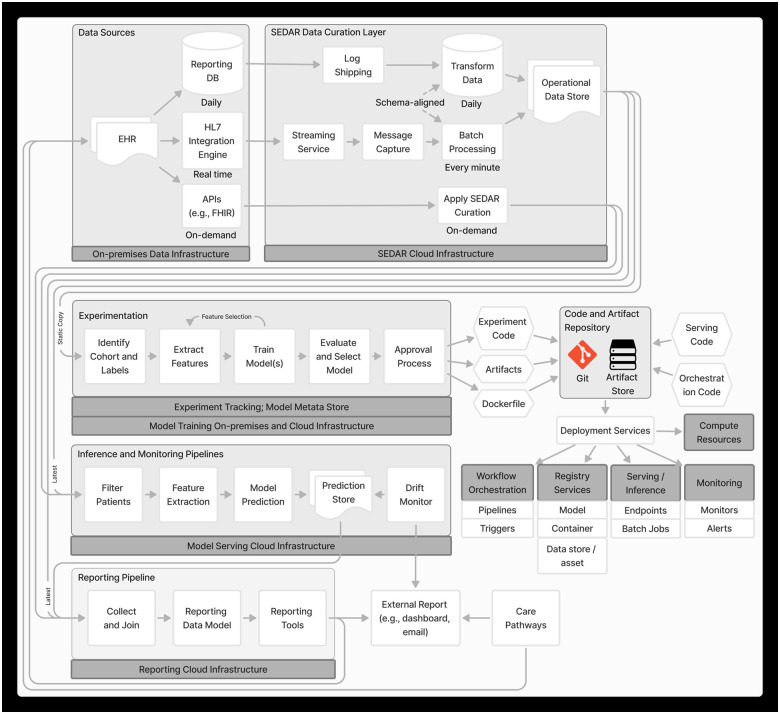
Materials and methods: We present common challenges in developing and deploying models in healthcare related to the following: identify clinical scenarios, establish data infrastructure and utilization, create machine learning operations and integrate into clinical workflows.
Results: We show examples of how these challenges were overcome and provide suggestions for pragmatic solutions while maintaining best practices.
Discussion: These approaches will require refinement over time as the number of deployments and experience increase.




 京公网安备 11010802042870号
京ICP备2023020795号-1
京公网安备 11010802042870号
京ICP备2023020795号-1

 分享
分享

 求助内容:
求助内容: 应助结果提醒方式:
 扫码关注我们
