Jisoo Yuk, Jeonghun Kim, Prof. Dr. Sunghwan Jung, Prof. Dr. Soong Ho Um
{"title":"短癌基因片段鉴别的工程装置。","authors":"Jisoo Yuk, Jeonghun Kim, Prof. Dr. Sunghwan Jung, Prof. Dr. Soong Ho Um","doi":"10.1002/cbic.202400867","DOIUrl":null,"url":null,"abstract":"<p>Currently, mankind is fiercely struggling with cancer. Recently, we have been winning the battle against cancer through precision medicine and accompanying diagnostic methods, and we are raising many hopes with blockbuster drugs. It would be even better if we could read the cancer nucleotide sequence, identify them in advance, and suggest treatments simultaneously. However, this may be an impossible dream because it takes a lot of time and effort to diagnose and ensure all the long gene sequences of cancer at once. Thus, victory will be even closer if a rapid and accurate diagnosis of the cancer-specific gene biomarkers that will soon be imprinted can be made. With the advent of nanotechnology, a new short cancer diagnostic toolkit has been proposed to achieve the goal. This review presents a small diagnostic device that detects certain cancers′ genetic fragments (simply ‘Gizmo’). The development of numerous diagnostic methods has focused on (1) directly detecting pre-selectively targeted genes using novel diagnostic systems, and (2) indirectly detecting substantial improvements in diagnostic sensitivity only through detection signal amplification without existing gene amplification steps. Our fight against cancer is not a dream, but the result of success, and it is assumed that victory will accelerate as soon as possible.</p>","PeriodicalId":140,"journal":{"name":"ChemBioChem","volume":"26 7","pages":""},"PeriodicalIF":2.8000,"publicationDate":"2025-02-05","publicationTypes":"Journal Article","fieldsOfStudy":null,"isOpenAccess":false,"openAccessPdf":"","citationCount":"0","resultStr":"{\"title\":\"Engineering Gizmos for Short Cancer Genetic Fragments Discrimination\",\"authors\":\"Jisoo Yuk, Jeonghun Kim, Prof. Dr. Sunghwan Jung, Prof. Dr. Soong Ho Um\",\"doi\":\"10.1002/cbic.202400867\",\"DOIUrl\":null,\"url\":null,\"abstract\":\"<p>Currently, mankind is fiercely struggling with cancer. Recently, we have been winning the battle against cancer through precision medicine and accompanying diagnostic methods, and we are raising many hopes with blockbuster drugs. It would be even better if we could read the cancer nucleotide sequence, identify them in advance, and suggest treatments simultaneously. However, this may be an impossible dream because it takes a lot of time and effort to diagnose and ensure all the long gene sequences of cancer at once. Thus, victory will be even closer if a rapid and accurate diagnosis of the cancer-specific gene biomarkers that will soon be imprinted can be made. With the advent of nanotechnology, a new short cancer diagnostic toolkit has been proposed to achieve the goal. This review presents a small diagnostic device that detects certain cancers′ genetic fragments (simply ‘Gizmo’). The development of numerous diagnostic methods has focused on (1) directly detecting pre-selectively targeted genes using novel diagnostic systems, and (2) indirectly detecting substantial improvements in diagnostic sensitivity only through detection signal amplification without existing gene amplification steps. Our fight against cancer is not a dream, but the result of success, and it is assumed that victory will accelerate as soon as possible.</p>\",\"PeriodicalId\":140,\"journal\":{\"name\":\"ChemBioChem\",\"volume\":\"26 7\",\"pages\":\"\"},\"PeriodicalIF\":2.8000,\"publicationDate\":\"2025-02-05\",\"publicationTypes\":\"Journal Article\",\"fieldsOfStudy\":null,\"isOpenAccess\":false,\"openAccessPdf\":\"\",\"citationCount\":\"0\",\"resultStr\":null,\"platform\":\"Semanticscholar\",\"paperid\":null,\"PeriodicalName\":\"ChemBioChem\",\"FirstCategoryId\":\"99\",\"ListUrlMain\":\"https://chemistry-europe.onlinelibrary.wiley.com/doi/10.1002/cbic.202400867\",\"RegionNum\":4,\"RegionCategory\":\"生物学\",\"ArticlePicture\":[],\"TitleCN\":null,\"AbstractTextCN\":null,\"PMCID\":null,\"EPubDate\":\"\",\"PubModel\":\"\",\"JCR\":\"Q3\",\"JCRName\":\"BIOCHEMISTRY & MOLECULAR BIOLOGY\",\"Score\":null,\"Total\":0}","platform":"Semanticscholar","paperid":null,"PeriodicalName":"ChemBioChem","FirstCategoryId":"99","ListUrlMain":"https://chemistry-europe.onlinelibrary.wiley.com/doi/10.1002/cbic.202400867","RegionNum":4,"RegionCategory":"生物学","ArticlePicture":[],"TitleCN":null,"AbstractTextCN":null,"PMCID":null,"EPubDate":"","PubModel":"","JCR":"Q3","JCRName":"BIOCHEMISTRY & MOLECULAR BIOLOGY","Score":null,"Total":0}
Engineering Gizmos for Short Cancer Genetic Fragments Discrimination
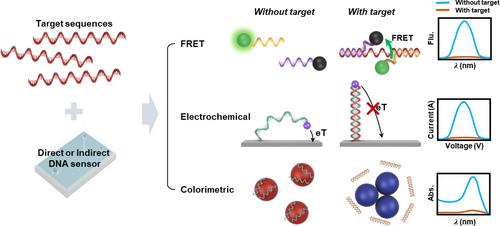
Currently, mankind is fiercely struggling with cancer. Recently, we have been winning the battle against cancer through precision medicine and accompanying diagnostic methods, and we are raising many hopes with blockbuster drugs. It would be even better if we could read the cancer nucleotide sequence, identify them in advance, and suggest treatments simultaneously. However, this may be an impossible dream because it takes a lot of time and effort to diagnose and ensure all the long gene sequences of cancer at once. Thus, victory will be even closer if a rapid and accurate diagnosis of the cancer-specific gene biomarkers that will soon be imprinted can be made. With the advent of nanotechnology, a new short cancer diagnostic toolkit has been proposed to achieve the goal. This review presents a small diagnostic device that detects certain cancers′ genetic fragments (simply ‘Gizmo’). The development of numerous diagnostic methods has focused on (1) directly detecting pre-selectively targeted genes using novel diagnostic systems, and (2) indirectly detecting substantial improvements in diagnostic sensitivity only through detection signal amplification without existing gene amplification steps. Our fight against cancer is not a dream, but the result of success, and it is assumed that victory will accelerate as soon as possible.
期刊介绍:
ChemBioChem (Impact Factor 2018: 2.641) publishes important breakthroughs across all areas at the interface of chemistry and biology, including the fields of chemical biology, bioorganic chemistry, bioinorganic chemistry, synthetic biology, biocatalysis, bionanotechnology, and biomaterials. It is published on behalf of Chemistry Europe, an association of 16 European chemical societies, and supported by the Asian Chemical Editorial Society (ACES).







 京公网安备 11010802042870号
京ICP备2023020795号-1
京公网安备 11010802042870号
京ICP备2023020795号-1

 分享
分享
 求助内容:
求助内容: 应助结果提醒方式:
 扫码关注我们
