{"title":"血清尿酸与肌酐比值作为正常韩国成人胰岛素抵抗、β细胞功能和代谢综合征的预测因子:一项横断面研究。","authors":"Misuk Oh, Soo Hyun Cho","doi":"10.1186/s12902-025-01860-0","DOIUrl":null,"url":null,"abstract":"<p><strong>Background: </strong>This study aimed to determine the relations between serum uric acid to creatinine ratio(SUA/Cr) and insulin resistance, pancreatic β cell function, and outbreak of metabolic syndrome (MetS) in normal Korean participants.</p><p><strong>Materials and methods: </strong>This study included 14,984 participants without diabetes mellitus or gout who participated in the 2019-2021 Korea National Health and Nutrition Examination Survey. To evaluate insulin resistance and β cell function, the homeostasis model assessment (HOMA) was used. Insulin resistance was suggested by HOMA-IR, and β cell function was presented as HOMA-β. Multivariate logistic linear regression analysis was used to identify the factors affecting HOMA-IR, HOMA-β, and MetS. Cut-off values of SUA/Cr to predict insulin resistance, β cell dysfunction, and MetS risk were also been suggested.</p><p><strong>Results: </strong>Consequent to dividing SUA/Cr into tertiles, the higher the SUA/Cr, the higher the HOMA-IR and dysfunction of β cell, and the rate of MetS increased (p < 0.05). SUA/Cr was associated with insulin resistance, β cell function, and existence of MetS (adjusted odds ratio [OR]; 1.231 [95% confidence interval [CI]; 1.204-1.259], 1.033 [1.011-1.057], and 1.065 [1.026-1.106], respectively). In addition, the group with the clinical significance was the 3rd tertile. In this group, insulin resistance, β cell dysfunction, and MetS risk could be predicted when SUA/Cr value was 8.2716, 8.8710, and 7.9762, respectively. Based on the total number of people, meaningful SUA/Cr values were 7.0175, 6.7925, and 6.9369.</p><p><strong>Conclusions: </strong>The SUA/Cr may be a useful marker for predicting the insulin resistance, β cell function and incidence of MetS in normal Korean participants.</p>","PeriodicalId":9152,"journal":{"name":"BMC Endocrine Disorders","volume":"25 1","pages":"31"},"PeriodicalIF":3.3000,"publicationDate":"2025-02-05","publicationTypes":"Journal Article","fieldsOfStudy":null,"isOpenAccess":false,"openAccessPdf":"https://www.ncbi.nlm.nih.gov/pmc/articles/PMC11796277/pdf/","citationCount":"0","resultStr":"{\"title\":\"Serum uric acid to creatinine ratio as a predictor of insulin resistance, β cell function, and metabolic syndrome in normal Korean adults: a cross-sectional study.\",\"authors\":\"Misuk Oh, Soo Hyun Cho\",\"doi\":\"10.1186/s12902-025-01860-0\",\"DOIUrl\":null,\"url\":null,\"abstract\":\"<p><strong>Background: </strong>This study aimed to determine the relations between serum uric acid to creatinine ratio(SUA/Cr) and insulin resistance, pancreatic β cell function, and outbreak of metabolic syndrome (MetS) in normal Korean participants.</p><p><strong>Materials and methods: </strong>This study included 14,984 participants without diabetes mellitus or gout who participated in the 2019-2021 Korea National Health and Nutrition Examination Survey. To evaluate insulin resistance and β cell function, the homeostasis model assessment (HOMA) was used. Insulin resistance was suggested by HOMA-IR, and β cell function was presented as HOMA-β. Multivariate logistic linear regression analysis was used to identify the factors affecting HOMA-IR, HOMA-β, and MetS. Cut-off values of SUA/Cr to predict insulin resistance, β cell dysfunction, and MetS risk were also been suggested.</p><p><strong>Results: </strong>Consequent to dividing SUA/Cr into tertiles, the higher the SUA/Cr, the higher the HOMA-IR and dysfunction of β cell, and the rate of MetS increased (p < 0.05). SUA/Cr was associated with insulin resistance, β cell function, and existence of MetS (adjusted odds ratio [OR]; 1.231 [95% confidence interval [CI]; 1.204-1.259], 1.033 [1.011-1.057], and 1.065 [1.026-1.106], respectively). In addition, the group with the clinical significance was the 3rd tertile. In this group, insulin resistance, β cell dysfunction, and MetS risk could be predicted when SUA/Cr value was 8.2716, 8.8710, and 7.9762, respectively. Based on the total number of people, meaningful SUA/Cr values were 7.0175, 6.7925, and 6.9369.</p><p><strong>Conclusions: </strong>The SUA/Cr may be a useful marker for predicting the insulin resistance, β cell function and incidence of MetS in normal Korean participants.</p>\",\"PeriodicalId\":9152,\"journal\":{\"name\":\"BMC Endocrine Disorders\",\"volume\":\"25 1\",\"pages\":\"31\"},\"PeriodicalIF\":3.3000,\"publicationDate\":\"2025-02-05\",\"publicationTypes\":\"Journal Article\",\"fieldsOfStudy\":null,\"isOpenAccess\":false,\"openAccessPdf\":\"https://www.ncbi.nlm.nih.gov/pmc/articles/PMC11796277/pdf/\",\"citationCount\":\"0\",\"resultStr\":null,\"platform\":\"Semanticscholar\",\"paperid\":null,\"PeriodicalName\":\"BMC Endocrine Disorders\",\"FirstCategoryId\":\"3\",\"ListUrlMain\":\"https://doi.org/10.1186/s12902-025-01860-0\",\"RegionNum\":3,\"RegionCategory\":\"医学\",\"ArticlePicture\":[],\"TitleCN\":null,\"AbstractTextCN\":null,\"PMCID\":null,\"EPubDate\":\"\",\"PubModel\":\"\",\"JCR\":\"Q3\",\"JCRName\":\"ENDOCRINOLOGY & METABOLISM\",\"Score\":null,\"Total\":0}","platform":"Semanticscholar","paperid":null,"PeriodicalName":"BMC Endocrine Disorders","FirstCategoryId":"3","ListUrlMain":"https://doi.org/10.1186/s12902-025-01860-0","RegionNum":3,"RegionCategory":"医学","ArticlePicture":[],"TitleCN":null,"AbstractTextCN":null,"PMCID":null,"EPubDate":"","PubModel":"","JCR":"Q3","JCRName":"ENDOCRINOLOGY & METABOLISM","Score":null,"Total":0}
Serum uric acid to creatinine ratio as a predictor of insulin resistance, β cell function, and metabolic syndrome in normal Korean adults: a cross-sectional study.
Background: This study aimed to determine the relations between serum uric acid to creatinine ratio(SUA/Cr) and insulin resistance, pancreatic β cell function, and outbreak of metabolic syndrome (MetS) in normal Korean participants.
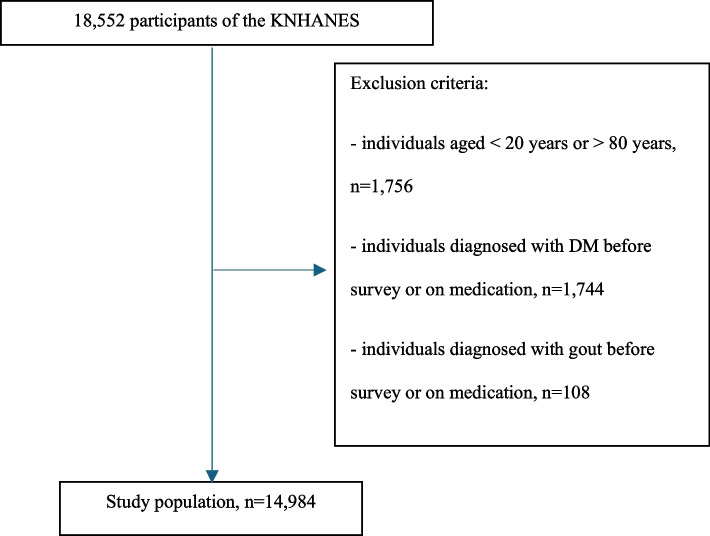
Materials and methods: This study included 14,984 participants without diabetes mellitus or gout who participated in the 2019-2021 Korea National Health and Nutrition Examination Survey. To evaluate insulin resistance and β cell function, the homeostasis model assessment (HOMA) was used. Insulin resistance was suggested by HOMA-IR, and β cell function was presented as HOMA-β. Multivariate logistic linear regression analysis was used to identify the factors affecting HOMA-IR, HOMA-β, and MetS. Cut-off values of SUA/Cr to predict insulin resistance, β cell dysfunction, and MetS risk were also been suggested.
Results: Consequent to dividing SUA/Cr into tertiles, the higher the SUA/Cr, the higher the HOMA-IR and dysfunction of β cell, and the rate of MetS increased (p < 0.05). SUA/Cr was associated with insulin resistance, β cell function, and existence of MetS (adjusted odds ratio [OR]; 1.231 [95% confidence interval [CI]; 1.204-1.259], 1.033 [1.011-1.057], and 1.065 [1.026-1.106], respectively). In addition, the group with the clinical significance was the 3rd tertile. In this group, insulin resistance, β cell dysfunction, and MetS risk could be predicted when SUA/Cr value was 8.2716, 8.8710, and 7.9762, respectively. Based on the total number of people, meaningful SUA/Cr values were 7.0175, 6.7925, and 6.9369.
Conclusions: The SUA/Cr may be a useful marker for predicting the insulin resistance, β cell function and incidence of MetS in normal Korean participants.
期刊介绍:
BMC Endocrine Disorders is an open access, peer-reviewed journal that considers articles on all aspects of the prevention, diagnosis and management of endocrine disorders, as well as related molecular genetics, pathophysiology, and epidemiology.





 京公网安备 11010802042870号
京ICP备2023020795号-1
京公网安备 11010802042870号
京ICP备2023020795号-1

 分享
分享
 求助内容:
求助内容: 应助结果提醒方式:
 扫码关注我们
