Charalampos S Siristatidis, Michail Papapanou, Abha Maheshwari, Dennis Vaidakis
{"title":"患有多囊卵巢综合征的不孕妇女接受辅助生殖的体外成熟。","authors":"Charalampos S Siristatidis, Michail Papapanou, Abha Maheshwari, Dennis Vaidakis","doi":"10.1002/14651858.CD006606.pub5","DOIUrl":null,"url":null,"abstract":"<p><strong>Background: </strong>Polycystic ovarian syndrome (PCOS) occurs in 8% to 13% of all women of reproductive age and 50% of women presenting with infertility (i.e. inability to reach a pregnancy after 12 months or more of regular unprotected sexual intercourse). A proportion of these women ultimately need assisted reproductive technology. In vitro fertilisation (IVF)/intracytoplasmic sperm injection (ICSI) are assisted reproduction techniques used to raise the chances of a pregnancy. In women with PCOS, the supra-physiological doses of gonadotrophins used for controlled ovarian hyperstimulation (COH) often result in an exaggerated ovarian response characterised by the development of a large cohort of follicles of uneven quality, retrieval of immature oocytes, and increased risk of ovarian hyperstimulation syndrome (OHSS). A potentially effective intervention for women with PCOS-related infertility involves earlier retrieval of immature oocytes at the germinal-vesicle stage followed by in vitro maturation (IVM). This is the third update of this Cochrane review on the subject (after the last update on 27 June 2018).</p><p><strong>Objectives: </strong>To assess the benefits and harms of IVM followed by IVF or ICSI versus conventional IVF or ICSI among women with PCOS.</p><p><strong>Search methods: </strong>On 27 February 2023, we searched the Cochrane Gynaecology and Fertility Group Specialised Register of Controlled Trials, CENTRAL, MEDLINE, Embase, and the Open Grey database. We further searched the National Institute for Health and Care Excellence (NICE) fertility assessment and treatment guidelines. We also searched reference lists of relevant papers and Google Scholar for any additional trials.</p><p><strong>Selection criteria: </strong>We included randomised controlled trials (RCTs) comparing IVM before IVF or ICSI with conventional IVF or ICSI for infertile women with PCOS, irrespective of language and country of origin.</p><p><strong>Data collection and analysis: </strong>Two review authors independently selected studies, assessed the risk of bias, extracted data from studies, and, where needed, attempted to contact the authors for missing data. Our primary outcomes were live birth per woman randomised and miscarriage. We performed statistical analysis using Review Manager. We assessed the certainty of the evidence using GRADE and the risk of bias using the Cochrane RoB 2 tool.</p><p><strong>Main results: </strong>We found four published trials suitable for inclusion in this update. The studies involved 810 subfertile women undergoing assisted reproductive technology. Two of four were already included in the previous version of the review, were published as abstracts in international conferences, and were at high risk of bias. The two new studies were at low risk of bias in all domains and in terms of all outcomes. We implemented the random-effects model for the quantitative analyses and restricted the primary analysis to studies at low risk of bias in all domains. We are very uncertain about the effect of IVM or capacitation IVM (a new biphasic IVM system improving the developmental competence of oocytes) on live birth when compared to IVF when a GnRH antagonist protocol was applied (odds ratio (OR) 0.47, 95% confidence interval (CI) 0.17 to 1.32; I<sup>2</sup> = 91%; 2 studies, 739 participants; very low-certainty evidence). This suggests that if the chance of live birth following standard IVF is assumed to be 45.7%, then the chance of IVM would be 12.5% to 52.6%. In contrast, IVM or capacitation IVM increases miscarriage per clinical pregnancy (where clinical pregnancy was defined as evidence of a fetal heart beat on ultrasound at seven gestational weeks) in women with PCOS when compared to IVF (OR 1.66, 95% CI 1.02 to 2.70; I<sup>2</sup> = 0%; 2 studies, 378 clinical pregnancies; high-certainty evidence). This suggests that if the chance of miscarriage following standard IVF is assumed to be 20.1%, then the chance using IVM would be 20.4% to 40.4%. Results remained similar when using the risk ratio (RR) as the measure of effect. We are uncertain about the effect of IVM or capacitation IVM on clinical pregnancy when compared to IVF when a GnRH antagonist protocol was applied (OR 0.49, 95% CI 0.14 to 1.70; I<sup>2</sup> = 94%; 2 studies, 739 participants; very low-certainty evidence). The results were similar after pooling the RRs. IVM or capacitation IVM results in a large reduction in the incidence of moderate or severe OHSS as compared to IVF when a GnRH antagonist protocol was applied (OR 0.08, 95% CI 0.01 to 0.67; I<sup>2</sup> = 0%; 2 studies, 739 participants; high-certainty evidence). This suggests that if the incidence of OHSS following IVF is assumed to be 3.5%, then the incidence with IVM would be 0% to 2.4%. Also, there is probably little to no difference in preterm birth between IVM or capacitation IVM and IVF after the application of a GnRH antagonist protocol (OR 0.69, 95% CI 0.31 to 1.52; I² = 45%; 2 studies, 739 participants; moderate-certainty evidence). As for congenital anomalies, one study reported no events, while another showed an uncertain effect of IVM (OR 0.33, 95% CI 0.01 to 8.24; 1 study, 351 participants; low-certainty evidence). Results remained similar when using the RR as the measure of effect. There were no data from any of the studies for cycle cancellation, oocyte fertilisation, or subgroup analyses.</p><p><strong>Authors' conclusions: </strong>There is continuous scientific interest in IVM, and promising data have been published. Concerning live birth and clinical pregnancy, we are very uncertain about the effect of the technique when compared to IVF after using a GnRH antagonist protocol. In contrast, high-certainty evidence shows that IVM increases miscarriage per clinical pregnancy and reduces the incidence of moderate or severe OHSS in women with PCOS compared to IVF after a GnRH antagonist protocol. Regarding the rest of the outcomes, low- to moderate-certainty evidence showed little to no difference in preterm birth and risk of congenital anomalies between the two modalities. We eagerly anticipate further evidence from high-quality trials in the field (we found five ongoing trials).</p>","PeriodicalId":10473,"journal":{"name":"Cochrane Database of Systematic Reviews","volume":"2 ","pages":"CD006606"},"PeriodicalIF":8.8000,"publicationDate":"2025-02-06","publicationTypes":"Journal Article","fieldsOfStudy":null,"isOpenAccess":false,"openAccessPdf":"https://www.ncbi.nlm.nih.gov/pmc/articles/PMC11800328/pdf/","citationCount":"0","resultStr":"{\"title\":\"In vitro maturation in subfertile women with polycystic ovarian syndrome undergoing assisted reproduction.\",\"authors\":\"Charalampos S Siristatidis, Michail Papapanou, Abha Maheshwari, Dennis Vaidakis\",\"doi\":\"10.1002/14651858.CD006606.pub5\",\"DOIUrl\":null,\"url\":null,\"abstract\":\"<p><strong>Background: </strong>Polycystic ovarian syndrome (PCOS) occurs in 8% to 13% of all women of reproductive age and 50% of women presenting with infertility (i.e. inability to reach a pregnancy after 12 months or more of regular unprotected sexual intercourse). A proportion of these women ultimately need assisted reproductive technology. In vitro fertilisation (IVF)/intracytoplasmic sperm injection (ICSI) are assisted reproduction techniques used to raise the chances of a pregnancy. In women with PCOS, the supra-physiological doses of gonadotrophins used for controlled ovarian hyperstimulation (COH) often result in an exaggerated ovarian response characterised by the development of a large cohort of follicles of uneven quality, retrieval of immature oocytes, and increased risk of ovarian hyperstimulation syndrome (OHSS). A potentially effective intervention for women with PCOS-related infertility involves earlier retrieval of immature oocytes at the germinal-vesicle stage followed by in vitro maturation (IVM). This is the third update of this Cochrane review on the subject (after the last update on 27 June 2018).</p><p><strong>Objectives: </strong>To assess the benefits and harms of IVM followed by IVF or ICSI versus conventional IVF or ICSI among women with PCOS.</p><p><strong>Search methods: </strong>On 27 February 2023, we searched the Cochrane Gynaecology and Fertility Group Specialised Register of Controlled Trials, CENTRAL, MEDLINE, Embase, and the Open Grey database. We further searched the National Institute for Health and Care Excellence (NICE) fertility assessment and treatment guidelines. We also searched reference lists of relevant papers and Google Scholar for any additional trials.</p><p><strong>Selection criteria: </strong>We included randomised controlled trials (RCTs) comparing IVM before IVF or ICSI with conventional IVF or ICSI for infertile women with PCOS, irrespective of language and country of origin.</p><p><strong>Data collection and analysis: </strong>Two review authors independently selected studies, assessed the risk of bias, extracted data from studies, and, where needed, attempted to contact the authors for missing data. Our primary outcomes were live birth per woman randomised and miscarriage. We performed statistical analysis using Review Manager. We assessed the certainty of the evidence using GRADE and the risk of bias using the Cochrane RoB 2 tool.</p><p><strong>Main results: </strong>We found four published trials suitable for inclusion in this update. The studies involved 810 subfertile women undergoing assisted reproductive technology. Two of four were already included in the previous version of the review, were published as abstracts in international conferences, and were at high risk of bias. The two new studies were at low risk of bias in all domains and in terms of all outcomes. We implemented the random-effects model for the quantitative analyses and restricted the primary analysis to studies at low risk of bias in all domains. We are very uncertain about the effect of IVM or capacitation IVM (a new biphasic IVM system improving the developmental competence of oocytes) on live birth when compared to IVF when a GnRH antagonist protocol was applied (odds ratio (OR) 0.47, 95% confidence interval (CI) 0.17 to 1.32; I<sup>2</sup> = 91%; 2 studies, 739 participants; very low-certainty evidence). This suggests that if the chance of live birth following standard IVF is assumed to be 45.7%, then the chance of IVM would be 12.5% to 52.6%. In contrast, IVM or capacitation IVM increases miscarriage per clinical pregnancy (where clinical pregnancy was defined as evidence of a fetal heart beat on ultrasound at seven gestational weeks) in women with PCOS when compared to IVF (OR 1.66, 95% CI 1.02 to 2.70; I<sup>2</sup> = 0%; 2 studies, 378 clinical pregnancies; high-certainty evidence). This suggests that if the chance of miscarriage following standard IVF is assumed to be 20.1%, then the chance using IVM would be 20.4% to 40.4%. Results remained similar when using the risk ratio (RR) as the measure of effect. We are uncertain about the effect of IVM or capacitation IVM on clinical pregnancy when compared to IVF when a GnRH antagonist protocol was applied (OR 0.49, 95% CI 0.14 to 1.70; I<sup>2</sup> = 94%; 2 studies, 739 participants; very low-certainty evidence). The results were similar after pooling the RRs. IVM or capacitation IVM results in a large reduction in the incidence of moderate or severe OHSS as compared to IVF when a GnRH antagonist protocol was applied (OR 0.08, 95% CI 0.01 to 0.67; I<sup>2</sup> = 0%; 2 studies, 739 participants; high-certainty evidence). This suggests that if the incidence of OHSS following IVF is assumed to be 3.5%, then the incidence with IVM would be 0% to 2.4%. Also, there is probably little to no difference in preterm birth between IVM or capacitation IVM and IVF after the application of a GnRH antagonist protocol (OR 0.69, 95% CI 0.31 to 1.52; I² = 45%; 2 studies, 739 participants; moderate-certainty evidence). As for congenital anomalies, one study reported no events, while another showed an uncertain effect of IVM (OR 0.33, 95% CI 0.01 to 8.24; 1 study, 351 participants; low-certainty evidence). Results remained similar when using the RR as the measure of effect. There were no data from any of the studies for cycle cancellation, oocyte fertilisation, or subgroup analyses.</p><p><strong>Authors' conclusions: </strong>There is continuous scientific interest in IVM, and promising data have been published. Concerning live birth and clinical pregnancy, we are very uncertain about the effect of the technique when compared to IVF after using a GnRH antagonist protocol. In contrast, high-certainty evidence shows that IVM increases miscarriage per clinical pregnancy and reduces the incidence of moderate or severe OHSS in women with PCOS compared to IVF after a GnRH antagonist protocol. Regarding the rest of the outcomes, low- to moderate-certainty evidence showed little to no difference in preterm birth and risk of congenital anomalies between the two modalities. We eagerly anticipate further evidence from high-quality trials in the field (we found five ongoing trials).</p>\",\"PeriodicalId\":10473,\"journal\":{\"name\":\"Cochrane Database of Systematic Reviews\",\"volume\":\"2 \",\"pages\":\"CD006606\"},\"PeriodicalIF\":8.8000,\"publicationDate\":\"2025-02-06\",\"publicationTypes\":\"Journal Article\",\"fieldsOfStudy\":null,\"isOpenAccess\":false,\"openAccessPdf\":\"https://www.ncbi.nlm.nih.gov/pmc/articles/PMC11800328/pdf/\",\"citationCount\":\"0\",\"resultStr\":null,\"platform\":\"Semanticscholar\",\"paperid\":null,\"PeriodicalName\":\"Cochrane Database of Systematic Reviews\",\"FirstCategoryId\":\"3\",\"ListUrlMain\":\"https://doi.org/10.1002/14651858.CD006606.pub5\",\"RegionNum\":2,\"RegionCategory\":\"医学\",\"ArticlePicture\":[],\"TitleCN\":null,\"AbstractTextCN\":null,\"PMCID\":null,\"EPubDate\":\"\",\"PubModel\":\"\",\"JCR\":\"Q1\",\"JCRName\":\"MEDICINE, GENERAL & INTERNAL\",\"Score\":null,\"Total\":0}","platform":"Semanticscholar","paperid":null,"PeriodicalName":"Cochrane Database of Systematic Reviews","FirstCategoryId":"3","ListUrlMain":"https://doi.org/10.1002/14651858.CD006606.pub5","RegionNum":2,"RegionCategory":"医学","ArticlePicture":[],"TitleCN":null,"AbstractTextCN":null,"PMCID":null,"EPubDate":"","PubModel":"","JCR":"Q1","JCRName":"MEDICINE, GENERAL & INTERNAL","Score":null,"Total":0}
引用次数: 0
摘要
背景:多囊卵巢综合征(PCOS)发生在8%至13%的育龄妇女和50%的不孕妇女中(即在12个月或更长时间的定期无保护性交后无法怀孕)。这些妇女中有一部分最终需要辅助生殖技术。体外受精(IVF)/胞浆内单精子注射(ICSI)是用于提高怀孕机会的辅助生殖技术。在多囊卵巢综合征(PCOS)女性中,用于控制卵巢过度刺激(COH)的超生理剂量的促性腺激素通常会导致卵巢反应过度,其特征是发育大量质量参差的卵泡,未成熟卵母细胞的恢复,以及卵巢过度刺激综合征(OHSS)的风险增加。对多囊卵巢综合征(pcos)相关不孕妇女的潜在有效干预包括在生发-囊泡阶段早期回收未成熟卵母细胞,然后进行体外成熟(IVM)。这是关于该主题的Cochrane综述的第三次更新(上一次更新是在2018年6月27日)。目的:评估在PCOS患者中,IVM后IVF或ICSI与常规IVF或ICSI相比的利弊。检索方法:在2023年2月27日,我们检索了Cochrane妇科和生育组对照试验专业注册、CENTRAL、MEDLINE、Embase和Open Grey数据库。我们进一步检索了国家健康与护理卓越研究所(NICE)生育评估和治疗指南。我们还检索了相关论文的参考文献列表和谷歌Scholar,以寻找任何额外的试验。选择标准:我们纳入了随机对照试验(RCTs),比较IVF或ICSI前的IVM与常规IVF或ICSI治疗的PCOS不孕妇女,不论语言和原籍国。数据收集和分析:两位综述作者独立选择研究,评估偏倚风险,从研究中提取数据,并在需要时试图联系作者以获取缺失的数据。我们的主要结局是每个随机妇女的活产和流产。我们使用Review Manager进行统计分析。我们使用GRADE评估证据的确定性,使用Cochrane RoB 2工具评估偏倚风险。主要结果:我们发现四项已发表的试验适合纳入本次更新。这项研究涉及810名接受辅助生殖技术的不孕妇女。四篇论文中的两篇已经被收录在先前版本的综述中,并作为摘要发表在国际会议上,具有很高的偏倚风险。这两项新研究在所有领域和所有结果方面的偏倚风险都很低。我们采用随机效应模型进行定量分析,并将主要分析限制在所有领域低偏倚风险的研究。当应用GnRH拮抗剂方案时,我们非常不确定IVM或容能性IVM(一种新的双相IVM系统,可提高卵母细胞的发育能力)与IVF相比对活产的影响(优势比(or) 0.47, 95%置信区间(CI) 0.17至1.32;I2 = 91%;2项研究,739名受试者;非常低确定性证据)。这表明,如果假设标准试管婴儿的活产机会为45.7%,那么IVM的机会将为12.5%至52.6%。相比之下,与IVF相比,IVM或获能性IVM增加了PCOS妇女每次临床妊娠的流产率(临床妊娠被定义为妊娠7周时超声显示胎儿心脏跳动的证据)(or 1.66, 95% CI 1.02至2.70;I2 = 0%;2项研究,378例临床妊娠;高确定性的证据)。这表明,如果假设标准试管婴儿流产的几率为20.1%,那么使用IVM的几率将为20.4%至40.4%。当使用风险比(RR)作为效果的度量时,结果仍然相似。与使用GnRH拮抗剂方案的IVF相比,我们不确定IVM或容能性IVM对临床妊娠的影响(or 0.49, 95% CI 0.14至1.70;I2 = 94%;2项研究,739名受试者;非常低确定性证据)。在汇总rr后,结果相似。与使用GnRH拮抗剂方案的IVF相比,IVM或容能IVM导致中度或重度OHSS发生率大幅降低(or 0.08, 95% CI 0.01至0.67;I2 = 0%;2项研究,739名受试者;高确定性的证据)。这表明,如果假设IVF后OHSS的发生率为3.5%,那么IVM的发生率将为0%至2.4%。此外,在应用GnRH拮抗剂方案后,IVM或获能性IVM与IVF之间的早产可能几乎没有差异(or 0.69, 95% CI 0.31至1.52;I²= 45%;2项研究,739名受试者;moderate-certainty证据)。 对于先天性异常,一项研究未报道任何事件,而另一项研究显示IVM的影响不确定(OR 0.33, 95% CI 0.01 ~ 8.24;1项研究,351名参与者;确定性的证据)。当使用RR作为效果的度量时,结果仍然相似。没有任何关于周期取消、卵母细胞受精或亚组分析的研究数据。作者的结论:对IVM有持续的科学兴趣,并且已经发表了有希望的数据。关于活产和临床妊娠,我们非常不确定与使用GnRH拮抗剂方案后的体外受精相比,该技术的效果。相反,高质量的证据表明,与GnRH拮抗剂方案后的IVF相比,IVM增加了PCOS妇女每次临床妊娠的流产率,降低了中度或重度OHSS的发生率。至于其余的结果,低到中等确定性的证据显示,两种方式在早产和先天性异常风险方面几乎没有差异。我们热切期待来自该领域高质量试验的进一步证据(我们发现了五个正在进行的试验)。
In vitro maturation in subfertile women with polycystic ovarian syndrome undergoing assisted reproduction.
Background: Polycystic ovarian syndrome (PCOS) occurs in 8% to 13% of all women of reproductive age and 50% of women presenting with infertility (i.e. inability to reach a pregnancy after 12 months or more of regular unprotected sexual intercourse). A proportion of these women ultimately need assisted reproductive technology. In vitro fertilisation (IVF)/intracytoplasmic sperm injection (ICSI) are assisted reproduction techniques used to raise the chances of a pregnancy. In women with PCOS, the supra-physiological doses of gonadotrophins used for controlled ovarian hyperstimulation (COH) often result in an exaggerated ovarian response characterised by the development of a large cohort of follicles of uneven quality, retrieval of immature oocytes, and increased risk of ovarian hyperstimulation syndrome (OHSS). A potentially effective intervention for women with PCOS-related infertility involves earlier retrieval of immature oocytes at the germinal-vesicle stage followed by in vitro maturation (IVM). This is the third update of this Cochrane review on the subject (after the last update on 27 June 2018).
Objectives: To assess the benefits and harms of IVM followed by IVF or ICSI versus conventional IVF or ICSI among women with PCOS.
Search methods: On 27 February 2023, we searched the Cochrane Gynaecology and Fertility Group Specialised Register of Controlled Trials, CENTRAL, MEDLINE, Embase, and the Open Grey database. We further searched the National Institute for Health and Care Excellence (NICE) fertility assessment and treatment guidelines. We also searched reference lists of relevant papers and Google Scholar for any additional trials.
Selection criteria: We included randomised controlled trials (RCTs) comparing IVM before IVF or ICSI with conventional IVF or ICSI for infertile women with PCOS, irrespective of language and country of origin.
Data collection and analysis: Two review authors independently selected studies, assessed the risk of bias, extracted data from studies, and, where needed, attempted to contact the authors for missing data. Our primary outcomes were live birth per woman randomised and miscarriage. We performed statistical analysis using Review Manager. We assessed the certainty of the evidence using GRADE and the risk of bias using the Cochrane RoB 2 tool.
Main results: We found four published trials suitable for inclusion in this update. The studies involved 810 subfertile women undergoing assisted reproductive technology. Two of four were already included in the previous version of the review, were published as abstracts in international conferences, and were at high risk of bias. The two new studies were at low risk of bias in all domains and in terms of all outcomes. We implemented the random-effects model for the quantitative analyses and restricted the primary analysis to studies at low risk of bias in all domains. We are very uncertain about the effect of IVM or capacitation IVM (a new biphasic IVM system improving the developmental competence of oocytes) on live birth when compared to IVF when a GnRH antagonist protocol was applied (odds ratio (OR) 0.47, 95% confidence interval (CI) 0.17 to 1.32; I2 = 91%; 2 studies, 739 participants; very low-certainty evidence). This suggests that if the chance of live birth following standard IVF is assumed to be 45.7%, then the chance of IVM would be 12.5% to 52.6%. In contrast, IVM or capacitation IVM increases miscarriage per clinical pregnancy (where clinical pregnancy was defined as evidence of a fetal heart beat on ultrasound at seven gestational weeks) in women with PCOS when compared to IVF (OR 1.66, 95% CI 1.02 to 2.70; I2 = 0%; 2 studies, 378 clinical pregnancies; high-certainty evidence). This suggests that if the chance of miscarriage following standard IVF is assumed to be 20.1%, then the chance using IVM would be 20.4% to 40.4%. Results remained similar when using the risk ratio (RR) as the measure of effect. We are uncertain about the effect of IVM or capacitation IVM on clinical pregnancy when compared to IVF when a GnRH antagonist protocol was applied (OR 0.49, 95% CI 0.14 to 1.70; I2 = 94%; 2 studies, 739 participants; very low-certainty evidence). The results were similar after pooling the RRs. IVM or capacitation IVM results in a large reduction in the incidence of moderate or severe OHSS as compared to IVF when a GnRH antagonist protocol was applied (OR 0.08, 95% CI 0.01 to 0.67; I2 = 0%; 2 studies, 739 participants; high-certainty evidence). This suggests that if the incidence of OHSS following IVF is assumed to be 3.5%, then the incidence with IVM would be 0% to 2.4%. Also, there is probably little to no difference in preterm birth between IVM or capacitation IVM and IVF after the application of a GnRH antagonist protocol (OR 0.69, 95% CI 0.31 to 1.52; I² = 45%; 2 studies, 739 participants; moderate-certainty evidence). As for congenital anomalies, one study reported no events, while another showed an uncertain effect of IVM (OR 0.33, 95% CI 0.01 to 8.24; 1 study, 351 participants; low-certainty evidence). Results remained similar when using the RR as the measure of effect. There were no data from any of the studies for cycle cancellation, oocyte fertilisation, or subgroup analyses.
Authors' conclusions: There is continuous scientific interest in IVM, and promising data have been published. Concerning live birth and clinical pregnancy, we are very uncertain about the effect of the technique when compared to IVF after using a GnRH antagonist protocol. In contrast, high-certainty evidence shows that IVM increases miscarriage per clinical pregnancy and reduces the incidence of moderate or severe OHSS in women with PCOS compared to IVF after a GnRH antagonist protocol. Regarding the rest of the outcomes, low- to moderate-certainty evidence showed little to no difference in preterm birth and risk of congenital anomalies between the two modalities. We eagerly anticipate further evidence from high-quality trials in the field (we found five ongoing trials).
期刊介绍:
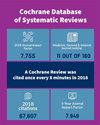
The Cochrane Database of Systematic Reviews (CDSR) stands as the premier database for systematic reviews in healthcare. It comprises Cochrane Reviews, along with protocols for these reviews, editorials, and supplements. Owned and operated by Cochrane, a worldwide independent network of healthcare stakeholders, the CDSR (ISSN 1469-493X) encompasses a broad spectrum of health-related topics, including health services.




 京公网安备 11010802042870号
京ICP备2023020795号-1
京公网安备 11010802042870号
京ICP备2023020795号-1

 分享
分享
 求助内容:
求助内容: 应助结果提醒方式:
 扫码关注我们
