{"title":"在资源有限的情况下,肺切除术的适应症、影响因素和短期结果:一项8年回顾性研究。","authors":"Mekonnen Feyissa Senbu, Dereje Gulilat, Hiwot Tadesse Habtamu","doi":"10.1186/s13019-024-03268-8","DOIUrl":null,"url":null,"abstract":"<p><strong>Background: </strong>Pneumonectomy, the surgical removal of an entire lung, was first performed in 1933 by Evarts A. Graham for lung carcinoma. Today, pneumonectomy is primarily indicated for non-small cell lung cancer (NSCLC) worldwide. However, it carries a higher risk of morbidity and mortality compared to less extensive lung resections.</p><p><strong>Objectives: </strong>This study aims to investigate the indications for pneumonectomy and its short-term outcomes among patients who underwent the procedure between 2016 and 2023.</p><p><strong>Methods and materials: </strong>A retrospective study was conducted on 112 patients who underwent pneumonectomy. Data were analyzed using the Statistical Package for the Social Sciences (SPSS) version 25. Univariate, bivariate, and multivariate analyses were performed to address the study's objectives. The Pearson chi-square test, crude odds ratio (COR), and adjusted odds ratio (AOR) were calculated for categorical variables where appropriate. To identify factors associated with pneumonectomy, a binary logistic regression model was used, and odds ratios with 95% confidence intervals were calculated. A p-value of < 0.25 was used as a threshold for including variables in the multivariate analysis, while a p-value of < 0.05 was considered statistically significant in the final model.</p><p><strong>Results: </strong>The majority of patients were aged between 20 and 30 years, with 54 patients (48.2%) in this age group, and a male-to-female ratio of 1.6:1. The primary indication for pneumonectomy was inflammatory conditions, accounting for 62.5% (70 patients), followed by carcinoid tumors at 32.1% (36 patients). Lung cancer was the diagnosis in 5.4% (6 patients) of cases. Factors significantly associated with pneumonectomy included a history of tuberculosis treatment (AOR 40.3; 95% CI: 3.01, 540.2), intraoperative blood loss > 500 mL (AOR 9.07; 95% CI: 1.04, 79.13), and surgical duration > 180 min (AOR 37.9; 95% CI: 1.82, 792.3). The morbidity rate was 25%, while the mortality rate was 5.4%.</p><p><strong>Conclusion and recommendations: </strong>In our setting, pneumonectomy is most commonly performed for inflammatory conditions. Significant factors associated with the procedure include a history of tuberculosis treatment, intraoperative blood loss > 500 mL, and surgical duration > 180 min. To reduce the need for pneumonectomy, strategies should focus on tuberculosis prevention, screening, and proper patient evaluation and diagnosis before treatment, to prevent extensive lung damage that often necessitates this procedure.</p>","PeriodicalId":15201,"journal":{"name":"Journal of Cardiothoracic Surgery","volume":"20 1","pages":"120"},"PeriodicalIF":1.5000,"publicationDate":"2025-02-05","publicationTypes":"Journal Article","fieldsOfStudy":null,"isOpenAccess":false,"openAccessPdf":"https://www.ncbi.nlm.nih.gov/pmc/articles/PMC11796055/pdf/","citationCount":"0","resultStr":"{\"title\":\"Indications, contributing factors, and short-term outcomes of pneumonectomy: an 8-year retrospective study in a resource-limited setting.\",\"authors\":\"Mekonnen Feyissa Senbu, Dereje Gulilat, Hiwot Tadesse Habtamu\",\"doi\":\"10.1186/s13019-024-03268-8\",\"DOIUrl\":null,\"url\":null,\"abstract\":\"<p><strong>Background: </strong>Pneumonectomy, the surgical removal of an entire lung, was first performed in 1933 by Evarts A. Graham for lung carcinoma. Today, pneumonectomy is primarily indicated for non-small cell lung cancer (NSCLC) worldwide. However, it carries a higher risk of morbidity and mortality compared to less extensive lung resections.</p><p><strong>Objectives: </strong>This study aims to investigate the indications for pneumonectomy and its short-term outcomes among patients who underwent the procedure between 2016 and 2023.</p><p><strong>Methods and materials: </strong>A retrospective study was conducted on 112 patients who underwent pneumonectomy. Data were analyzed using the Statistical Package for the Social Sciences (SPSS) version 25. Univariate, bivariate, and multivariate analyses were performed to address the study's objectives. The Pearson chi-square test, crude odds ratio (COR), and adjusted odds ratio (AOR) were calculated for categorical variables where appropriate. To identify factors associated with pneumonectomy, a binary logistic regression model was used, and odds ratios with 95% confidence intervals were calculated. A p-value of < 0.25 was used as a threshold for including variables in the multivariate analysis, while a p-value of < 0.05 was considered statistically significant in the final model.</p><p><strong>Results: </strong>The majority of patients were aged between 20 and 30 years, with 54 patients (48.2%) in this age group, and a male-to-female ratio of 1.6:1. The primary indication for pneumonectomy was inflammatory conditions, accounting for 62.5% (70 patients), followed by carcinoid tumors at 32.1% (36 patients). Lung cancer was the diagnosis in 5.4% (6 patients) of cases. Factors significantly associated with pneumonectomy included a history of tuberculosis treatment (AOR 40.3; 95% CI: 3.01, 540.2), intraoperative blood loss > 500 mL (AOR 9.07; 95% CI: 1.04, 79.13), and surgical duration > 180 min (AOR 37.9; 95% CI: 1.82, 792.3). The morbidity rate was 25%, while the mortality rate was 5.4%.</p><p><strong>Conclusion and recommendations: </strong>In our setting, pneumonectomy is most commonly performed for inflammatory conditions. Significant factors associated with the procedure include a history of tuberculosis treatment, intraoperative blood loss > 500 mL, and surgical duration > 180 min. To reduce the need for pneumonectomy, strategies should focus on tuberculosis prevention, screening, and proper patient evaluation and diagnosis before treatment, to prevent extensive lung damage that often necessitates this procedure.</p>\",\"PeriodicalId\":15201,\"journal\":{\"name\":\"Journal of Cardiothoracic Surgery\",\"volume\":\"20 1\",\"pages\":\"120\"},\"PeriodicalIF\":1.5000,\"publicationDate\":\"2025-02-05\",\"publicationTypes\":\"Journal Article\",\"fieldsOfStudy\":null,\"isOpenAccess\":false,\"openAccessPdf\":\"https://www.ncbi.nlm.nih.gov/pmc/articles/PMC11796055/pdf/\",\"citationCount\":\"0\",\"resultStr\":null,\"platform\":\"Semanticscholar\",\"paperid\":null,\"PeriodicalName\":\"Journal of Cardiothoracic Surgery\",\"FirstCategoryId\":\"3\",\"ListUrlMain\":\"https://doi.org/10.1186/s13019-024-03268-8\",\"RegionNum\":4,\"RegionCategory\":\"医学\",\"ArticlePicture\":[],\"TitleCN\":null,\"AbstractTextCN\":null,\"PMCID\":null,\"EPubDate\":\"\",\"PubModel\":\"\",\"JCR\":\"Q3\",\"JCRName\":\"CARDIAC & CARDIOVASCULAR SYSTEMS\",\"Score\":null,\"Total\":0}","platform":"Semanticscholar","paperid":null,"PeriodicalName":"Journal of Cardiothoracic Surgery","FirstCategoryId":"3","ListUrlMain":"https://doi.org/10.1186/s13019-024-03268-8","RegionNum":4,"RegionCategory":"医学","ArticlePicture":[],"TitleCN":null,"AbstractTextCN":null,"PMCID":null,"EPubDate":"","PubModel":"","JCR":"Q3","JCRName":"CARDIAC & CARDIOVASCULAR SYSTEMS","Score":null,"Total":0}
引用次数: 0
摘要
背景:全肺切除术是一种切除整个肺的手术,于1933年由Evarts A. Graham首次用于治疗肺癌。目前,全肺切除术主要适用于非小细胞肺癌(NSCLC)。然而,与不太广泛的肺切除术相比,它有更高的发病率和死亡率风险。目的:本研究旨在调查2016年至2023年期间接受全肺切除术的患者的适应证及其短期预后。方法与材料:对112例行全肺切除术的患者进行回顾性研究。数据分析使用社会科学统计软件包(SPSS)版本25。进行了单因素、双因素和多因素分析,以解决研究目标。在适当的情况下,对分类变量进行Pearson卡方检验、粗优势比(COR)和调整优势比(AOR)的计算。为了确定与全肺切除术相关的因素,采用二元logistic回归模型,并计算95%置信区间的比值比。结果的p值:患者以20 ~ 30岁为主,该年龄段54例(48.2%),男女比例为1.6:1。肺切除术的主要指征是炎性疾病,占62.5%(70例),其次是类癌,占32.1%(36例)。6例(5.4%)确诊为肺癌。与全肺切除术显著相关的因素包括结核病治疗史(AOR 40.3;95% CI: 3.01, 540.2),术中出血量> 500 mL (AOR 9.07;95% CI: 1.04, 79.13),手术时间bbb180 min (AOR 37.9;95% ci: 1.82, 792.3)。发病率为25%,死亡率为5.4%。结论和建议:在我们的研究中,肺切除术最常用于治疗炎症。与手术相关的重要因素包括结核病治疗史、术中出血量> 500ml和手术时间> 180min。为了减少对全肺切除术的需要,策略应侧重于结核病预防、筛查和治疗前的适当患者评估和诊断,以防止经常需要此手术的广泛肺损伤。
Indications, contributing factors, and short-term outcomes of pneumonectomy: an 8-year retrospective study in a resource-limited setting.
Background: Pneumonectomy, the surgical removal of an entire lung, was first performed in 1933 by Evarts A. Graham for lung carcinoma. Today, pneumonectomy is primarily indicated for non-small cell lung cancer (NSCLC) worldwide. However, it carries a higher risk of morbidity and mortality compared to less extensive lung resections.
Objectives: This study aims to investigate the indications for pneumonectomy and its short-term outcomes among patients who underwent the procedure between 2016 and 2023.
Methods and materials: A retrospective study was conducted on 112 patients who underwent pneumonectomy. Data were analyzed using the Statistical Package for the Social Sciences (SPSS) version 25. Univariate, bivariate, and multivariate analyses were performed to address the study's objectives. The Pearson chi-square test, crude odds ratio (COR), and adjusted odds ratio (AOR) were calculated for categorical variables where appropriate. To identify factors associated with pneumonectomy, a binary logistic regression model was used, and odds ratios with 95% confidence intervals were calculated. A p-value of < 0.25 was used as a threshold for including variables in the multivariate analysis, while a p-value of < 0.05 was considered statistically significant in the final model.
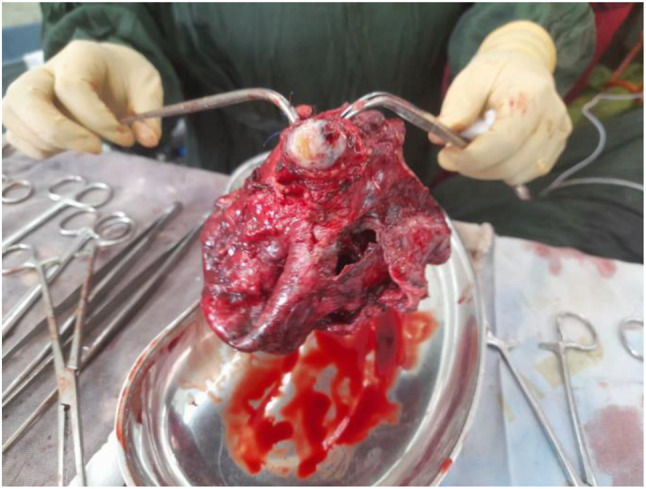
Results: The majority of patients were aged between 20 and 30 years, with 54 patients (48.2%) in this age group, and a male-to-female ratio of 1.6:1. The primary indication for pneumonectomy was inflammatory conditions, accounting for 62.5% (70 patients), followed by carcinoid tumors at 32.1% (36 patients). Lung cancer was the diagnosis in 5.4% (6 patients) of cases. Factors significantly associated with pneumonectomy included a history of tuberculosis treatment (AOR 40.3; 95% CI: 3.01, 540.2), intraoperative blood loss > 500 mL (AOR 9.07; 95% CI: 1.04, 79.13), and surgical duration > 180 min (AOR 37.9; 95% CI: 1.82, 792.3). The morbidity rate was 25%, while the mortality rate was 5.4%.
Conclusion and recommendations: In our setting, pneumonectomy is most commonly performed for inflammatory conditions. Significant factors associated with the procedure include a history of tuberculosis treatment, intraoperative blood loss > 500 mL, and surgical duration > 180 min. To reduce the need for pneumonectomy, strategies should focus on tuberculosis prevention, screening, and proper patient evaluation and diagnosis before treatment, to prevent extensive lung damage that often necessitates this procedure.
期刊介绍:
Journal of Cardiothoracic Surgery is an open access journal that encompasses all aspects of research in the field of Cardiology, and Cardiothoracic and Vascular Surgery. The journal publishes original scientific research documenting clinical and experimental advances in cardiac, vascular and thoracic surgery, and related fields.
Topics of interest include surgical techniques, survival rates, surgical complications and their outcomes; along with basic sciences, pediatric conditions, transplantations and clinical trials.
Journal of Cardiothoracic Surgery is of interest to cardiothoracic and vascular surgeons, cardiothoracic anaesthesiologists, cardiologists, chest physicians, and allied health professionals.






 京公网安备 11010802042870号
京ICP备2023020795号-1
京公网安备 11010802042870号
京ICP备2023020795号-1

 分享
分享
 求助内容:
求助内容: 应助结果提醒方式:
 扫码关注我们
