Peipei Jin , Hui Qi , Jing Zhao , Yuanyuan Zhang , Caiyun Yuan , Shiwei Kang , Le Wang , Qixuan Feng , Yan Ma , Yadong Yuan , Yunlong Hou , Zhenhua Jia
{"title":"连花清咳片治疗重症肺炎的临床疗效及免疫调节机制。","authors":"Peipei Jin , Hui Qi , Jing Zhao , Yuanyuan Zhang , Caiyun Yuan , Shiwei Kang , Le Wang , Qixuan Feng , Yan Ma , Yadong Yuan , Yunlong Hou , Zhenhua Jia","doi":"10.1016/j.jep.2025.119420","DOIUrl":null,"url":null,"abstract":"<div><h3>Ethnopharmacological relevance</h3><div>Lianhua Qingke (LHQK), a traditional Chinese medicine, has shown efficacy in treating acute and chronic bronchitis and bronchiolitis. However, the specific mechanism underlying the therapeutic effects of LHQK on severe pneumonia is not clear.</div></div><div><h3>Aim of the study</h3><div>Severe pneumonia remains a critical health challenge, particularly in cases progressing to sepsis and septic shock, where host immune responses become dysregulated or dysfunctional. This study aims to evaluate the immunomodulatory effects of LHQK in severe pneumonia.</div></div><div><h3>Materials and methods</h3><div>This research examined LHQK's therapeutic and immunomodulatory mechanisms in patients with severe pneumonia and a lipopolysaccharide (LPS)-induced mouse model of severe pneumonia. Patients with severe pneumonia were randomized into three groups: basal treatment, LHQK-Low dose (12 tablets/day), and LHQK-High dose (24 tablets/day). BALB/c mice were categorized into four groups: control, model, LHQK-Low dose (3.7 mg/kg), and LHQK-High dose (7.4 mg/kg). Clinical efficacy was evaluated by assessing parameters including the value and rate of change in APACHE II score, improvement in chest X-ray or CT, partial pressure of oxygen (PO<sub>2</sub>), oxygen saturation in arterial blood (SaO<sub>2</sub>), oxygenation index (OI), and the length of hospitalization after 7 days of treatment. The viscosity of sputum was measured by viscosimeter. Moreover, lung histopathology, airway barrier integrity, and immune cells in BALF, were assessed using hematoxylin and eosin staining, immunostaining, and Wright-Giemsa staining. Cytokine levels were measured using Luminex assay and Olink, while pulmonary immune cell patterns were analyzed using multiplex fluorescence and Cytometry by Time-Of-Flight (CyTOF).</div></div><div><h3>Results</h3><div>In comparison to the basal treatment group of patients, LHQK treatment exhibited a reduction in the severity of severe pneumonia and inflammatory status, as evidenced by observations on Chest X-ray or CT scans. Additionally, LHQK treatment led to an elevation in OI, PO<sub>2</sub>, and SaO<sub>2</sub> levels, and notably, a decreased duration of hospitalization. Further analysis revealed that LHQK enhanced the integrity of the airway epithelial barrier, reduced the viscosity of sputum, and significantly decreased inflammatory cells infiltration. The application of Luminex and Olink assay further confirmed the inhibitory impact of LHQK on the cytokine storm in mice. Moreover, multiplex fluorescence and CyTOF analysis demonstrated that LHQK effectively suppressed the activation of monocyte derived macrophages, neutrophils, and Treg cells, while preserved the levels of alveolar macrophages, B cells, and CD4<sup>+</sup> and CD8<sup>+</sup> T lymphocytes, therefore restoring immune homeostasis within the lung of severe pneumonia. These findings significantly substantiate the potential clinical application of LHQK in severe pneumonia treatment.</div></div><div><h3>Conclusion</h3><div>LHQK demonstrates therapeutic efficacy in severe pneumonia by maintaining structural integrity, suppressing cytokine storms, enhancing intrinsic immunity, reversing T cell exhaustion, and correcting lung immune disorders. These findings significantly substantiate LHQK's potential clinical application in severe pneumonia treatment.</div></div>","PeriodicalId":15761,"journal":{"name":"Journal of ethnopharmacology","volume":"342 ","pages":"Article 119420"},"PeriodicalIF":6.8000,"publicationDate":"2025-02-27","publicationTypes":"Journal Article","fieldsOfStudy":null,"isOpenAccess":false,"openAccessPdf":"","citationCount":"0","resultStr":"{\"title\":\"Lianhua Qingke Tablet in severe pneumonia: Clinical efficacy and immunoregulatory mechanisms\",\"authors\":\"Peipei Jin , Hui Qi , Jing Zhao , Yuanyuan Zhang , Caiyun Yuan , Shiwei Kang , Le Wang , Qixuan Feng , Yan Ma , Yadong Yuan , Yunlong Hou , Zhenhua Jia\",\"doi\":\"10.1016/j.jep.2025.119420\",\"DOIUrl\":null,\"url\":null,\"abstract\":\"<div><h3>Ethnopharmacological relevance</h3><div>Lianhua Qingke (LHQK), a traditional Chinese medicine, has shown efficacy in treating acute and chronic bronchitis and bronchiolitis. However, the specific mechanism underlying the therapeutic effects of LHQK on severe pneumonia is not clear.</div></div><div><h3>Aim of the study</h3><div>Severe pneumonia remains a critical health challenge, particularly in cases progressing to sepsis and septic shock, where host immune responses become dysregulated or dysfunctional. This study aims to evaluate the immunomodulatory effects of LHQK in severe pneumonia.</div></div><div><h3>Materials and methods</h3><div>This research examined LHQK's therapeutic and immunomodulatory mechanisms in patients with severe pneumonia and a lipopolysaccharide (LPS)-induced mouse model of severe pneumonia. Patients with severe pneumonia were randomized into three groups: basal treatment, LHQK-Low dose (12 tablets/day), and LHQK-High dose (24 tablets/day). BALB/c mice were categorized into four groups: control, model, LHQK-Low dose (3.7 mg/kg), and LHQK-High dose (7.4 mg/kg). Clinical efficacy was evaluated by assessing parameters including the value and rate of change in APACHE II score, improvement in chest X-ray or CT, partial pressure of oxygen (PO<sub>2</sub>), oxygen saturation in arterial blood (SaO<sub>2</sub>), oxygenation index (OI), and the length of hospitalization after 7 days of treatment. The viscosity of sputum was measured by viscosimeter. Moreover, lung histopathology, airway barrier integrity, and immune cells in BALF, were assessed using hematoxylin and eosin staining, immunostaining, and Wright-Giemsa staining. Cytokine levels were measured using Luminex assay and Olink, while pulmonary immune cell patterns were analyzed using multiplex fluorescence and Cytometry by Time-Of-Flight (CyTOF).</div></div><div><h3>Results</h3><div>In comparison to the basal treatment group of patients, LHQK treatment exhibited a reduction in the severity of severe pneumonia and inflammatory status, as evidenced by observations on Chest X-ray or CT scans. Additionally, LHQK treatment led to an elevation in OI, PO<sub>2</sub>, and SaO<sub>2</sub> levels, and notably, a decreased duration of hospitalization. Further analysis revealed that LHQK enhanced the integrity of the airway epithelial barrier, reduced the viscosity of sputum, and significantly decreased inflammatory cells infiltration. The application of Luminex and Olink assay further confirmed the inhibitory impact of LHQK on the cytokine storm in mice. Moreover, multiplex fluorescence and CyTOF analysis demonstrated that LHQK effectively suppressed the activation of monocyte derived macrophages, neutrophils, and Treg cells, while preserved the levels of alveolar macrophages, B cells, and CD4<sup>+</sup> and CD8<sup>+</sup> T lymphocytes, therefore restoring immune homeostasis within the lung of severe pneumonia. These findings significantly substantiate the potential clinical application of LHQK in severe pneumonia treatment.</div></div><div><h3>Conclusion</h3><div>LHQK demonstrates therapeutic efficacy in severe pneumonia by maintaining structural integrity, suppressing cytokine storms, enhancing intrinsic immunity, reversing T cell exhaustion, and correcting lung immune disorders. These findings significantly substantiate LHQK's potential clinical application in severe pneumonia treatment.</div></div>\",\"PeriodicalId\":15761,\"journal\":{\"name\":\"Journal of ethnopharmacology\",\"volume\":\"342 \",\"pages\":\"Article 119420\"},\"PeriodicalIF\":6.8000,\"publicationDate\":\"2025-02-27\",\"publicationTypes\":\"Journal Article\",\"fieldsOfStudy\":null,\"isOpenAccess\":false,\"openAccessPdf\":\"\",\"citationCount\":\"0\",\"resultStr\":null,\"platform\":\"Semanticscholar\",\"paperid\":null,\"PeriodicalName\":\"Journal of ethnopharmacology\",\"FirstCategoryId\":\"3\",\"ListUrlMain\":\"https://www.sciencedirect.com/science/article/pii/S0378874125001035\",\"RegionNum\":2,\"RegionCategory\":\"医学\",\"ArticlePicture\":[],\"TitleCN\":null,\"AbstractTextCN\":null,\"PMCID\":null,\"EPubDate\":\"2025/2/3 0:00:00\",\"PubModel\":\"Epub\",\"JCR\":\"Q1\",\"JCRName\":\"CHEMISTRY, MEDICINAL\",\"Score\":null,\"Total\":0}","platform":"Semanticscholar","paperid":null,"PeriodicalName":"Journal of ethnopharmacology","FirstCategoryId":"3","ListUrlMain":"https://www.sciencedirect.com/science/article/pii/S0378874125001035","RegionNum":2,"RegionCategory":"医学","ArticlePicture":[],"TitleCN":null,"AbstractTextCN":null,"PMCID":null,"EPubDate":"2025/2/3 0:00:00","PubModel":"Epub","JCR":"Q1","JCRName":"CHEMISTRY, MEDICINAL","Score":null,"Total":0}
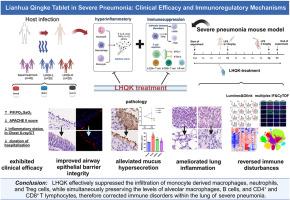
Lianhua Qingke Tablet in severe pneumonia: Clinical efficacy and immunoregulatory mechanisms
Ethnopharmacological relevance
Lianhua Qingke (LHQK), a traditional Chinese medicine, has shown efficacy in treating acute and chronic bronchitis and bronchiolitis. However, the specific mechanism underlying the therapeutic effects of LHQK on severe pneumonia is not clear.
Aim of the study
Severe pneumonia remains a critical health challenge, particularly in cases progressing to sepsis and septic shock, where host immune responses become dysregulated or dysfunctional. This study aims to evaluate the immunomodulatory effects of LHQK in severe pneumonia.
Materials and methods
This research examined LHQK's therapeutic and immunomodulatory mechanisms in patients with severe pneumonia and a lipopolysaccharide (LPS)-induced mouse model of severe pneumonia. Patients with severe pneumonia were randomized into three groups: basal treatment, LHQK-Low dose (12 tablets/day), and LHQK-High dose (24 tablets/day). BALB/c mice were categorized into four groups: control, model, LHQK-Low dose (3.7 mg/kg), and LHQK-High dose (7.4 mg/kg). Clinical efficacy was evaluated by assessing parameters including the value and rate of change in APACHE II score, improvement in chest X-ray or CT, partial pressure of oxygen (PO2), oxygen saturation in arterial blood (SaO2), oxygenation index (OI), and the length of hospitalization after 7 days of treatment. The viscosity of sputum was measured by viscosimeter. Moreover, lung histopathology, airway barrier integrity, and immune cells in BALF, were assessed using hematoxylin and eosin staining, immunostaining, and Wright-Giemsa staining. Cytokine levels were measured using Luminex assay and Olink, while pulmonary immune cell patterns were analyzed using multiplex fluorescence and Cytometry by Time-Of-Flight (CyTOF).
Results
In comparison to the basal treatment group of patients, LHQK treatment exhibited a reduction in the severity of severe pneumonia and inflammatory status, as evidenced by observations on Chest X-ray or CT scans. Additionally, LHQK treatment led to an elevation in OI, PO2, and SaO2 levels, and notably, a decreased duration of hospitalization. Further analysis revealed that LHQK enhanced the integrity of the airway epithelial barrier, reduced the viscosity of sputum, and significantly decreased inflammatory cells infiltration. The application of Luminex and Olink assay further confirmed the inhibitory impact of LHQK on the cytokine storm in mice. Moreover, multiplex fluorescence and CyTOF analysis demonstrated that LHQK effectively suppressed the activation of monocyte derived macrophages, neutrophils, and Treg cells, while preserved the levels of alveolar macrophages, B cells, and CD4+ and CD8+ T lymphocytes, therefore restoring immune homeostasis within the lung of severe pneumonia. These findings significantly substantiate the potential clinical application of LHQK in severe pneumonia treatment.
Conclusion
LHQK demonstrates therapeutic efficacy in severe pneumonia by maintaining structural integrity, suppressing cytokine storms, enhancing intrinsic immunity, reversing T cell exhaustion, and correcting lung immune disorders. These findings significantly substantiate LHQK's potential clinical application in severe pneumonia treatment.
期刊介绍:
The Journal of Ethnopharmacology is dedicated to the exchange of information and understandings about people''s use of plants, fungi, animals, microorganisms and minerals and their biological and pharmacological effects based on the principles established through international conventions. Early people confronted with illness and disease, discovered a wealth of useful therapeutic agents in the plant and animal kingdoms. The empirical knowledge of these medicinal substances and their toxic potential was passed on by oral tradition and sometimes recorded in herbals and other texts on materia medica. Many valuable drugs of today (e.g., atropine, ephedrine, tubocurarine, digoxin, reserpine) came into use through the study of indigenous remedies. Chemists continue to use plant-derived drugs (e.g., morphine, taxol, physostigmine, quinidine, emetine) as prototypes in their attempts to develop more effective and less toxic medicinals.





 京公网安备 11010802042870号
京ICP备2023020795号-1
京公网安备 11010802042870号
京ICP备2023020795号-1

 分享
分享
 求助内容:
求助内容: 应助结果提醒方式:
 扫码关注我们
