Andrew Hudson, Peng Wu, Kyle W Kroll, Brady Hueber, Griffin Woolley, Pixu Shi, R Keith Reeves
{"title":"急性SIV感染期间恒河猴代谢组的纵向分析揭示了广泛代谢物类别的破坏。","authors":"Andrew Hudson, Peng Wu, Kyle W Kroll, Brady Hueber, Griffin Woolley, Pixu Shi, R Keith Reeves","doi":"10.1128/jvi.01634-24","DOIUrl":null,"url":null,"abstract":"<p><p>Persons living with HIV experience significant metabolic dysregulation, frequently resulting in immune and other cellular dysfunction. However, our understanding of metabolism and its relationship to immunity in the context of HIV remains incompletely understood, especially as it relates to the acute and early chronic phases of HIV infection. Herein, we employed mass spectrometry and a simian immunodeficiency virus (SIV)-infected rhesus macaque model to characterize changes in over 500 plasma metabolites throughout SIV infection. This broad metabolomic approach recapitulated known pathogenic signatures of HIV, such as a perturbed tryptophan/kynurenine ratio, but also identified novel metabolic changes. We observed a general decrease in plasma amino acid concentrations, with the notable exceptions of elevated aspartate and glutamate. Acute infection was marked by a transient increase in lactate dehydrogenase activity, indicating a shift toward anaerobic metabolism. Indoleamine 2,3-dioxygenase activity, defined by the kynurenine/tryptophan ratio, was significantly increased in both acute and chronic phases and strongly correlated with viral load. These results provide a comprehensive characterization of metabolic fluctuations during early lentiviral infection, furthering our understanding of the crucial interplay between metabolism and immune response. Our findings highlight systemic metabolic consequences of infection and provide potential targets for therapeutic intervention or biomarkers of disease progression.</p><p><strong>Importance: </strong>Despite significant advances in antiretroviral therapy and pre-exposure prophylaxis, HIV remains a global challenge. Understanding the underlying immune mechanisms is critical for improving HIV control and therapeutic development. Cellular metabolism represents a crucial yet underappreciated area of immune system function. Metabolite availability and metabolic pathway preferences directly influence the functional response capacity of immune cells and are highly dysregulated during HIV infection. To further the understanding of metabolic impacts of HIV infection, we utilized cutting-edge mass spectrometry-based metabolome interrogation to measure over 500 metabolites using an acute simian immunodeficiency virus infection model in rhesus macaques. Our comprehensive analysis provides insights into the dynamic metabolic landscape throughout early infection, revealing both known and novel metabolic signatures. These findings enhance our understanding of the complex interplay between metabolism and immunity in lentiviral infections, potentially informing new strategies for early detection, prevention, and treatment of HIV.</p>","PeriodicalId":17583,"journal":{"name":"Journal of Virology","volume":" ","pages":"e0163424"},"PeriodicalIF":3.8000,"publicationDate":"2025-03-18","publicationTypes":"Journal Article","fieldsOfStudy":null,"isOpenAccess":false,"openAccessPdf":"https://www.ncbi.nlm.nih.gov/pmc/articles/PMC11915796/pdf/","citationCount":"0","resultStr":"{\"title\":\"Longitudinal analysis of rhesus macaque metabolome during acute SIV infection reveals disruption in broad metabolite classes.\",\"authors\":\"Andrew Hudson, Peng Wu, Kyle W Kroll, Brady Hueber, Griffin Woolley, Pixu Shi, R Keith Reeves\",\"doi\":\"10.1128/jvi.01634-24\",\"DOIUrl\":null,\"url\":null,\"abstract\":\"<p><p>Persons living with HIV experience significant metabolic dysregulation, frequently resulting in immune and other cellular dysfunction. However, our understanding of metabolism and its relationship to immunity in the context of HIV remains incompletely understood, especially as it relates to the acute and early chronic phases of HIV infection. Herein, we employed mass spectrometry and a simian immunodeficiency virus (SIV)-infected rhesus macaque model to characterize changes in over 500 plasma metabolites throughout SIV infection. This broad metabolomic approach recapitulated known pathogenic signatures of HIV, such as a perturbed tryptophan/kynurenine ratio, but also identified novel metabolic changes. We observed a general decrease in plasma amino acid concentrations, with the notable exceptions of elevated aspartate and glutamate. Acute infection was marked by a transient increase in lactate dehydrogenase activity, indicating a shift toward anaerobic metabolism. Indoleamine 2,3-dioxygenase activity, defined by the kynurenine/tryptophan ratio, was significantly increased in both acute and chronic phases and strongly correlated with viral load. These results provide a comprehensive characterization of metabolic fluctuations during early lentiviral infection, furthering our understanding of the crucial interplay between metabolism and immune response. Our findings highlight systemic metabolic consequences of infection and provide potential targets for therapeutic intervention or biomarkers of disease progression.</p><p><strong>Importance: </strong>Despite significant advances in antiretroviral therapy and pre-exposure prophylaxis, HIV remains a global challenge. Understanding the underlying immune mechanisms is critical for improving HIV control and therapeutic development. Cellular metabolism represents a crucial yet underappreciated area of immune system function. Metabolite availability and metabolic pathway preferences directly influence the functional response capacity of immune cells and are highly dysregulated during HIV infection. To further the understanding of metabolic impacts of HIV infection, we utilized cutting-edge mass spectrometry-based metabolome interrogation to measure over 500 metabolites using an acute simian immunodeficiency virus infection model in rhesus macaques. Our comprehensive analysis provides insights into the dynamic metabolic landscape throughout early infection, revealing both known and novel metabolic signatures. These findings enhance our understanding of the complex interplay between metabolism and immunity in lentiviral infections, potentially informing new strategies for early detection, prevention, and treatment of HIV.</p>\",\"PeriodicalId\":17583,\"journal\":{\"name\":\"Journal of Virology\",\"volume\":\" \",\"pages\":\"e0163424\"},\"PeriodicalIF\":3.8000,\"publicationDate\":\"2025-03-18\",\"publicationTypes\":\"Journal Article\",\"fieldsOfStudy\":null,\"isOpenAccess\":false,\"openAccessPdf\":\"https://www.ncbi.nlm.nih.gov/pmc/articles/PMC11915796/pdf/\",\"citationCount\":\"0\",\"resultStr\":null,\"platform\":\"Semanticscholar\",\"paperid\":null,\"PeriodicalName\":\"Journal of Virology\",\"FirstCategoryId\":\"3\",\"ListUrlMain\":\"https://doi.org/10.1128/jvi.01634-24\",\"RegionNum\":2,\"RegionCategory\":\"医学\",\"ArticlePicture\":[],\"TitleCN\":null,\"AbstractTextCN\":null,\"PMCID\":null,\"EPubDate\":\"2025/2/6 0:00:00\",\"PubModel\":\"Epub\",\"JCR\":\"Q2\",\"JCRName\":\"VIROLOGY\",\"Score\":null,\"Total\":0}","platform":"Semanticscholar","paperid":null,"PeriodicalName":"Journal of Virology","FirstCategoryId":"3","ListUrlMain":"https://doi.org/10.1128/jvi.01634-24","RegionNum":2,"RegionCategory":"医学","ArticlePicture":[],"TitleCN":null,"AbstractTextCN":null,"PMCID":null,"EPubDate":"2025/2/6 0:00:00","PubModel":"Epub","JCR":"Q2","JCRName":"VIROLOGY","Score":null,"Total":0}
Longitudinal analysis of rhesus macaque metabolome during acute SIV infection reveals disruption in broad metabolite classes.
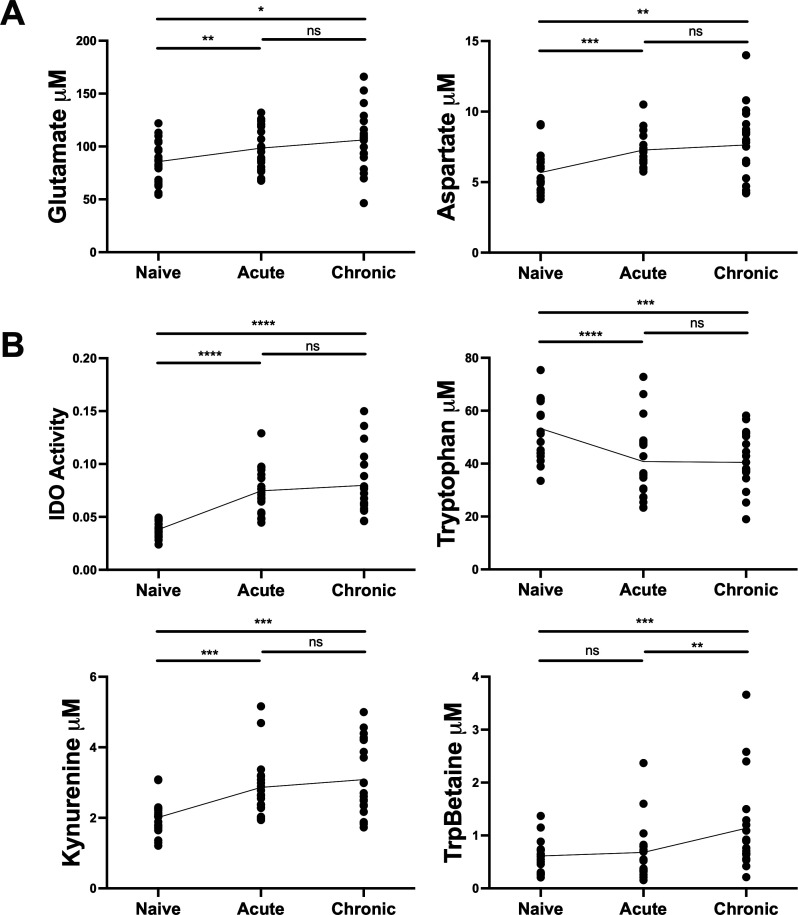
Persons living with HIV experience significant metabolic dysregulation, frequently resulting in immune and other cellular dysfunction. However, our understanding of metabolism and its relationship to immunity in the context of HIV remains incompletely understood, especially as it relates to the acute and early chronic phases of HIV infection. Herein, we employed mass spectrometry and a simian immunodeficiency virus (SIV)-infected rhesus macaque model to characterize changes in over 500 plasma metabolites throughout SIV infection. This broad metabolomic approach recapitulated known pathogenic signatures of HIV, such as a perturbed tryptophan/kynurenine ratio, but also identified novel metabolic changes. We observed a general decrease in plasma amino acid concentrations, with the notable exceptions of elevated aspartate and glutamate. Acute infection was marked by a transient increase in lactate dehydrogenase activity, indicating a shift toward anaerobic metabolism. Indoleamine 2,3-dioxygenase activity, defined by the kynurenine/tryptophan ratio, was significantly increased in both acute and chronic phases and strongly correlated with viral load. These results provide a comprehensive characterization of metabolic fluctuations during early lentiviral infection, furthering our understanding of the crucial interplay between metabolism and immune response. Our findings highlight systemic metabolic consequences of infection and provide potential targets for therapeutic intervention or biomarkers of disease progression.
Importance: Despite significant advances in antiretroviral therapy and pre-exposure prophylaxis, HIV remains a global challenge. Understanding the underlying immune mechanisms is critical for improving HIV control and therapeutic development. Cellular metabolism represents a crucial yet underappreciated area of immune system function. Metabolite availability and metabolic pathway preferences directly influence the functional response capacity of immune cells and are highly dysregulated during HIV infection. To further the understanding of metabolic impacts of HIV infection, we utilized cutting-edge mass spectrometry-based metabolome interrogation to measure over 500 metabolites using an acute simian immunodeficiency virus infection model in rhesus macaques. Our comprehensive analysis provides insights into the dynamic metabolic landscape throughout early infection, revealing both known and novel metabolic signatures. These findings enhance our understanding of the complex interplay between metabolism and immunity in lentiviral infections, potentially informing new strategies for early detection, prevention, and treatment of HIV.
期刊介绍:
Journal of Virology (JVI) explores the nature of the viruses of animals, archaea, bacteria, fungi, plants, and protozoa. We welcome papers on virion structure and assembly, viral genome replication and regulation of gene expression, genetic diversity and evolution, virus-cell interactions, cellular responses to infection, transformation and oncogenesis, gene delivery, viral pathogenesis and immunity, and vaccines and antiviral agents.






 京公网安备 11010802042870号
京ICP备2023020795号-1
京公网安备 11010802042870号
京ICP备2023020795号-1

 分享
分享
 求助内容:
求助内容: 应助结果提醒方式:
 扫码关注我们
