{"title":"首次在喀麦隆家畜采集的微小鼻头蜱(Boophilus microplus)中检测到荆门蜱病毒并进行分子鉴定(2024年)。","authors":"Paloma Kiwan, Eva Lopez, Morena Gasparine, Geraldine Piorkowski, Agathe Colmant, Achille Paguem, Stephanie Mvodo, Laurence Thirion, Xavier de Lamballerie, Remi Charrel, Alessandra Falchi","doi":"10.1186/s13071-025-06670-w","DOIUrl":null,"url":null,"abstract":"<p><strong>Background: </strong>Jingmen tick virus (JMTV) is a novel tick-borne virus detected for the first time in Rhipicephalus (Boophilus) microplus in China. To date, there is no information regarding the circulation of JMTV in ticks collected from livestock in Cameroon. As part of the surveillance for arboviral circulation, this study aimed to assess the presence of JMTV in ticks collected from livestock (cattle and sheep) in an area of the Akonolinga health district, Center Region, Cameroon.</p><p><strong>Methods: </strong>A cross sectional study was carried out during the dry season between 5 and 14 March 2024. Ticks were collected from cattle and sheep in six sampling sites in an area approximately 30 km long and 18 km wide along the Nyong River, in central Cameroon. Ticks were identified morphologically and molecularly. Total RNA/DNA was extracted from tick pools and screened for JMTV RNA using a segment 2 RT-qPCR system. Positive JMTV pools were sequenced for partial JMTV-Segment 1 and full genome analyses.</p><p><strong>Results: </strong>A total of 622 ticks, organized into 251 pools were collected from 155 cattle and nine sheep. They consisted of five species covering three genera: R. (B.) microplus (472; 75.9%), Amblyomma variegatum (118; 19.0%), Hyalomma truncatum (13; 2.1%), Hyalomma rufipes (2; 0.3%), and other Rhipicephalus spp. (17; 2.7%). The quantitative reverse transcription polymerase chain reaction (qRT-PCR) screening of 251 tick pools yielded 61 JMTV-positive pools, of which 58 corresponded to R. (B.) microplus. Multiple sequence analysis revealed that JMTV from the Akonolinga area shared > 95% identity with strains from Guinea, and that these strains clustered phylogenetically together.</p><p><strong>Conclusions: </strong>We provide molecular evidence of the presence of JMTV in R. (B.) microplus and A. variegatum collected from cattle and sheep from an area not yet recognized as endemic for this virus, confirming its wide geographical distribution.</p>","PeriodicalId":19793,"journal":{"name":"Parasites & Vectors","volume":"18 1","pages":"41"},"PeriodicalIF":3.7000,"publicationDate":"2025-02-05","publicationTypes":"Journal Article","fieldsOfStudy":null,"isOpenAccess":false,"openAccessPdf":"https://www.ncbi.nlm.nih.gov/pmc/articles/PMC11796043/pdf/","citationCount":"0","resultStr":"{\"title\":\"First detection and molecular characterization of Jingmen tick virus with a high occurrence in Rhipicephalus (Boophilus) microplus collected from livestock in Cameroon (2024).\",\"authors\":\"Paloma Kiwan, Eva Lopez, Morena Gasparine, Geraldine Piorkowski, Agathe Colmant, Achille Paguem, Stephanie Mvodo, Laurence Thirion, Xavier de Lamballerie, Remi Charrel, Alessandra Falchi\",\"doi\":\"10.1186/s13071-025-06670-w\",\"DOIUrl\":null,\"url\":null,\"abstract\":\"<p><strong>Background: </strong>Jingmen tick virus (JMTV) is a novel tick-borne virus detected for the first time in Rhipicephalus (Boophilus) microplus in China. To date, there is no information regarding the circulation of JMTV in ticks collected from livestock in Cameroon. As part of the surveillance for arboviral circulation, this study aimed to assess the presence of JMTV in ticks collected from livestock (cattle and sheep) in an area of the Akonolinga health district, Center Region, Cameroon.</p><p><strong>Methods: </strong>A cross sectional study was carried out during the dry season between 5 and 14 March 2024. Ticks were collected from cattle and sheep in six sampling sites in an area approximately 30 km long and 18 km wide along the Nyong River, in central Cameroon. Ticks were identified morphologically and molecularly. Total RNA/DNA was extracted from tick pools and screened for JMTV RNA using a segment 2 RT-qPCR system. Positive JMTV pools were sequenced for partial JMTV-Segment 1 and full genome analyses.</p><p><strong>Results: </strong>A total of 622 ticks, organized into 251 pools were collected from 155 cattle and nine sheep. They consisted of five species covering three genera: R. (B.) microplus (472; 75.9%), Amblyomma variegatum (118; 19.0%), Hyalomma truncatum (13; 2.1%), Hyalomma rufipes (2; 0.3%), and other Rhipicephalus spp. (17; 2.7%). The quantitative reverse transcription polymerase chain reaction (qRT-PCR) screening of 251 tick pools yielded 61 JMTV-positive pools, of which 58 corresponded to R. (B.) microplus. Multiple sequence analysis revealed that JMTV from the Akonolinga area shared > 95% identity with strains from Guinea, and that these strains clustered phylogenetically together.</p><p><strong>Conclusions: </strong>We provide molecular evidence of the presence of JMTV in R. (B.) microplus and A. variegatum collected from cattle and sheep from an area not yet recognized as endemic for this virus, confirming its wide geographical distribution.</p>\",\"PeriodicalId\":19793,\"journal\":{\"name\":\"Parasites & Vectors\",\"volume\":\"18 1\",\"pages\":\"41\"},\"PeriodicalIF\":3.7000,\"publicationDate\":\"2025-02-05\",\"publicationTypes\":\"Journal Article\",\"fieldsOfStudy\":null,\"isOpenAccess\":false,\"openAccessPdf\":\"https://www.ncbi.nlm.nih.gov/pmc/articles/PMC11796043/pdf/\",\"citationCount\":\"0\",\"resultStr\":null,\"platform\":\"Semanticscholar\",\"paperid\":null,\"PeriodicalName\":\"Parasites & Vectors\",\"FirstCategoryId\":\"3\",\"ListUrlMain\":\"https://doi.org/10.1186/s13071-025-06670-w\",\"RegionNum\":2,\"RegionCategory\":\"医学\",\"ArticlePicture\":[],\"TitleCN\":null,\"AbstractTextCN\":null,\"PMCID\":null,\"EPubDate\":\"\",\"PubModel\":\"\",\"JCR\":\"Q1\",\"JCRName\":\"PARASITOLOGY\",\"Score\":null,\"Total\":0}","platform":"Semanticscholar","paperid":null,"PeriodicalName":"Parasites & Vectors","FirstCategoryId":"3","ListUrlMain":"https://doi.org/10.1186/s13071-025-06670-w","RegionNum":2,"RegionCategory":"医学","ArticlePicture":[],"TitleCN":null,"AbstractTextCN":null,"PMCID":null,"EPubDate":"","PubModel":"","JCR":"Q1","JCRName":"PARASITOLOGY","Score":null,"Total":0}
First detection and molecular characterization of Jingmen tick virus with a high occurrence in Rhipicephalus (Boophilus) microplus collected from livestock in Cameroon (2024).
Background: Jingmen tick virus (JMTV) is a novel tick-borne virus detected for the first time in Rhipicephalus (Boophilus) microplus in China. To date, there is no information regarding the circulation of JMTV in ticks collected from livestock in Cameroon. As part of the surveillance for arboviral circulation, this study aimed to assess the presence of JMTV in ticks collected from livestock (cattle and sheep) in an area of the Akonolinga health district, Center Region, Cameroon.
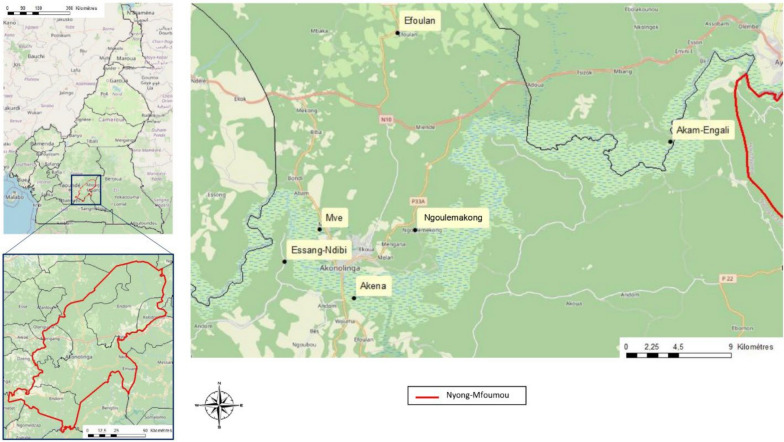
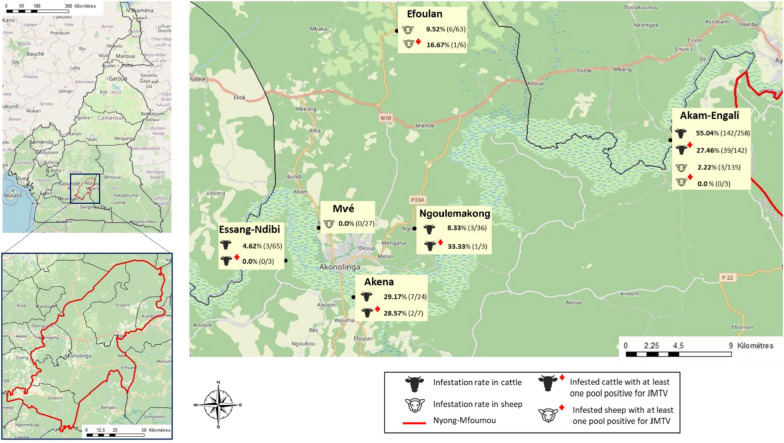
Methods: A cross sectional study was carried out during the dry season between 5 and 14 March 2024. Ticks were collected from cattle and sheep in six sampling sites in an area approximately 30 km long and 18 km wide along the Nyong River, in central Cameroon. Ticks were identified morphologically and molecularly. Total RNA/DNA was extracted from tick pools and screened for JMTV RNA using a segment 2 RT-qPCR system. Positive JMTV pools were sequenced for partial JMTV-Segment 1 and full genome analyses.
Results: A total of 622 ticks, organized into 251 pools were collected from 155 cattle and nine sheep. They consisted of five species covering three genera: R. (B.) microplus (472; 75.9%), Amblyomma variegatum (118; 19.0%), Hyalomma truncatum (13; 2.1%), Hyalomma rufipes (2; 0.3%), and other Rhipicephalus spp. (17; 2.7%). The quantitative reverse transcription polymerase chain reaction (qRT-PCR) screening of 251 tick pools yielded 61 JMTV-positive pools, of which 58 corresponded to R. (B.) microplus. Multiple sequence analysis revealed that JMTV from the Akonolinga area shared > 95% identity with strains from Guinea, and that these strains clustered phylogenetically together.
Conclusions: We provide molecular evidence of the presence of JMTV in R. (B.) microplus and A. variegatum collected from cattle and sheep from an area not yet recognized as endemic for this virus, confirming its wide geographical distribution.
期刊介绍:
Parasites & Vectors is an open access, peer-reviewed online journal dealing with the biology of parasites, parasitic diseases, intermediate hosts, vectors and vector-borne pathogens. Manuscripts published in this journal will be available to all worldwide, with no barriers to access, immediately following acceptance. However, authors retain the copyright of their material and may use it, or distribute it, as they wish.
Manuscripts on all aspects of the basic and applied biology of parasites, intermediate hosts, vectors and vector-borne pathogens will be considered. In addition to the traditional and well-established areas of science in these fields, we also aim to provide a vehicle for publication of the rapidly developing resources and technology in parasite, intermediate host and vector genomics and their impacts on biological research. We are able to publish large datasets and extensive results, frequently associated with genomic and post-genomic technologies, which are not readily accommodated in traditional journals. Manuscripts addressing broader issues, for example economics, social sciences and global climate change in relation to parasites, vectors and disease control, are also welcomed.





 京公网安备 11010802042870号
京ICP备2023020795号-1
京公网安备 11010802042870号
京ICP备2023020795号-1

 分享
分享
 求助内容:
求助内容: 应助结果提醒方式:
 扫码关注我们
