Xinlin Li, Zheng Xiang, Yang Mei, Declan O'Brien, David Brennan, Hong Zhao, Daniel N. Baker, Michael A. Temerin
{"title":"在2024年5月10日的超级磁暴之后,CIRBE/REPTile-2测量发现了一个新的电子和质子辐射带","authors":"Xinlin Li, Zheng Xiang, Yang Mei, Declan O'Brien, David Brennan, Hong Zhao, Daniel N. Baker, Michael A. Temerin","doi":"10.1029/2024JA033504","DOIUrl":null,"url":null,"abstract":"<p>Following the largest magnetic storm in 20 years (10 May 2024), REPTile-2 on NASA's CIRBE satellite identified two new radiation belts containing 1.3–5 MeV electrons around <i>L</i> = 2.5–3.5 and 6.8–20 MeV protons around <i>L</i> = 2. The region around <i>L</i> = 2.5–3.5 is usually devoid of relativistic electrons due to wave-particle interactions that scatter them into the atmosphere. However, these 1.3–5 MeV electrons in this new belt seemed unaffected until a magnetic storm on 28 June 2024, perturbed the region. The long-lasting nature of this new electron belt has physical implications for the dependence of electron wave-particle interactions on energy, plasma density, and magnetic field strength. The enhancement of protons around <i>L</i> = 2 exceeded an order of magnitude between 6.8 and 15 MeV forming a distinct new proton belt that appears even more stable. CIRBE, after a year of successful operation, malfunctioned 25 days before the super storm but returned to functionality 1 month after the storm, enabling these discoveries.</p>","PeriodicalId":15894,"journal":{"name":"Journal of Geophysical Research: Space Physics","volume":"130 2","pages":""},"PeriodicalIF":2.9000,"publicationDate":"2025-02-06","publicationTypes":"Journal Article","fieldsOfStudy":null,"isOpenAccess":false,"openAccessPdf":"https://onlinelibrary.wiley.com/doi/epdf/10.1029/2024JA033504","citationCount":"0","resultStr":"{\"title\":\"A New Electron and Proton Radiation Belt Identified by CIRBE/REPTile-2 Measurements After the Magnetic Super Storm of 10 May 2024\",\"authors\":\"Xinlin Li, Zheng Xiang, Yang Mei, Declan O'Brien, David Brennan, Hong Zhao, Daniel N. Baker, Michael A. Temerin\",\"doi\":\"10.1029/2024JA033504\",\"DOIUrl\":null,\"url\":null,\"abstract\":\"<p>Following the largest magnetic storm in 20 years (10 May 2024), REPTile-2 on NASA's CIRBE satellite identified two new radiation belts containing 1.3–5 MeV electrons around <i>L</i> = 2.5–3.5 and 6.8–20 MeV protons around <i>L</i> = 2. The region around <i>L</i> = 2.5–3.5 is usually devoid of relativistic electrons due to wave-particle interactions that scatter them into the atmosphere. However, these 1.3–5 MeV electrons in this new belt seemed unaffected until a magnetic storm on 28 June 2024, perturbed the region. The long-lasting nature of this new electron belt has physical implications for the dependence of electron wave-particle interactions on energy, plasma density, and magnetic field strength. The enhancement of protons around <i>L</i> = 2 exceeded an order of magnitude between 6.8 and 15 MeV forming a distinct new proton belt that appears even more stable. CIRBE, after a year of successful operation, malfunctioned 25 days before the super storm but returned to functionality 1 month after the storm, enabling these discoveries.</p>\",\"PeriodicalId\":15894,\"journal\":{\"name\":\"Journal of Geophysical Research: Space Physics\",\"volume\":\"130 2\",\"pages\":\"\"},\"PeriodicalIF\":2.9000,\"publicationDate\":\"2025-02-06\",\"publicationTypes\":\"Journal Article\",\"fieldsOfStudy\":null,\"isOpenAccess\":false,\"openAccessPdf\":\"https://onlinelibrary.wiley.com/doi/epdf/10.1029/2024JA033504\",\"citationCount\":\"0\",\"resultStr\":null,\"platform\":\"Semanticscholar\",\"paperid\":null,\"PeriodicalName\":\"Journal of Geophysical Research: Space Physics\",\"FirstCategoryId\":\"89\",\"ListUrlMain\":\"https://agupubs.onlinelibrary.wiley.com/doi/10.1029/2024JA033504\",\"RegionNum\":2,\"RegionCategory\":\"地球科学\",\"ArticlePicture\":[],\"TitleCN\":null,\"AbstractTextCN\":null,\"PMCID\":null,\"EPubDate\":\"\",\"PubModel\":\"\",\"JCR\":\"Q2\",\"JCRName\":\"ASTRONOMY & ASTROPHYSICS\",\"Score\":null,\"Total\":0}","platform":"Semanticscholar","paperid":null,"PeriodicalName":"Journal of Geophysical Research: Space Physics","FirstCategoryId":"89","ListUrlMain":"https://agupubs.onlinelibrary.wiley.com/doi/10.1029/2024JA033504","RegionNum":2,"RegionCategory":"地球科学","ArticlePicture":[],"TitleCN":null,"AbstractTextCN":null,"PMCID":null,"EPubDate":"","PubModel":"","JCR":"Q2","JCRName":"ASTRONOMY & ASTROPHYSICS","Score":null,"Total":0}
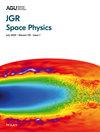
A New Electron and Proton Radiation Belt Identified by CIRBE/REPTile-2 Measurements After the Magnetic Super Storm of 10 May 2024
Following the largest magnetic storm in 20 years (10 May 2024), REPTile-2 on NASA's CIRBE satellite identified two new radiation belts containing 1.3–5 MeV electrons around L = 2.5–3.5 and 6.8–20 MeV protons around L = 2. The region around L = 2.5–3.5 is usually devoid of relativistic electrons due to wave-particle interactions that scatter them into the atmosphere. However, these 1.3–5 MeV electrons in this new belt seemed unaffected until a magnetic storm on 28 June 2024, perturbed the region. The long-lasting nature of this new electron belt has physical implications for the dependence of electron wave-particle interactions on energy, plasma density, and magnetic field strength. The enhancement of protons around L = 2 exceeded an order of magnitude between 6.8 and 15 MeV forming a distinct new proton belt that appears even more stable. CIRBE, after a year of successful operation, malfunctioned 25 days before the super storm but returned to functionality 1 month after the storm, enabling these discoveries.






 京公网安备 11010802042870号
京ICP备2023020795号-1
京公网安备 11010802042870号
京ICP备2023020795号-1

 分享
分享
 求助内容:
求助内容: 应助结果提醒方式:
 扫码关注我们
