Nataliia Semenko, Iurii Kuchyn, Michael Frank, Kateryna Bielka, Demyd Milokhov, Olga Korshun
{"title":"与异丙酚相比,七氟醚降低了布比卡因对兔的心脏毒性:一项使用早期心电图检测和测量毒性血浆浓度的实验研究。","authors":"Nataliia Semenko, Iurii Kuchyn, Michael Frank, Kateryna Bielka, Demyd Milokhov, Olga Korshun","doi":"10.5114/ait.2024.145167","DOIUrl":null,"url":null,"abstract":"<p><strong>Background: </strong>The effect of both propofol and sevoflurane on bupivacaine cardiac toxi-city has not been conclusively defined. The goal of this study was to investigate the effects of propofol vs sevoflurane general anesthesia (GA) on bupivacaine-induced arrhyth-mias.</p><p><strong>Material and methods: </strong>Ten rabbits were randomized to two groups: propofol- or sevoflurane-based GA. At the maintenance stage of anesthesia heart rate and QRS/QT durations were recorded as \"baseline\" and an intravenous (i.v.) bupivacaine 0.25% infusion at the rate of 1.0 mg kg -1 min -1 was initiated. Blood samples were obtained when predefined electrocardiographic (ECG) changes were observed and when the heart rate (HR) reached 75%, 50%, and 25% of the baseline and 0 bpm.</p><p><strong>Results: </strong>The mean time to first predefined ECG changes was 131 ± 25.02 s for the propofol group and 223 ± 34.11 s for the sevoflurane group ( P = 0.001). Time of progression of bradycardia in both groups was evaluated as a percentage of the initial HR for the understanding of the dynamics of changes during the local anesthetic systemic toxicity (LAST). The 25% HR time was shorter for the propofol group (480 ± 117 vs. 673 ± 146 s, P = 0.05). Time to asystole was shorter in the propofol group (110.7 ± 22.22 vs. 226.6 ± 98.61 s, P = 0.047). Mean serum bupivacaine concentration was lower for the propofol group during the occurrence of the first ECG changes (2.542 ± 1.415 vs. 6.997 ± 2.197 mg mL -1 , P = 0.005) and asystole (110.7 ± 22.22 vs. 226.6 ± 98.61 mg mL -1 , P = 0.047).</p><p><strong>Conclusions: </strong>It seems that sevoflurane-, but not propofol-based anesthesia reduces the risk of LAST during GA combined with peripheral nerve blocks. Sevoflurane-based anesthesia may protect the myocardium from the toxic effects of bupivacaine.</p>","PeriodicalId":7750,"journal":{"name":"Anaesthesiology intensive therapy","volume":"56 4","pages":"224-230"},"PeriodicalIF":2.3000,"publicationDate":"2024-01-01","publicationTypes":"Journal Article","fieldsOfStudy":null,"isOpenAccess":false,"openAccessPdf":"https://www.ncbi.nlm.nih.gov/pmc/articles/PMC11736912/pdf/","citationCount":"0","resultStr":"{\"title\":\"Sevoflurane reduces the cardiac toxicity of bupivacaine compared with propofol in rabbits: an experimental study using early electrocardiographic detection and measurement of toxic plasma concentration.\",\"authors\":\"Nataliia Semenko, Iurii Kuchyn, Michael Frank, Kateryna Bielka, Demyd Milokhov, Olga Korshun\",\"doi\":\"10.5114/ait.2024.145167\",\"DOIUrl\":null,\"url\":null,\"abstract\":\"<p><strong>Background: </strong>The effect of both propofol and sevoflurane on bupivacaine cardiac toxi-city has not been conclusively defined. The goal of this study was to investigate the effects of propofol vs sevoflurane general anesthesia (GA) on bupivacaine-induced arrhyth-mias.</p><p><strong>Material and methods: </strong>Ten rabbits were randomized to two groups: propofol- or sevoflurane-based GA. At the maintenance stage of anesthesia heart rate and QRS/QT durations were recorded as \\\"baseline\\\" and an intravenous (i.v.) bupivacaine 0.25% infusion at the rate of 1.0 mg kg -1 min -1 was initiated. Blood samples were obtained when predefined electrocardiographic (ECG) changes were observed and when the heart rate (HR) reached 75%, 50%, and 25% of the baseline and 0 bpm.</p><p><strong>Results: </strong>The mean time to first predefined ECG changes was 131 ± 25.02 s for the propofol group and 223 ± 34.11 s for the sevoflurane group ( P = 0.001). Time of progression of bradycardia in both groups was evaluated as a percentage of the initial HR for the understanding of the dynamics of changes during the local anesthetic systemic toxicity (LAST). The 25% HR time was shorter for the propofol group (480 ± 117 vs. 673 ± 146 s, P = 0.05). Time to asystole was shorter in the propofol group (110.7 ± 22.22 vs. 226.6 ± 98.61 s, P = 0.047). Mean serum bupivacaine concentration was lower for the propofol group during the occurrence of the first ECG changes (2.542 ± 1.415 vs. 6.997 ± 2.197 mg mL -1 , P = 0.005) and asystole (110.7 ± 22.22 vs. 226.6 ± 98.61 mg mL -1 , P = 0.047).</p><p><strong>Conclusions: </strong>It seems that sevoflurane-, but not propofol-based anesthesia reduces the risk of LAST during GA combined with peripheral nerve blocks. Sevoflurane-based anesthesia may protect the myocardium from the toxic effects of bupivacaine.</p>\",\"PeriodicalId\":7750,\"journal\":{\"name\":\"Anaesthesiology intensive therapy\",\"volume\":\"56 4\",\"pages\":\"224-230\"},\"PeriodicalIF\":2.3000,\"publicationDate\":\"2024-01-01\",\"publicationTypes\":\"Journal Article\",\"fieldsOfStudy\":null,\"isOpenAccess\":false,\"openAccessPdf\":\"https://www.ncbi.nlm.nih.gov/pmc/articles/PMC11736912/pdf/\",\"citationCount\":\"0\",\"resultStr\":null,\"platform\":\"Semanticscholar\",\"paperid\":null,\"PeriodicalName\":\"Anaesthesiology intensive therapy\",\"FirstCategoryId\":\"1085\",\"ListUrlMain\":\"https://doi.org/10.5114/ait.2024.145167\",\"RegionNum\":0,\"RegionCategory\":null,\"ArticlePicture\":[],\"TitleCN\":null,\"AbstractTextCN\":null,\"PMCID\":null,\"EPubDate\":\"\",\"PubModel\":\"\",\"JCR\":\"Q2\",\"JCRName\":\"ANESTHESIOLOGY\",\"Score\":null,\"Total\":0}","platform":"Semanticscholar","paperid":null,"PeriodicalName":"Anaesthesiology intensive therapy","FirstCategoryId":"1085","ListUrlMain":"https://doi.org/10.5114/ait.2024.145167","RegionNum":0,"RegionCategory":null,"ArticlePicture":[],"TitleCN":null,"AbstractTextCN":null,"PMCID":null,"EPubDate":"","PubModel":"","JCR":"Q2","JCRName":"ANESTHESIOLOGY","Score":null,"Total":0}
引用次数: 0
摘要
背景:异丙酚和七氟醚对布比卡因心脏毒性的影响还没有明确的定义。本研究的目的是探讨异丙酚与七氟醚全身麻醉(GA)对布比卡因诱导的心律失常的影响。材料和方法:10只家兔随机分为两组:异丙酚组和七氟醚组。在麻醉维持阶段,心率和QRS/QT持续时间被记录为“基线”,并开始以1.0 mg kg -1 min -1的速率静脉输注0.25%的布比卡因。当观察到预先设定的心电图(ECG)变化,以及心率(HR)达到基线的75%、50%和25%以及bpm为0时,采集血液样本。结果:异丙酚组和七氟醚组首次心电图改变的平均时间分别为131±25.02 s和223±34.11 s (P = 0.001)。两组的心动过缓进展时间以初始HR的百分比进行评估,以了解局麻全身毒性(LAST)期间变化的动态。异丙酚组25% HR时间较短(480±117 vs 673±146 s, P = 0.05)。异丙酚组止搏时间较异丙酚组短(110.7±22.22 s∶226.6±98.61 s, P = 0.047)。异丙酚组首次心电图改变时布比卡因平均血清浓度较低(2.542±1.415∶6.997±2.197 mg mL -1, P = 0.005),无骤停时布比卡因平均血清浓度较低(110.7±22.22∶226.6±98.61 mg mL -1, P = 0.047)。结论:七氟醚麻醉,而非异丙酚麻醉,似乎降低了GA合并周围神经阻滞时LAST的风险。以七氟醚为基础的麻醉可以保护心肌免受布比卡因的毒性作用。
Sevoflurane reduces the cardiac toxicity of bupivacaine compared with propofol in rabbits: an experimental study using early electrocardiographic detection and measurement of toxic plasma concentration.
Background: The effect of both propofol and sevoflurane on bupivacaine cardiac toxi-city has not been conclusively defined. The goal of this study was to investigate the effects of propofol vs sevoflurane general anesthesia (GA) on bupivacaine-induced arrhyth-mias.
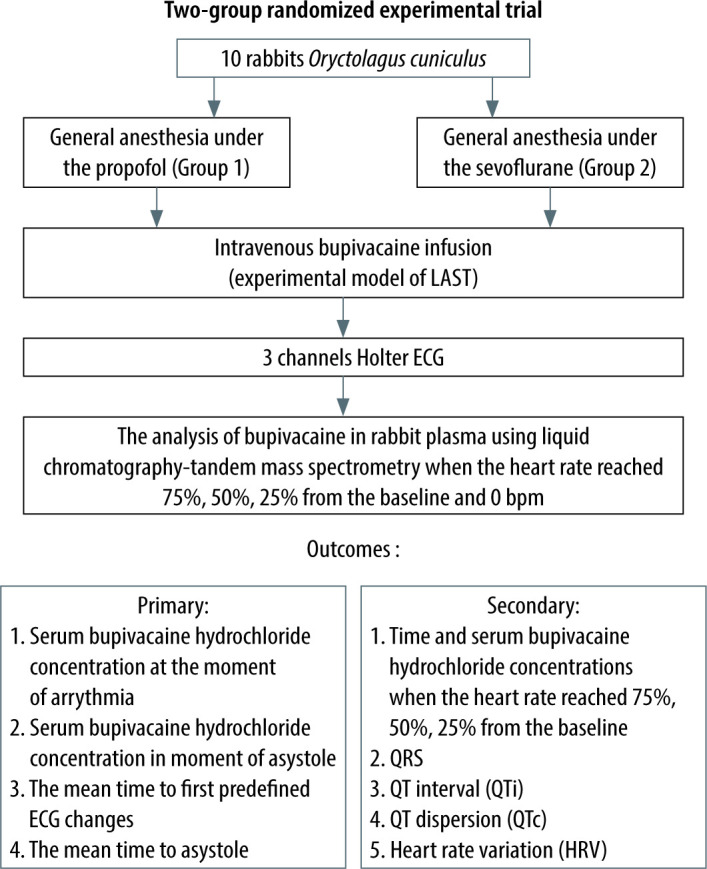
Material and methods: Ten rabbits were randomized to two groups: propofol- or sevoflurane-based GA. At the maintenance stage of anesthesia heart rate and QRS/QT durations were recorded as "baseline" and an intravenous (i.v.) bupivacaine 0.25% infusion at the rate of 1.0 mg kg -1 min -1 was initiated. Blood samples were obtained when predefined electrocardiographic (ECG) changes were observed and when the heart rate (HR) reached 75%, 50%, and 25% of the baseline and 0 bpm.
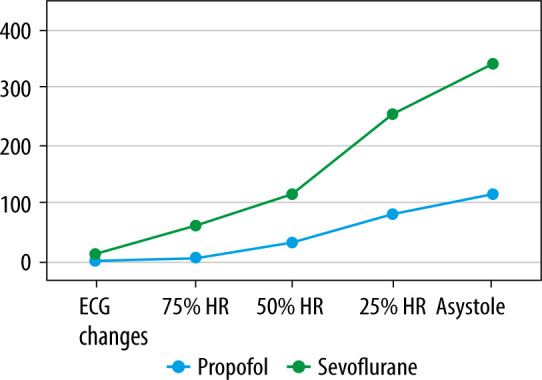
Results: The mean time to first predefined ECG changes was 131 ± 25.02 s for the propofol group and 223 ± 34.11 s for the sevoflurane group ( P = 0.001). Time of progression of bradycardia in both groups was evaluated as a percentage of the initial HR for the understanding of the dynamics of changes during the local anesthetic systemic toxicity (LAST). The 25% HR time was shorter for the propofol group (480 ± 117 vs. 673 ± 146 s, P = 0.05). Time to asystole was shorter in the propofol group (110.7 ± 22.22 vs. 226.6 ± 98.61 s, P = 0.047). Mean serum bupivacaine concentration was lower for the propofol group during the occurrence of the first ECG changes (2.542 ± 1.415 vs. 6.997 ± 2.197 mg mL -1 , P = 0.005) and asystole (110.7 ± 22.22 vs. 226.6 ± 98.61 mg mL -1 , P = 0.047).
Conclusions: It seems that sevoflurane-, but not propofol-based anesthesia reduces the risk of LAST during GA combined with peripheral nerve blocks. Sevoflurane-based anesthesia may protect the myocardium from the toxic effects of bupivacaine.






 京公网安备 11010802042870号
京ICP备2023020795号-1
京公网安备 11010802042870号
京ICP备2023020795号-1

 分享
分享
 求助内容:
求助内容: 应助结果提醒方式:
 扫码关注我们
