Jingru Song, Ziwei Gao, Liqun Lai, Jie Zhang, Binbin Liu, Yi Sang, Siqi Chen, Jiachen Qi, Yujun Zhang, Huang Kai, Wei Ye
{"title":"基于机器学习的血浆代谢组学改善肝硬化风险分层。","authors":"Jingru Song, Ziwei Gao, Liqun Lai, Jie Zhang, Binbin Liu, Yi Sang, Siqi Chen, Jiachen Qi, Yujun Zhang, Huang Kai, Wei Ye","doi":"10.1186/s12876-025-03655-y","DOIUrl":null,"url":null,"abstract":"<p><strong>Background: </strong>Cirrhosis is a leading cause of mortality in patients with chronic liver disease (CLD). The rapid development of metabolomic technologies has enabled the capture of metabolic changes related to the progression of cirrhosis.</p><p><strong>Methods: </strong>This study used proton nuclear magnetic resonance (1 H-NMR) serum metabolomics data from the UK Biobank (UKB) and employed elastic net-regularized Cox proportional hazards models to explore the role of metabolomics in cirrhosis risk stratification in patients with CLD. Metabolomic data were integrated with aspartate aminotransferase to platelet ratio index (APRI) and fibrosis-4 score (FIB-4) to construct predictive models for cirrhosis risk. The model performance was assessed in both the derivation and validation cohorts.</p><p><strong>Results: </strong>A total of 2,738 eligible patients were included in the analysis. Several metabolites showed an independent association with cirrhosis events (68 out of 168 metabolites after adjustment for age and sex, and 21 out of 168 metabolites after full adjustment). The integration of metabolomics with FIB-4 improved the predictive performance compared to FIB-4 alone (Harrell's C: 0.717 vs. 0.696, ΔC = 0.021, 95% confidence interval [CI] 0.014-0.028, Net Reclassification Improvement [NRI]: 0.504 [0.488-0.520]). Similarly, the combination of metabolomics with APRI also improved predictive performance compared to APRI alone (Harrell's C: 0.747 vs. 0.718, ΔC = 0.029, 95% CI 0.022-0.035, NRI: 0.378 [0.366-0.389]). Key metabolites, including branched-chain amino acids (BCAAs), lipids, and markers of oxidative stress, were identified as significant predictors. Pathway enrichment analysis revealed that disruptions in lipid and amino acid metabolism play a central role in the progression of cirrhosis.</p><p><strong>Conclusion: </strong>1 H-NMR serum metabolomics significantly improves the prediction of cirrhosis risk in patients with CLD. The APRI + Metabolomics model demonstrated strong discriminatory power, with key metabolites involved in fatty acid and amino acid metabolism, providing a promising tool for the early screening of cirrhosis risk.</p>","PeriodicalId":9129,"journal":{"name":"BMC Gastroenterology","volume":"25 1","pages":"61"},"PeriodicalIF":3.2000,"publicationDate":"2025-02-06","publicationTypes":"Journal Article","fieldsOfStudy":null,"isOpenAccess":false,"openAccessPdf":"https://www.ncbi.nlm.nih.gov/pmc/articles/PMC11800577/pdf/","citationCount":"0","resultStr":"{\"title\":\"Machine learning-based plasma metabolomics for improved cirrhosis risk stratification.\",\"authors\":\"Jingru Song, Ziwei Gao, Liqun Lai, Jie Zhang, Binbin Liu, Yi Sang, Siqi Chen, Jiachen Qi, Yujun Zhang, Huang Kai, Wei Ye\",\"doi\":\"10.1186/s12876-025-03655-y\",\"DOIUrl\":null,\"url\":null,\"abstract\":\"<p><strong>Background: </strong>Cirrhosis is a leading cause of mortality in patients with chronic liver disease (CLD). The rapid development of metabolomic technologies has enabled the capture of metabolic changes related to the progression of cirrhosis.</p><p><strong>Methods: </strong>This study used proton nuclear magnetic resonance (1 H-NMR) serum metabolomics data from the UK Biobank (UKB) and employed elastic net-regularized Cox proportional hazards models to explore the role of metabolomics in cirrhosis risk stratification in patients with CLD. Metabolomic data were integrated with aspartate aminotransferase to platelet ratio index (APRI) and fibrosis-4 score (FIB-4) to construct predictive models for cirrhosis risk. The model performance was assessed in both the derivation and validation cohorts.</p><p><strong>Results: </strong>A total of 2,738 eligible patients were included in the analysis. Several metabolites showed an independent association with cirrhosis events (68 out of 168 metabolites after adjustment for age and sex, and 21 out of 168 metabolites after full adjustment). The integration of metabolomics with FIB-4 improved the predictive performance compared to FIB-4 alone (Harrell's C: 0.717 vs. 0.696, ΔC = 0.021, 95% confidence interval [CI] 0.014-0.028, Net Reclassification Improvement [NRI]: 0.504 [0.488-0.520]). Similarly, the combination of metabolomics with APRI also improved predictive performance compared to APRI alone (Harrell's C: 0.747 vs. 0.718, ΔC = 0.029, 95% CI 0.022-0.035, NRI: 0.378 [0.366-0.389]). Key metabolites, including branched-chain amino acids (BCAAs), lipids, and markers of oxidative stress, were identified as significant predictors. Pathway enrichment analysis revealed that disruptions in lipid and amino acid metabolism play a central role in the progression of cirrhosis.</p><p><strong>Conclusion: </strong>1 H-NMR serum metabolomics significantly improves the prediction of cirrhosis risk in patients with CLD. The APRI + Metabolomics model demonstrated strong discriminatory power, with key metabolites involved in fatty acid and amino acid metabolism, providing a promising tool for the early screening of cirrhosis risk.</p>\",\"PeriodicalId\":9129,\"journal\":{\"name\":\"BMC Gastroenterology\",\"volume\":\"25 1\",\"pages\":\"61\"},\"PeriodicalIF\":3.2000,\"publicationDate\":\"2025-02-06\",\"publicationTypes\":\"Journal Article\",\"fieldsOfStudy\":null,\"isOpenAccess\":false,\"openAccessPdf\":\"https://www.ncbi.nlm.nih.gov/pmc/articles/PMC11800577/pdf/\",\"citationCount\":\"0\",\"resultStr\":null,\"platform\":\"Semanticscholar\",\"paperid\":null,\"PeriodicalName\":\"BMC Gastroenterology\",\"FirstCategoryId\":\"3\",\"ListUrlMain\":\"https://doi.org/10.1186/s12876-025-03655-y\",\"RegionNum\":3,\"RegionCategory\":\"医学\",\"ArticlePicture\":[],\"TitleCN\":null,\"AbstractTextCN\":null,\"PMCID\":null,\"EPubDate\":\"\",\"PubModel\":\"\",\"JCR\":\"Q2\",\"JCRName\":\"GASTROENTEROLOGY & HEPATOLOGY\",\"Score\":null,\"Total\":0}","platform":"Semanticscholar","paperid":null,"PeriodicalName":"BMC Gastroenterology","FirstCategoryId":"3","ListUrlMain":"https://doi.org/10.1186/s12876-025-03655-y","RegionNum":3,"RegionCategory":"医学","ArticlePicture":[],"TitleCN":null,"AbstractTextCN":null,"PMCID":null,"EPubDate":"","PubModel":"","JCR":"Q2","JCRName":"GASTROENTEROLOGY & HEPATOLOGY","Score":null,"Total":0}
引用次数: 0
摘要
背景:肝硬化是慢性肝病(CLD)患者死亡的主要原因。代谢组学技术的快速发展使得捕捉与肝硬化进展相关的代谢变化成为可能。方法:本研究利用英国生物银行(UKB)的质子核磁共振(1h - nmr)血清代谢组学数据,采用弹性净正则化Cox比例风险模型,探讨代谢组学在CLD患者肝硬化风险分层中的作用。代谢组学数据与天冬氨酸转氨酶血小板比值指数(APRI)和纤维化-4评分(FIB-4)相结合,构建肝硬化风险预测模型。在推导和验证队列中对模型的性能进行了评估。结果:共有2738例符合条件的患者被纳入分析。一些代谢物显示出与肝硬化事件的独立关联(在年龄和性别调整后的168种代谢物中有68种,完全调整后的168种代谢物中有21种)。与单独使用FIB-4相比,代谢组学与FIB-4的整合提高了预测性能(Harrell’s C: 0.717 vs. 0.696, ΔC = 0.021, 95%可信区间[CI] 0.014-0.028,净再分类改善[NRI]: 0.504[0.488-0.520])。同样,与单独使用APRI相比,代谢组学与APRI的结合也提高了预测性能(Harrell’s C: 0.747 vs. 0.718, ΔC = 0.029, 95% CI 0.022-0.035, NRI: 0.378[0.366-0.389])。关键代谢物,包括支链氨基酸(BCAAs)、脂质和氧化应激标志物,被认为是重要的预测因素。途径富集分析显示,脂质和氨基酸代谢的中断在肝硬化的进展中起核心作用。结论:1 H-NMR血清代谢组学可显著提高CLD患者肝硬化风险的预测能力。APRI +代谢组学模型具有很强的鉴别能力,关键代谢物参与脂肪酸和氨基酸代谢,为肝硬化风险的早期筛查提供了一种很有前景的工具。
Machine learning-based plasma metabolomics for improved cirrhosis risk stratification.
Background: Cirrhosis is a leading cause of mortality in patients with chronic liver disease (CLD). The rapid development of metabolomic technologies has enabled the capture of metabolic changes related to the progression of cirrhosis.
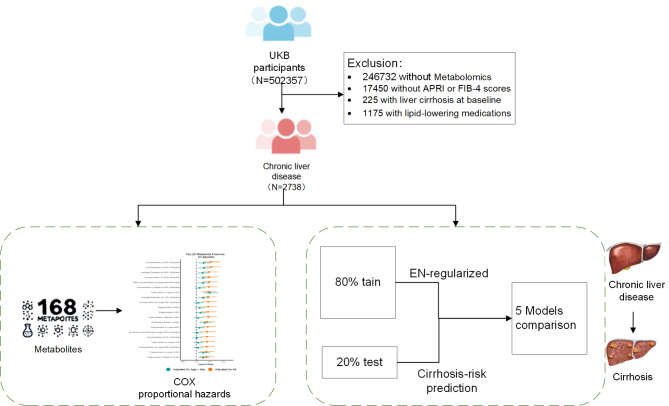
Methods: This study used proton nuclear magnetic resonance (1 H-NMR) serum metabolomics data from the UK Biobank (UKB) and employed elastic net-regularized Cox proportional hazards models to explore the role of metabolomics in cirrhosis risk stratification in patients with CLD. Metabolomic data were integrated with aspartate aminotransferase to platelet ratio index (APRI) and fibrosis-4 score (FIB-4) to construct predictive models for cirrhosis risk. The model performance was assessed in both the derivation and validation cohorts.
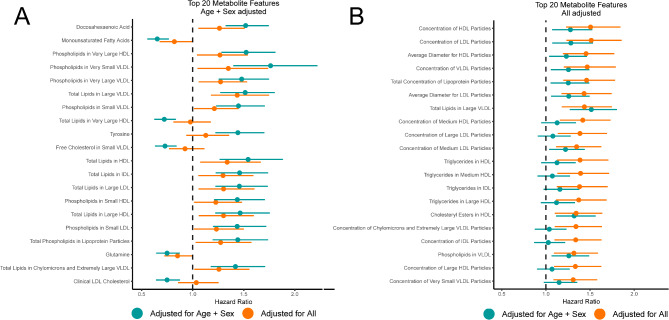
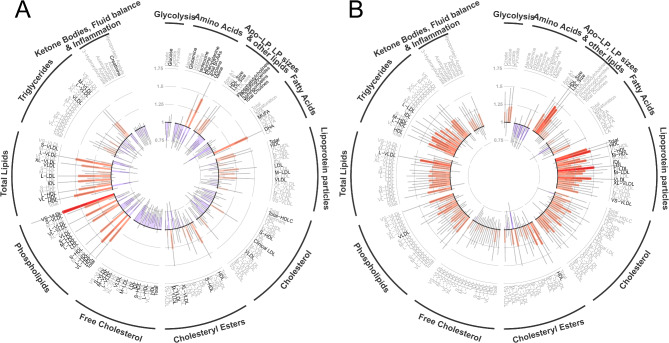
Results: A total of 2,738 eligible patients were included in the analysis. Several metabolites showed an independent association with cirrhosis events (68 out of 168 metabolites after adjustment for age and sex, and 21 out of 168 metabolites after full adjustment). The integration of metabolomics with FIB-4 improved the predictive performance compared to FIB-4 alone (Harrell's C: 0.717 vs. 0.696, ΔC = 0.021, 95% confidence interval [CI] 0.014-0.028, Net Reclassification Improvement [NRI]: 0.504 [0.488-0.520]). Similarly, the combination of metabolomics with APRI also improved predictive performance compared to APRI alone (Harrell's C: 0.747 vs. 0.718, ΔC = 0.029, 95% CI 0.022-0.035, NRI: 0.378 [0.366-0.389]). Key metabolites, including branched-chain amino acids (BCAAs), lipids, and markers of oxidative stress, were identified as significant predictors. Pathway enrichment analysis revealed that disruptions in lipid and amino acid metabolism play a central role in the progression of cirrhosis.
Conclusion: 1 H-NMR serum metabolomics significantly improves the prediction of cirrhosis risk in patients with CLD. The APRI + Metabolomics model demonstrated strong discriminatory power, with key metabolites involved in fatty acid and amino acid metabolism, providing a promising tool for the early screening of cirrhosis risk.
期刊介绍:
BMC Gastroenterology is an open access, peer-reviewed journal that considers articles on all aspects of the prevention, diagnosis and management of gastrointestinal and hepatobiliary disorders, as well as related molecular genetics, pathophysiology, and epidemiology.




 京公网安备 11010802042870号
京ICP备2023020795号-1
京公网安备 11010802042870号
京ICP备2023020795号-1

 分享
分享
 求助内容:
求助内容: 应助结果提醒方式:
 扫码关注我们
