{"title":"成功根除幽门螺杆菌后早期胃癌的短期内镜改变。","authors":"Xiaohan Yan, Jingze Li, Zehua Zhang, Bensong Duan, Meidong Xu, Qinwei Xu","doi":"10.1186/s12876-025-03651-2","DOIUrl":null,"url":null,"abstract":"<p><strong>Background: </strong>Detecting and demarcating early gastric cancers (EGC) after eradication therapy of Helicobacter pylori (H. pylori) is a challenging task due to the fact that the lesion's surface is covered with gastritis-like tissue (non-neoplastic epithelium covering the cancerous tissue). However, our study aimed to investigate the endoscopic alterations of EGC within 3 months after eradication, which has not been reported clearly yet.</p><p><strong>Methods: </strong>Consecutive EGC patients who underwent two gastroscopies (one with H. pylori infection and another within 3 months after successful H. pylori eradication) were enrolled. The endoscopic photographs were evaluated for the endoscopic features and confidence level of demarcation line (DL), invasion depth, and histopathological classification by three highly experienced endoscopists. The DL estimated by endoscopy was compared with that of postoperative pathological examination.</p><p><strong>Results: </strong>45 pairs of EGC cases before and after eradication were enrolled. All the confidence level of DL (High confidence: 15.6% vs. 93.3%, p value = 0.000) and invasion depth (High confidence: 37.8% vs. 80.0%, p value = 0.000) and histopathological classification (High confidence: 31.1% vs. 91.1%, p value = 0.000) were significantly improved after eradication. A higher confidence level of DL before eradication was correlated with severe atrophy score (p value = 0.036). The inter-observer agreements for DL, invasion depth, and histopathological classification were 0.85 and 0.75 and 0.78, respectively.</p><p><strong>Conclusions: </strong>DL of EGC becomes much more apparent after eradication in the short-term. Eradication therapy is necessary even shortly prior to the procedure of endoscopic submucosal dissection (ESD) to help precise pre-procedure diagnosis and avoid incomplete resection.</p>","PeriodicalId":9129,"journal":{"name":"BMC Gastroenterology","volume":"25 1","pages":"59"},"PeriodicalIF":3.2000,"publicationDate":"2025-02-06","publicationTypes":"Journal Article","fieldsOfStudy":null,"isOpenAccess":false,"openAccessPdf":"https://www.ncbi.nlm.nih.gov/pmc/articles/PMC11800400/pdf/","citationCount":"0","resultStr":"{\"title\":\"Short-term endoscopic alterations of early gastric cancer after successful eradication of Helicobacter pylori.\",\"authors\":\"Xiaohan Yan, Jingze Li, Zehua Zhang, Bensong Duan, Meidong Xu, Qinwei Xu\",\"doi\":\"10.1186/s12876-025-03651-2\",\"DOIUrl\":null,\"url\":null,\"abstract\":\"<p><strong>Background: </strong>Detecting and demarcating early gastric cancers (EGC) after eradication therapy of Helicobacter pylori (H. pylori) is a challenging task due to the fact that the lesion's surface is covered with gastritis-like tissue (non-neoplastic epithelium covering the cancerous tissue). However, our study aimed to investigate the endoscopic alterations of EGC within 3 months after eradication, which has not been reported clearly yet.</p><p><strong>Methods: </strong>Consecutive EGC patients who underwent two gastroscopies (one with H. pylori infection and another within 3 months after successful H. pylori eradication) were enrolled. The endoscopic photographs were evaluated for the endoscopic features and confidence level of demarcation line (DL), invasion depth, and histopathological classification by three highly experienced endoscopists. The DL estimated by endoscopy was compared with that of postoperative pathological examination.</p><p><strong>Results: </strong>45 pairs of EGC cases before and after eradication were enrolled. All the confidence level of DL (High confidence: 15.6% vs. 93.3%, p value = 0.000) and invasion depth (High confidence: 37.8% vs. 80.0%, p value = 0.000) and histopathological classification (High confidence: 31.1% vs. 91.1%, p value = 0.000) were significantly improved after eradication. A higher confidence level of DL before eradication was correlated with severe atrophy score (p value = 0.036). The inter-observer agreements for DL, invasion depth, and histopathological classification were 0.85 and 0.75 and 0.78, respectively.</p><p><strong>Conclusions: </strong>DL of EGC becomes much more apparent after eradication in the short-term. Eradication therapy is necessary even shortly prior to the procedure of endoscopic submucosal dissection (ESD) to help precise pre-procedure diagnosis and avoid incomplete resection.</p>\",\"PeriodicalId\":9129,\"journal\":{\"name\":\"BMC Gastroenterology\",\"volume\":\"25 1\",\"pages\":\"59\"},\"PeriodicalIF\":3.2000,\"publicationDate\":\"2025-02-06\",\"publicationTypes\":\"Journal Article\",\"fieldsOfStudy\":null,\"isOpenAccess\":false,\"openAccessPdf\":\"https://www.ncbi.nlm.nih.gov/pmc/articles/PMC11800400/pdf/\",\"citationCount\":\"0\",\"resultStr\":null,\"platform\":\"Semanticscholar\",\"paperid\":null,\"PeriodicalName\":\"BMC Gastroenterology\",\"FirstCategoryId\":\"3\",\"ListUrlMain\":\"https://doi.org/10.1186/s12876-025-03651-2\",\"RegionNum\":3,\"RegionCategory\":\"医学\",\"ArticlePicture\":[],\"TitleCN\":null,\"AbstractTextCN\":null,\"PMCID\":null,\"EPubDate\":\"\",\"PubModel\":\"\",\"JCR\":\"Q2\",\"JCRName\":\"GASTROENTEROLOGY & HEPATOLOGY\",\"Score\":null,\"Total\":0}","platform":"Semanticscholar","paperid":null,"PeriodicalName":"BMC Gastroenterology","FirstCategoryId":"3","ListUrlMain":"https://doi.org/10.1186/s12876-025-03651-2","RegionNum":3,"RegionCategory":"医学","ArticlePicture":[],"TitleCN":null,"AbstractTextCN":null,"PMCID":null,"EPubDate":"","PubModel":"","JCR":"Q2","JCRName":"GASTROENTEROLOGY & HEPATOLOGY","Score":null,"Total":0}
引用次数: 0
摘要
背景:幽门螺杆菌根除治疗后早期胃癌(EGC)的检测和鉴别是一项具有挑战性的任务,因为病变表面覆盖着胃炎样组织(非肿瘤上皮覆盖癌组织)。然而,我们的研究目的是研究EGC根除后3个月内的内镜改变,目前还没有明确的报道。方法:入选连续两次胃镜检查的EGC患者(一次为幽门螺旋杆菌感染,另一次为成功根除幽门螺旋杆菌后3个月内)。内镜照片由三名经验丰富的内镜医师评估内镜特征和分界线(DL)置信水平、侵犯深度和组织病理学分类。将内镜下DL值与术后病理检查值进行比较。结果:共纳入根治前后45对EGC病例。根除后DL(高置信度:15.6% vs. 93.3%, p值= 0.000)、侵袭深度(高置信度:37.8% vs. 80.0%, p值= 0.000)和组织病理分类(高置信度:31.1% vs. 91.1%, p值= 0.000)的置信度均显著提高。根治前DL置信度较高与严重萎缩评分相关(p值= 0.036)。对于深度、浸润深度和组织病理学分类,观察者间的一致性分别为0.85、0.75和0.78。结论:EGC根治后短期内DL明显增加。根除治疗是必要的,甚至在内镜下粘膜剥离(ESD)手术前不久,以帮助准确的术前诊断和避免不完全切除。
Short-term endoscopic alterations of early gastric cancer after successful eradication of Helicobacter pylori.
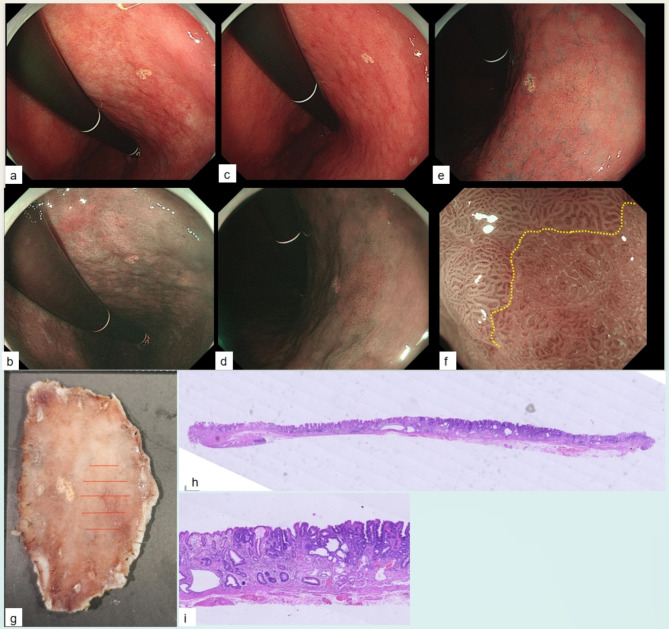
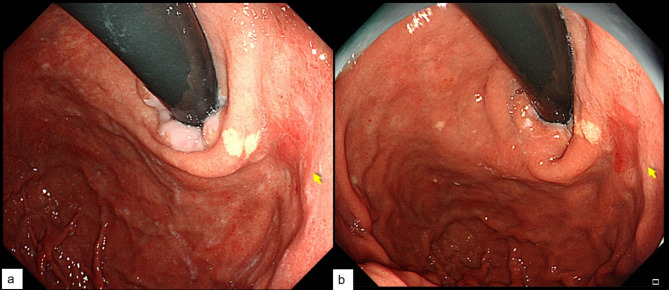
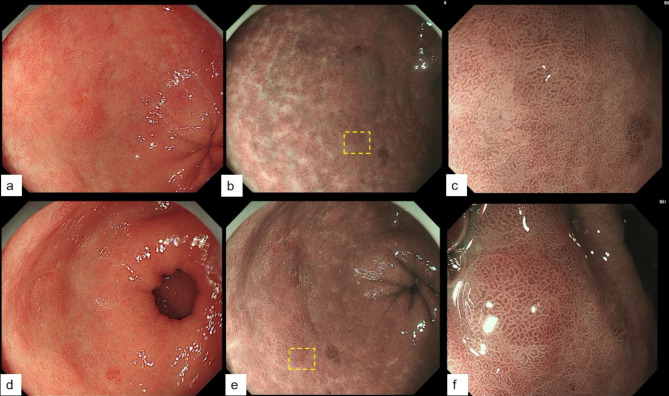
Background: Detecting and demarcating early gastric cancers (EGC) after eradication therapy of Helicobacter pylori (H. pylori) is a challenging task due to the fact that the lesion's surface is covered with gastritis-like tissue (non-neoplastic epithelium covering the cancerous tissue). However, our study aimed to investigate the endoscopic alterations of EGC within 3 months after eradication, which has not been reported clearly yet.
Methods: Consecutive EGC patients who underwent two gastroscopies (one with H. pylori infection and another within 3 months after successful H. pylori eradication) were enrolled. The endoscopic photographs were evaluated for the endoscopic features and confidence level of demarcation line (DL), invasion depth, and histopathological classification by three highly experienced endoscopists. The DL estimated by endoscopy was compared with that of postoperative pathological examination.
Results: 45 pairs of EGC cases before and after eradication were enrolled. All the confidence level of DL (High confidence: 15.6% vs. 93.3%, p value = 0.000) and invasion depth (High confidence: 37.8% vs. 80.0%, p value = 0.000) and histopathological classification (High confidence: 31.1% vs. 91.1%, p value = 0.000) were significantly improved after eradication. A higher confidence level of DL before eradication was correlated with severe atrophy score (p value = 0.036). The inter-observer agreements for DL, invasion depth, and histopathological classification were 0.85 and 0.75 and 0.78, respectively.
Conclusions: DL of EGC becomes much more apparent after eradication in the short-term. Eradication therapy is necessary even shortly prior to the procedure of endoscopic submucosal dissection (ESD) to help precise pre-procedure diagnosis and avoid incomplete resection.
期刊介绍:
BMC Gastroenterology is an open access, peer-reviewed journal that considers articles on all aspects of the prevention, diagnosis and management of gastrointestinal and hepatobiliary disorders, as well as related molecular genetics, pathophysiology, and epidemiology.




 京公网安备 11010802042870号
京ICP备2023020795号-1
京公网安备 11010802042870号
京ICP备2023020795号-1

 分享
分享
 求助内容:
求助内容: 应助结果提醒方式:
 扫码关注我们
