Diksha Sirohi, Cecilia Hm Ng, Niranjan Bidargaddi, Helen Slater, Melissa Parker, M Louise Hull, Rebecca O'Hara
{"title":"高质量的移动健康应用程序子宫内膜异位症护理:系统搜索。","authors":"Diksha Sirohi, Cecilia Hm Ng, Niranjan Bidargaddi, Helen Slater, Melissa Parker, M Louise Hull, Rebecca O'Hara","doi":"10.2196/49654","DOIUrl":null,"url":null,"abstract":"<p><strong>Background: </strong>Mobile health (mHealth) apps are increasingly being used by community members to track symptoms and manage endometriosis. In addition, clinicians use mHealth apps for continued medical education and clinical decision-making and recommend good-quality apps to patients. However, poor-quality apps can spread misinformation or provide recommendations that are not evidence-based. Therefore, a critical evaluation is needed to assess and recommend good-quality endometriosis mHealth apps.</p><p><strong>Objective: </strong>This study aimed to evaluate the quality and provide recommendations for good quality endometriosis mHealth apps for the community and clinicians.</p><p><strong>Methods: </strong>PRISMA (Preferred Reporting Items for Systematic Reviews and Meta-Analyses) 2020 guidelines informed the search of mHealth apps on the Google Play Store and Apple App Store. The search terms included \"endometriosis,\" \"adenomyosis,\" and \"pelvic pain.\" mHealth apps were eligible if they were (1) related to the search terms, (2) were in the English language, and (3) were available free of cost. Only the free content of the eligible mHealth apps was assessed. ENLIGHT, a validated evaluation tool for mobile and web-based interventions, was used to assess the quality across 7 domains such as usability, visual design, user engagement, content, therapeutic persuasiveness, therapeutic alliance, and general subjective evaluation. mHealth apps with a total score of ≥3.5 were classified as \"good\" according to the ENLIGHT scoring system and are recommended as good-quality mHealth apps for endometriosis care.</p><p><strong>Results: </strong>In total, 42 mHealth apps were screened, and 19 were included in the quality assessment. A total of 6 good-quality mHealth apps were identified (QENDO, Bearable, Luna for Health, Matilda Health, Branch Health: Pain Management, and CHARLI Health). These apps provided symptom-tracking functions and self-management support. A total of 17 apps were designed for community use, while 2 apps provided a digital endometriosis classification tool to clinicians. Most mHealth apps scored well (≥3.5) in the domains of usability (16/19, 84.2%), visual design (14/19, 73.7%), user engagement (11/19, 57.9%), and content (15/19, 78.9%). Few eHealth websites scored well on therapeutic persuasiveness (6/19, 31.6%), therapeutic alliance (9/19, 47.4%), and general subjective evaluation (6/19, 31.6%).</p><p><strong>Conclusions: </strong>Although time and geographical location can influence the search results, we identified 6 \"good-quality\" endometriosis mHealth apps that can be recommended to the endometriosis community. mHealth apps designed for community use should evaluate their effectiveness on user's endometriosis knowledge, self-recommended management strategies, pain self-efficacy, user satisfaction, and user quality of life. Digital technology should be leveraged to develop mHealth apps for clinicians that contribute to continued medical education and assist clinical decision-making in endometriosis management. Factors that enhance usability, visual design, therapeutic persuasiveness, and therapeutic alliance should be incorporated to ensure successful and long-term uptake of mHealth apps.</p><p><strong>Trial registration: </strong>PROSPERO CRD42020185475; https://tinyurl.com/384dkkmj.</p>","PeriodicalId":16337,"journal":{"name":"Journal of Medical Internet Research","volume":"27 ","pages":"e49654"},"PeriodicalIF":8.2000,"publicationDate":"2025-02-07","publicationTypes":"Journal Article","fieldsOfStudy":null,"isOpenAccess":false,"openAccessPdf":"https://www.ncbi.nlm.nih.gov/pmc/articles/PMC11845897/pdf/","citationCount":"0","resultStr":"{\"title\":\"Good-Quality mHealth Apps for Endometriosis Care: Systematic Search.\",\"authors\":\"Diksha Sirohi, Cecilia Hm Ng, Niranjan Bidargaddi, Helen Slater, Melissa Parker, M Louise Hull, Rebecca O'Hara\",\"doi\":\"10.2196/49654\",\"DOIUrl\":null,\"url\":null,\"abstract\":\"<p><strong>Background: </strong>Mobile health (mHealth) apps are increasingly being used by community members to track symptoms and manage endometriosis. In addition, clinicians use mHealth apps for continued medical education and clinical decision-making and recommend good-quality apps to patients. However, poor-quality apps can spread misinformation or provide recommendations that are not evidence-based. Therefore, a critical evaluation is needed to assess and recommend good-quality endometriosis mHealth apps.</p><p><strong>Objective: </strong>This study aimed to evaluate the quality and provide recommendations for good quality endometriosis mHealth apps for the community and clinicians.</p><p><strong>Methods: </strong>PRISMA (Preferred Reporting Items for Systematic Reviews and Meta-Analyses) 2020 guidelines informed the search of mHealth apps on the Google Play Store and Apple App Store. The search terms included \\\"endometriosis,\\\" \\\"adenomyosis,\\\" and \\\"pelvic pain.\\\" mHealth apps were eligible if they were (1) related to the search terms, (2) were in the English language, and (3) were available free of cost. Only the free content of the eligible mHealth apps was assessed. ENLIGHT, a validated evaluation tool for mobile and web-based interventions, was used to assess the quality across 7 domains such as usability, visual design, user engagement, content, therapeutic persuasiveness, therapeutic alliance, and general subjective evaluation. mHealth apps with a total score of ≥3.5 were classified as \\\"good\\\" according to the ENLIGHT scoring system and are recommended as good-quality mHealth apps for endometriosis care.</p><p><strong>Results: </strong>In total, 42 mHealth apps were screened, and 19 were included in the quality assessment. A total of 6 good-quality mHealth apps were identified (QENDO, Bearable, Luna for Health, Matilda Health, Branch Health: Pain Management, and CHARLI Health). These apps provided symptom-tracking functions and self-management support. A total of 17 apps were designed for community use, while 2 apps provided a digital endometriosis classification tool to clinicians. Most mHealth apps scored well (≥3.5) in the domains of usability (16/19, 84.2%), visual design (14/19, 73.7%), user engagement (11/19, 57.9%), and content (15/19, 78.9%). Few eHealth websites scored well on therapeutic persuasiveness (6/19, 31.6%), therapeutic alliance (9/19, 47.4%), and general subjective evaluation (6/19, 31.6%).</p><p><strong>Conclusions: </strong>Although time and geographical location can influence the search results, we identified 6 \\\"good-quality\\\" endometriosis mHealth apps that can be recommended to the endometriosis community. mHealth apps designed for community use should evaluate their effectiveness on user's endometriosis knowledge, self-recommended management strategies, pain self-efficacy, user satisfaction, and user quality of life. Digital technology should be leveraged to develop mHealth apps for clinicians that contribute to continued medical education and assist clinical decision-making in endometriosis management. Factors that enhance usability, visual design, therapeutic persuasiveness, and therapeutic alliance should be incorporated to ensure successful and long-term uptake of mHealth apps.</p><p><strong>Trial registration: </strong>PROSPERO CRD42020185475; https://tinyurl.com/384dkkmj.</p>\",\"PeriodicalId\":16337,\"journal\":{\"name\":\"Journal of Medical Internet Research\",\"volume\":\"27 \",\"pages\":\"e49654\"},\"PeriodicalIF\":8.2000,\"publicationDate\":\"2025-02-07\",\"publicationTypes\":\"Journal Article\",\"fieldsOfStudy\":null,\"isOpenAccess\":false,\"openAccessPdf\":\"https://www.ncbi.nlm.nih.gov/pmc/articles/PMC11845897/pdf/\",\"citationCount\":\"0\",\"resultStr\":null,\"platform\":\"Semanticscholar\",\"paperid\":null,\"PeriodicalName\":\"Journal of Medical Internet Research\",\"FirstCategoryId\":\"3\",\"ListUrlMain\":\"https://doi.org/10.2196/49654\",\"RegionNum\":2,\"RegionCategory\":\"医学\",\"ArticlePicture\":[],\"TitleCN\":null,\"AbstractTextCN\":null,\"PMCID\":null,\"EPubDate\":\"\",\"PubModel\":\"\",\"JCR\":\"Q1\",\"JCRName\":\"HEALTH CARE SCIENCES & SERVICES\",\"Score\":null,\"Total\":0}","platform":"Semanticscholar","paperid":null,"PeriodicalName":"Journal of Medical Internet Research","FirstCategoryId":"3","ListUrlMain":"https://doi.org/10.2196/49654","RegionNum":2,"RegionCategory":"医学","ArticlePicture":[],"TitleCN":null,"AbstractTextCN":null,"PMCID":null,"EPubDate":"","PubModel":"","JCR":"Q1","JCRName":"HEALTH CARE SCIENCES & SERVICES","Score":null,"Total":0}
引用次数: 0
摘要
背景:社区成员越来越多地使用移动健康(mHealth)应用程序来跟踪症状和管理子宫内膜异位症。此外,临床医生使用移动健康应用程序进行继续医学教育和临床决策,并向患者推荐高质量的应用程序。然而,质量差的应用程序可能会传播错误信息或提供没有证据的建议。因此,评估和推荐高质量的子宫内膜异位症移动健康应用程序需要进行严格的评估。目的:本研究旨在评估质量,并为社区和临床医生提供优质子宫内膜异位症移动健康应用程序的建议。方法:PRISMA(系统评价和荟萃分析的首选报告项目)2020指南在b谷歌Play Store和Apple App Store上搜索移动健康应用程序。搜索词包括“子宫内膜异位症”、“子宫腺肌症”和“盆腔疼痛”,如果移动健康应用程序(1)与搜索词相关,(2)使用英语,(3)免费提供,则符合条件。仅评估了符合条件的移动健康应用程序的免费内容。ENLIGHT是一种经过验证的移动和网络干预评估工具,用于评估7个领域的质量,如可用性、视觉设计、用户参与度、内容、治疗说服力、治疗联盟和一般主观评估。根据ENLIGHT评分系统,总分≥3.5分的移动健康应用程序被归类为“良好”,并被推荐为子宫内膜异位症护理的优质移动健康应用程序。结果:共筛选了42个移动健康应用程序,其中19个被纳入质量评估。总共确定了6个高质量的移动健康应用程序(QENDO, endure, Luna for Health, Matilda Health, Branch Health: Pain Management和CHARLI Health)。这些应用程序提供了症状跟踪功能和自我管理支持。共有17个应用程序是为社区使用而设计的,其中2个应用程序为临床医生提供了数字子宫内膜异位症分类工具。大多数移动健康应用在可用性(16/19,84.2%)、视觉设计(14/19,73.7%)、用户参与度(11/19,57.9%)和内容(15/19,78.9%)方面得分都很好(≥3.5)。很少有eHealth网站在治疗说服力(6/19,31.6%)、治疗联盟(9/19,47.4%)和一般主观评价(6/19,31.6%)方面得分较高。结论:虽然时间和地理位置会影响搜索结果,但我们确定了6个“高质量”的子宫内膜异位症移动健康应用程序,可以推荐给子宫内膜异位症社区。为社区使用而设计的移动健康应用程序应该评估其在用户子宫内膜异位症知识、自我推荐的管理策略、疼痛自我效能、用户满意度和用户生活质量方面的有效性。应利用数字技术为临床医生开发移动健康应用程序,这些应用程序有助于继续医学教育,并协助子宫内膜异位症管理的临床决策。提高可用性、视觉设计、治疗说服力和治疗联盟的因素应该被纳入,以确保移动健康应用程序的成功和长期吸收。试验注册:PROSPERO CRD42020185475;https://tinyurl.com/384dkkmj。
Good-Quality mHealth Apps for Endometriosis Care: Systematic Search.
Background: Mobile health (mHealth) apps are increasingly being used by community members to track symptoms and manage endometriosis. In addition, clinicians use mHealth apps for continued medical education and clinical decision-making and recommend good-quality apps to patients. However, poor-quality apps can spread misinformation or provide recommendations that are not evidence-based. Therefore, a critical evaluation is needed to assess and recommend good-quality endometriosis mHealth apps.
Objective: This study aimed to evaluate the quality and provide recommendations for good quality endometriosis mHealth apps for the community and clinicians.
Methods: PRISMA (Preferred Reporting Items for Systematic Reviews and Meta-Analyses) 2020 guidelines informed the search of mHealth apps on the Google Play Store and Apple App Store. The search terms included "endometriosis," "adenomyosis," and "pelvic pain." mHealth apps were eligible if they were (1) related to the search terms, (2) were in the English language, and (3) were available free of cost. Only the free content of the eligible mHealth apps was assessed. ENLIGHT, a validated evaluation tool for mobile and web-based interventions, was used to assess the quality across 7 domains such as usability, visual design, user engagement, content, therapeutic persuasiveness, therapeutic alliance, and general subjective evaluation. mHealth apps with a total score of ≥3.5 were classified as "good" according to the ENLIGHT scoring system and are recommended as good-quality mHealth apps for endometriosis care.
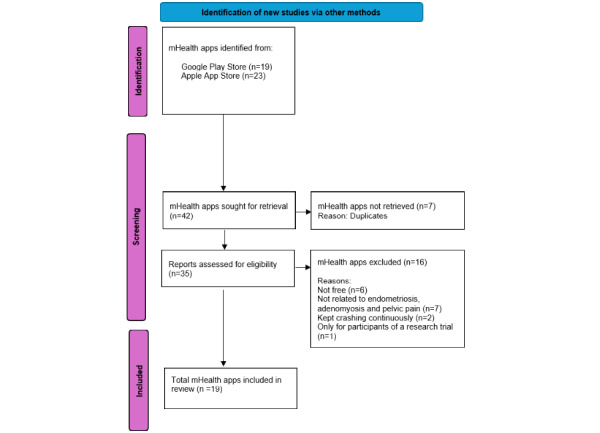
Results: In total, 42 mHealth apps were screened, and 19 were included in the quality assessment. A total of 6 good-quality mHealth apps were identified (QENDO, Bearable, Luna for Health, Matilda Health, Branch Health: Pain Management, and CHARLI Health). These apps provided symptom-tracking functions and self-management support. A total of 17 apps were designed for community use, while 2 apps provided a digital endometriosis classification tool to clinicians. Most mHealth apps scored well (≥3.5) in the domains of usability (16/19, 84.2%), visual design (14/19, 73.7%), user engagement (11/19, 57.9%), and content (15/19, 78.9%). Few eHealth websites scored well on therapeutic persuasiveness (6/19, 31.6%), therapeutic alliance (9/19, 47.4%), and general subjective evaluation (6/19, 31.6%).
Conclusions: Although time and geographical location can influence the search results, we identified 6 "good-quality" endometriosis mHealth apps that can be recommended to the endometriosis community. mHealth apps designed for community use should evaluate their effectiveness on user's endometriosis knowledge, self-recommended management strategies, pain self-efficacy, user satisfaction, and user quality of life. Digital technology should be leveraged to develop mHealth apps for clinicians that contribute to continued medical education and assist clinical decision-making in endometriosis management. Factors that enhance usability, visual design, therapeutic persuasiveness, and therapeutic alliance should be incorporated to ensure successful and long-term uptake of mHealth apps.
期刊介绍:
The Journal of Medical Internet Research (JMIR) is a highly respected publication in the field of health informatics and health services. With a founding date in 1999, JMIR has been a pioneer in the field for over two decades.
As a leader in the industry, the journal focuses on digital health, data science, health informatics, and emerging technologies for health, medicine, and biomedical research. It is recognized as a top publication in these disciplines, ranking in the first quartile (Q1) by Impact Factor.
Notably, JMIR holds the prestigious position of being ranked #1 on Google Scholar within the "Medical Informatics" discipline.




 京公网安备 11010802042870号
京ICP备2023020795号-1
京公网安备 11010802042870号
京ICP备2023020795号-1

 分享
分享
 求助内容:
求助内容: 应助结果提醒方式:
 扫码关注我们
