Catherine Johnson, Marcela Radunz, Jake Linardon, Matthew Fuller-Tyszkiewicz, Paul Williamson, Tracey D Wade
{"title":"患者选择对抑郁症、焦虑症和饮食失调患者的摄取、依从性和结局的影响:一项系统回顾和荟萃分析。","authors":"Catherine Johnson, Marcela Radunz, Jake Linardon, Matthew Fuller-Tyszkiewicz, Paul Williamson, Tracey D Wade","doi":"10.1017/S0033291725000066","DOIUrl":null,"url":null,"abstract":"<p><p>Growing evidence highlights the critical role of patient choice of treatment, with significant benefits for outcomes found in some studies. While four meta-analyses have previously examined the association between treatment choice and outcomes in mental health, robust conclusions have been limited by the inclusion of studies with biased preference trial designs. The current systematic review included 30 studies across three common and frequently comorbid mental health disorders (depression <i>N</i> = 23; anxiety, <i>N</i> = 5; eating disorders, <i>N</i> = 2) including 7055 participants (<i>M</i><sub>age</sub> 42.5 years, SD 11.7; 69.5% female). Treatment choice most often occurred between psychotherapy and antidepressant medication (43.3%), followed by choice between two different forms of psychotherapy, or elements within psychotherapy (36.7%). There were insufficient studies with stringent designs to conduct meta-analyses for anxiety or eating disorders as outcomes, or for treatment uptake. Treatment choice significantly improved outcomes for depression (<i>d</i> = 0.17, <i>n</i> = 18) and decreased therapy dropout, both in a combined sample targeting depression (<i>n</i> = 12), anxiety (<i>n</i> = 4) and eating disorders (<i>n</i> = 1; OR = 1.46, 95% CI: 1.17, 1.83), and in a smaller sample of the depression studies alone (OR = 1.65, 95% CI: 1.05, 2.59). All studies evaluated the impact of adults making treatment choices with none examining the effect of choice in adolescents. Clear directions in future research are indicated, in terms of designing studies that can adequately test the treatment choice and outcome association in anxiety and eating disorder treatment, and in youth.</p>","PeriodicalId":20891,"journal":{"name":"Psychological Medicine","volume":"55 ","pages":"e32"},"PeriodicalIF":5.5000,"publicationDate":"2025-02-07","publicationTypes":"Journal Article","fieldsOfStudy":null,"isOpenAccess":false,"openAccessPdf":"https://www.ncbi.nlm.nih.gov/pmc/articles/PMC12017370/pdf/","citationCount":"0","resultStr":"{\"title\":\"The impact of patient choice on uptake, adherence, and outcomes across depression, anxiety, and eating disorders: a systematic review and meta-analysis.\",\"authors\":\"Catherine Johnson, Marcela Radunz, Jake Linardon, Matthew Fuller-Tyszkiewicz, Paul Williamson, Tracey D Wade\",\"doi\":\"10.1017/S0033291725000066\",\"DOIUrl\":null,\"url\":null,\"abstract\":\"<p><p>Growing evidence highlights the critical role of patient choice of treatment, with significant benefits for outcomes found in some studies. While four meta-analyses have previously examined the association between treatment choice and outcomes in mental health, robust conclusions have been limited by the inclusion of studies with biased preference trial designs. The current systematic review included 30 studies across three common and frequently comorbid mental health disorders (depression <i>N</i> = 23; anxiety, <i>N</i> = 5; eating disorders, <i>N</i> = 2) including 7055 participants (<i>M</i><sub>age</sub> 42.5 years, SD 11.7; 69.5% female). Treatment choice most often occurred between psychotherapy and antidepressant medication (43.3%), followed by choice between two different forms of psychotherapy, or elements within psychotherapy (36.7%). There were insufficient studies with stringent designs to conduct meta-analyses for anxiety or eating disorders as outcomes, or for treatment uptake. Treatment choice significantly improved outcomes for depression (<i>d</i> = 0.17, <i>n</i> = 18) and decreased therapy dropout, both in a combined sample targeting depression (<i>n</i> = 12), anxiety (<i>n</i> = 4) and eating disorders (<i>n</i> = 1; OR = 1.46, 95% CI: 1.17, 1.83), and in a smaller sample of the depression studies alone (OR = 1.65, 95% CI: 1.05, 2.59). All studies evaluated the impact of adults making treatment choices with none examining the effect of choice in adolescents. Clear directions in future research are indicated, in terms of designing studies that can adequately test the treatment choice and outcome association in anxiety and eating disorder treatment, and in youth.</p>\",\"PeriodicalId\":20891,\"journal\":{\"name\":\"Psychological Medicine\",\"volume\":\"55 \",\"pages\":\"e32\"},\"PeriodicalIF\":5.5000,\"publicationDate\":\"2025-02-07\",\"publicationTypes\":\"Journal Article\",\"fieldsOfStudy\":null,\"isOpenAccess\":false,\"openAccessPdf\":\"https://www.ncbi.nlm.nih.gov/pmc/articles/PMC12017370/pdf/\",\"citationCount\":\"0\",\"resultStr\":null,\"platform\":\"Semanticscholar\",\"paperid\":null,\"PeriodicalName\":\"Psychological Medicine\",\"FirstCategoryId\":\"3\",\"ListUrlMain\":\"https://doi.org/10.1017/S0033291725000066\",\"RegionNum\":2,\"RegionCategory\":\"医学\",\"ArticlePicture\":[],\"TitleCN\":null,\"AbstractTextCN\":null,\"PMCID\":null,\"EPubDate\":\"\",\"PubModel\":\"\",\"JCR\":\"Q1\",\"JCRName\":\"PSYCHIATRY\",\"Score\":null,\"Total\":0}","platform":"Semanticscholar","paperid":null,"PeriodicalName":"Psychological Medicine","FirstCategoryId":"3","ListUrlMain":"https://doi.org/10.1017/S0033291725000066","RegionNum":2,"RegionCategory":"医学","ArticlePicture":[],"TitleCN":null,"AbstractTextCN":null,"PMCID":null,"EPubDate":"","PubModel":"","JCR":"Q1","JCRName":"PSYCHIATRY","Score":null,"Total":0}
The impact of patient choice on uptake, adherence, and outcomes across depression, anxiety, and eating disorders: a systematic review and meta-analysis.
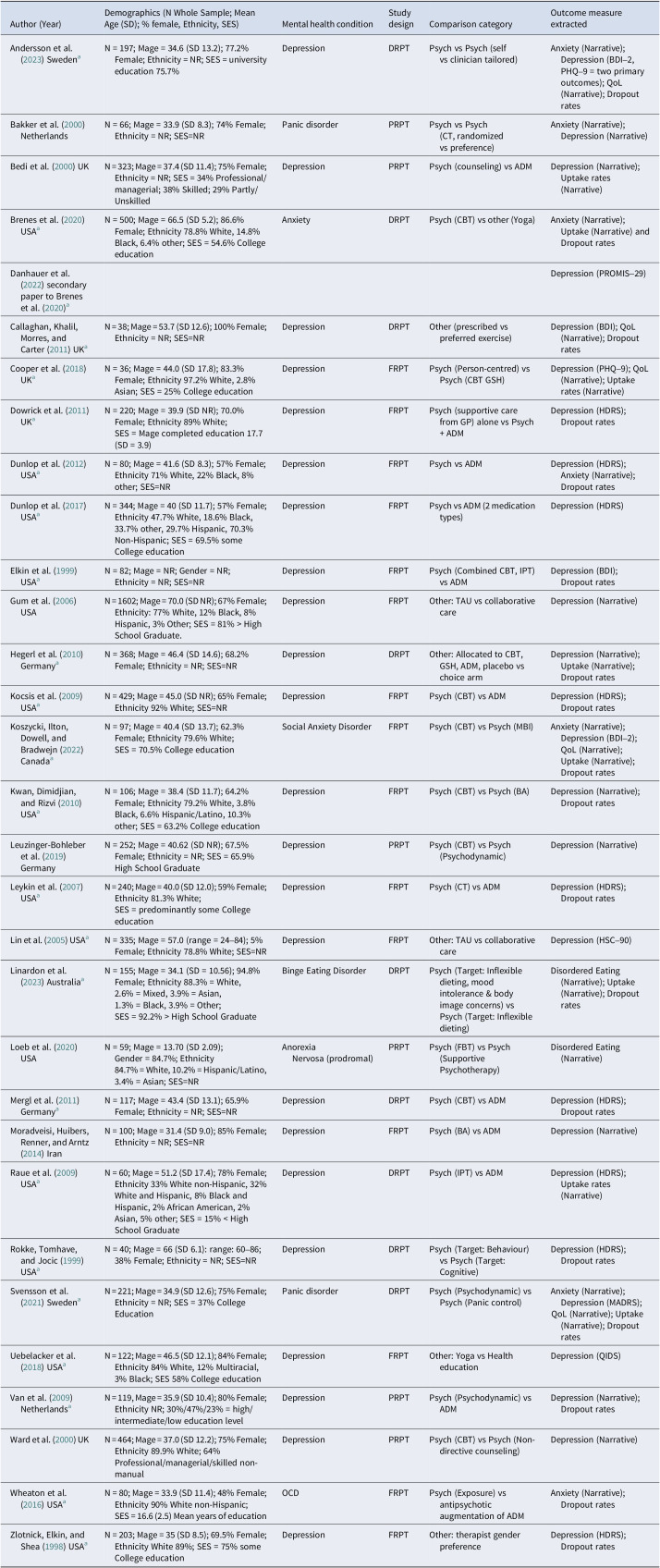
Growing evidence highlights the critical role of patient choice of treatment, with significant benefits for outcomes found in some studies. While four meta-analyses have previously examined the association between treatment choice and outcomes in mental health, robust conclusions have been limited by the inclusion of studies with biased preference trial designs. The current systematic review included 30 studies across three common and frequently comorbid mental health disorders (depression N = 23; anxiety, N = 5; eating disorders, N = 2) including 7055 participants (Mage 42.5 years, SD 11.7; 69.5% female). Treatment choice most often occurred between psychotherapy and antidepressant medication (43.3%), followed by choice between two different forms of psychotherapy, or elements within psychotherapy (36.7%). There were insufficient studies with stringent designs to conduct meta-analyses for anxiety or eating disorders as outcomes, or for treatment uptake. Treatment choice significantly improved outcomes for depression (d = 0.17, n = 18) and decreased therapy dropout, both in a combined sample targeting depression (n = 12), anxiety (n = 4) and eating disorders (n = 1; OR = 1.46, 95% CI: 1.17, 1.83), and in a smaller sample of the depression studies alone (OR = 1.65, 95% CI: 1.05, 2.59). All studies evaluated the impact of adults making treatment choices with none examining the effect of choice in adolescents. Clear directions in future research are indicated, in terms of designing studies that can adequately test the treatment choice and outcome association in anxiety and eating disorder treatment, and in youth.
期刊介绍:
Now in its fifth decade of publication, Psychological Medicine is a leading international journal in the fields of psychiatry, related aspects of psychology and basic sciences. From 2014, there are 16 issues a year, each featuring original articles reporting key research being undertaken worldwide, together with shorter editorials by distinguished scholars and an important book review section. The journal''s success is clearly demonstrated by a consistently high impact factor.






 京公网安备 11010802042870号
京ICP备2023020795号-1
京公网安备 11010802042870号
京ICP备2023020795号-1

 分享
分享
 求助内容:
求助内容: 应助结果提醒方式:
 扫码关注我们
