{"title":"脑内注射AAV-α-突触核蛋白加聚(adp -核糖)生成帕金森病猴模型的方案。","authors":"Shuyi Liu, Wei Si, Zhengbo Wang","doi":"10.1016/j.xpro.2025.103621","DOIUrl":null,"url":null,"abstract":"<p><p>The lack of an etiologic Parkinson's disease (PD) model in non-human primates has inhibited our understanding of the disease and the development of therapies. Here, we present a protocol for generating a PD model in Macaca fascicularis. We describe steps for localizing the substantia nigra and striatum using magnetic resonance imaging (MRI). We then detail a technique for the intracerebral administration of adeno-associated virus (AAV)-mediated overexpression of α-synuclein into the substantia nigra plus the injection of poly(ADP-ribose) (PAR) into the striatum. For complete details on the use and execution of this protocol, please refer to Liu et al.<sup>1</sup>.</p>","PeriodicalId":34214,"journal":{"name":"STAR Protocols","volume":"6 1","pages":"103621"},"PeriodicalIF":1.4000,"publicationDate":"2025-03-21","publicationTypes":"Journal Article","fieldsOfStudy":null,"isOpenAccess":false,"openAccessPdf":"https://www.ncbi.nlm.nih.gov/pmc/articles/PMC11848461/pdf/","citationCount":"0","resultStr":"{\"title\":\"Protocol for the intracerebral injection of AAV-α-synuclein plus poly(ADP-ribose) to generate a Parkinson's disease monkey model.\",\"authors\":\"Shuyi Liu, Wei Si, Zhengbo Wang\",\"doi\":\"10.1016/j.xpro.2025.103621\",\"DOIUrl\":null,\"url\":null,\"abstract\":\"<p><p>The lack of an etiologic Parkinson's disease (PD) model in non-human primates has inhibited our understanding of the disease and the development of therapies. Here, we present a protocol for generating a PD model in Macaca fascicularis. We describe steps for localizing the substantia nigra and striatum using magnetic resonance imaging (MRI). We then detail a technique for the intracerebral administration of adeno-associated virus (AAV)-mediated overexpression of α-synuclein into the substantia nigra plus the injection of poly(ADP-ribose) (PAR) into the striatum. For complete details on the use and execution of this protocol, please refer to Liu et al.<sup>1</sup>.</p>\",\"PeriodicalId\":34214,\"journal\":{\"name\":\"STAR Protocols\",\"volume\":\"6 1\",\"pages\":\"103621\"},\"PeriodicalIF\":1.4000,\"publicationDate\":\"2025-03-21\",\"publicationTypes\":\"Journal Article\",\"fieldsOfStudy\":null,\"isOpenAccess\":false,\"openAccessPdf\":\"https://www.ncbi.nlm.nih.gov/pmc/articles/PMC11848461/pdf/\",\"citationCount\":\"0\",\"resultStr\":null,\"platform\":\"Semanticscholar\",\"paperid\":null,\"PeriodicalName\":\"STAR Protocols\",\"FirstCategoryId\":\"1085\",\"ListUrlMain\":\"https://doi.org/10.1016/j.xpro.2025.103621\",\"RegionNum\":0,\"RegionCategory\":null,\"ArticlePicture\":[],\"TitleCN\":null,\"AbstractTextCN\":null,\"PMCID\":null,\"EPubDate\":\"2025/2/6 0:00:00\",\"PubModel\":\"Epub\",\"JCR\":\"Q4\",\"JCRName\":\"BIOCHEMICAL RESEARCH METHODS\",\"Score\":null,\"Total\":0}","platform":"Semanticscholar","paperid":null,"PeriodicalName":"STAR Protocols","FirstCategoryId":"1085","ListUrlMain":"https://doi.org/10.1016/j.xpro.2025.103621","RegionNum":0,"RegionCategory":null,"ArticlePicture":[],"TitleCN":null,"AbstractTextCN":null,"PMCID":null,"EPubDate":"2025/2/6 0:00:00","PubModel":"Epub","JCR":"Q4","JCRName":"BIOCHEMICAL RESEARCH METHODS","Score":null,"Total":0}
Protocol for the intracerebral injection of AAV-α-synuclein plus poly(ADP-ribose) to generate a Parkinson's disease monkey model.
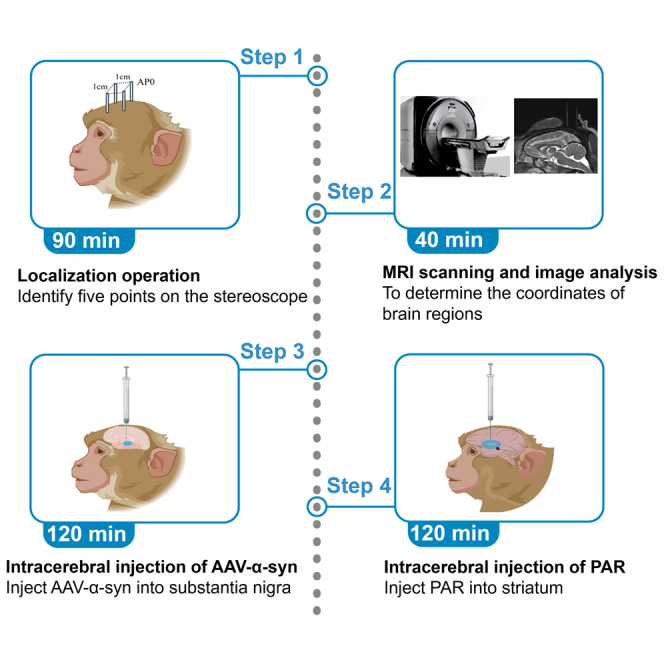
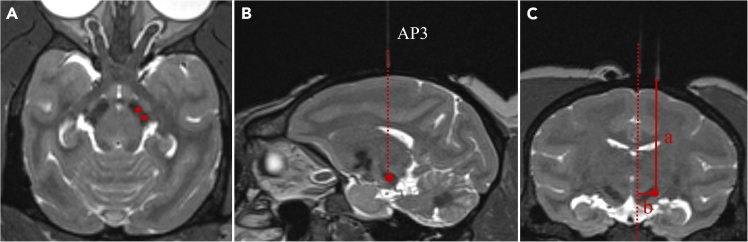
The lack of an etiologic Parkinson's disease (PD) model in non-human primates has inhibited our understanding of the disease and the development of therapies. Here, we present a protocol for generating a PD model in Macaca fascicularis. We describe steps for localizing the substantia nigra and striatum using magnetic resonance imaging (MRI). We then detail a technique for the intracerebral administration of adeno-associated virus (AAV)-mediated overexpression of α-synuclein into the substantia nigra plus the injection of poly(ADP-ribose) (PAR) into the striatum. For complete details on the use and execution of this protocol, please refer to Liu et al.1.





 京公网安备 11010802042870号
京ICP备2023020795号-1
京公网安备 11010802042870号
京ICP备2023020795号-1

 分享
分享
 求助内容:
求助内容: 应助结果提醒方式:
 扫码关注我们
