{"title":"突触可塑性和神经保护:黄酮类化合物对神经退行性疾病进展的分子影响。","authors":"Spandana Rajendra Kopalli , Tapan Behl , Ashishkumar Kyada , M.M. Rekha , Mayank Kundlas , Pooja Rani , Deepak Nathiya , K. Satyam Naidu , Monica Gulati , Manish Bhise , Priyanka Gupta , Pranay Wal , Mohammad Fareed , Seema Ramniwas , Sushruta Koppula , Amin Gasmi","doi":"10.1016/j.neuroscience.2025.02.007","DOIUrl":null,"url":null,"abstract":"<div><div>Flavonoids are a broad family of polyphenolic chemicals that are present in a wide variety of fruits, vegetables, and medicinal plants. Because of their neuroprotective qualities, flavonoids have attracted a lot of interest. The potential of flavonoids to control synaptic plasticity—a crucial process underlying memory, learning, and cognitive function—is becoming more and more clear. Dysregulation of synaptic plasticity is a feature of neurodegenerative diseases such as amyotrophic lateral sclerosis (0.4 %), Parkinson’s (1–2 %), Alzheimer’s (5–7 %), and Huntington’s ((0.2 %)). This review discusses the molecular mechanisms via which flavonoids influence synaptic plasticity as well as their therapeutic potential in neurodegenerative diseases. Flavonoids modulate key signaling pathways such as MAPK/ERK and PI3K/Akt/mTOR to support neuroprotection, synaptic plasticity, and neuronal health, while also influencing neurotrophic factors (BDNF, NGF) and their receptors (TrkB, TrkA). They regulate neurotransmitter receptors like GABA, AMPA, and NMDA to balance excitatory and inhibitory transmission, and exert antioxidant effects via the Nrf2-ARE pathway and anti-inflammatory actions by inhibiting NF-κB signaling, highlighting their potential for treating neurodegenerative diseases. These varied reactions support the preservation of synapse function and neuronal integrity in the face of neurodegenerative insults. Flavonoids can reduce the symptoms of neurodegeneration, prevent synaptic loss, and enhance cognitive function, according to experimental studies. However, there are still obstacles to using these findings in clinical settings, such as limited bioavailability and the need for consistent dose. The focus of future research should be on improving flavonoid delivery systems and combining them with conventional medications.</div></div>","PeriodicalId":19142,"journal":{"name":"Neuroscience","volume":"569 ","pages":"Pages 161-183"},"PeriodicalIF":2.8000,"publicationDate":"2025-03-17","publicationTypes":"Journal Article","fieldsOfStudy":null,"isOpenAccess":false,"openAccessPdf":"","citationCount":"0","resultStr":"{\"title\":\"Synaptic plasticity and neuroprotection: The molecular impact of flavonoids on neurodegenerative disease progression\",\"authors\":\"Spandana Rajendra Kopalli , Tapan Behl , Ashishkumar Kyada , M.M. Rekha , Mayank Kundlas , Pooja Rani , Deepak Nathiya , K. Satyam Naidu , Monica Gulati , Manish Bhise , Priyanka Gupta , Pranay Wal , Mohammad Fareed , Seema Ramniwas , Sushruta Koppula , Amin Gasmi\",\"doi\":\"10.1016/j.neuroscience.2025.02.007\",\"DOIUrl\":null,\"url\":null,\"abstract\":\"<div><div>Flavonoids are a broad family of polyphenolic chemicals that are present in a wide variety of fruits, vegetables, and medicinal plants. Because of their neuroprotective qualities, flavonoids have attracted a lot of interest. The potential of flavonoids to control synaptic plasticity—a crucial process underlying memory, learning, and cognitive function—is becoming more and more clear. Dysregulation of synaptic plasticity is a feature of neurodegenerative diseases such as amyotrophic lateral sclerosis (0.4 %), Parkinson’s (1–2 %), Alzheimer’s (5–7 %), and Huntington’s ((0.2 %)). This review discusses the molecular mechanisms via which flavonoids influence synaptic plasticity as well as their therapeutic potential in neurodegenerative diseases. Flavonoids modulate key signaling pathways such as MAPK/ERK and PI3K/Akt/mTOR to support neuroprotection, synaptic plasticity, and neuronal health, while also influencing neurotrophic factors (BDNF, NGF) and their receptors (TrkB, TrkA). They regulate neurotransmitter receptors like GABA, AMPA, and NMDA to balance excitatory and inhibitory transmission, and exert antioxidant effects via the Nrf2-ARE pathway and anti-inflammatory actions by inhibiting NF-κB signaling, highlighting their potential for treating neurodegenerative diseases. These varied reactions support the preservation of synapse function and neuronal integrity in the face of neurodegenerative insults. Flavonoids can reduce the symptoms of neurodegeneration, prevent synaptic loss, and enhance cognitive function, according to experimental studies. However, there are still obstacles to using these findings in clinical settings, such as limited bioavailability and the need for consistent dose. The focus of future research should be on improving flavonoid delivery systems and combining them with conventional medications.</div></div>\",\"PeriodicalId\":19142,\"journal\":{\"name\":\"Neuroscience\",\"volume\":\"569 \",\"pages\":\"Pages 161-183\"},\"PeriodicalIF\":2.8000,\"publicationDate\":\"2025-03-17\",\"publicationTypes\":\"Journal Article\",\"fieldsOfStudy\":null,\"isOpenAccess\":false,\"openAccessPdf\":\"\",\"citationCount\":\"0\",\"resultStr\":null,\"platform\":\"Semanticscholar\",\"paperid\":null,\"PeriodicalName\":\"Neuroscience\",\"FirstCategoryId\":\"3\",\"ListUrlMain\":\"https://www.sciencedirect.com/science/article/pii/S0306452225000910\",\"RegionNum\":3,\"RegionCategory\":\"医学\",\"ArticlePicture\":[],\"TitleCN\":null,\"AbstractTextCN\":null,\"PMCID\":null,\"EPubDate\":\"2025/2/6 0:00:00\",\"PubModel\":\"Epub\",\"JCR\":\"Q2\",\"JCRName\":\"NEUROSCIENCES\",\"Score\":null,\"Total\":0}","platform":"Semanticscholar","paperid":null,"PeriodicalName":"Neuroscience","FirstCategoryId":"3","ListUrlMain":"https://www.sciencedirect.com/science/article/pii/S0306452225000910","RegionNum":3,"RegionCategory":"医学","ArticlePicture":[],"TitleCN":null,"AbstractTextCN":null,"PMCID":null,"EPubDate":"2025/2/6 0:00:00","PubModel":"Epub","JCR":"Q2","JCRName":"NEUROSCIENCES","Score":null,"Total":0}
Synaptic plasticity and neuroprotection: The molecular impact of flavonoids on neurodegenerative disease progression
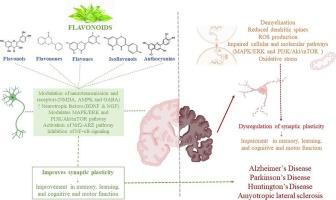
Flavonoids are a broad family of polyphenolic chemicals that are present in a wide variety of fruits, vegetables, and medicinal plants. Because of their neuroprotective qualities, flavonoids have attracted a lot of interest. The potential of flavonoids to control synaptic plasticity—a crucial process underlying memory, learning, and cognitive function—is becoming more and more clear. Dysregulation of synaptic plasticity is a feature of neurodegenerative diseases such as amyotrophic lateral sclerosis (0.4 %), Parkinson’s (1–2 %), Alzheimer’s (5–7 %), and Huntington’s ((0.2 %)). This review discusses the molecular mechanisms via which flavonoids influence synaptic plasticity as well as their therapeutic potential in neurodegenerative diseases. Flavonoids modulate key signaling pathways such as MAPK/ERK and PI3K/Akt/mTOR to support neuroprotection, synaptic plasticity, and neuronal health, while also influencing neurotrophic factors (BDNF, NGF) and their receptors (TrkB, TrkA). They regulate neurotransmitter receptors like GABA, AMPA, and NMDA to balance excitatory and inhibitory transmission, and exert antioxidant effects via the Nrf2-ARE pathway and anti-inflammatory actions by inhibiting NF-κB signaling, highlighting their potential for treating neurodegenerative diseases. These varied reactions support the preservation of synapse function and neuronal integrity in the face of neurodegenerative insults. Flavonoids can reduce the symptoms of neurodegeneration, prevent synaptic loss, and enhance cognitive function, according to experimental studies. However, there are still obstacles to using these findings in clinical settings, such as limited bioavailability and the need for consistent dose. The focus of future research should be on improving flavonoid delivery systems and combining them with conventional medications.
期刊介绍:
Neuroscience publishes papers describing the results of original research on any aspect of the scientific study of the nervous system. Any paper, however short, will be considered for publication provided that it reports significant, new and carefully confirmed findings with full experimental details.




 京公网安备 11010802042870号
京ICP备2023020795号-1
京公网安备 11010802042870号
京ICP备2023020795号-1

 分享
分享
 求助内容:
求助内容: 应助结果提醒方式:
 扫码关注我们
