{"title":"破骨细胞味觉受体1型成员3通过检测葡萄糖调节破骨细胞的发生。","authors":"Anna Yoshimura, Takuma Matsubara, Nao Kodama, Yoshimitsu Kakuta, Kazuma Yasuda, Ryusuke Yoshida, Osamu Kaminuma, Shuhei Hosomi, Hiroji Shinkawa, Quan Yuan, Tatsuo Kawamoto, Shoichiro Kokabu","doi":"10.1016/j.jbc.2025.108273","DOIUrl":null,"url":null,"abstract":"<p><p>The taste system extends beyond the oral cavity, with various taste receptors found in extraoral organs. Mice deficient in the taste receptor type 1 (TAS1R) family member, TAS1R3, and fed a high-fat, high-sugar diet showed high bone mass without altering food consumption. However, the underlying mechanisms, including the cell types responsible for TAS1R3 expression, remain unclear. Here, we demonstrate the expression and function of TAS1R3 in osteoclasts, which are responsible for bone resorption. The expression of Tas1r3, but not Tas1r1 or Tas1r2, is evoked during osteoclast differentiation. Osteoclastogenesis-related genes were downregulated in TAS1R3-deficient mice, whereas the opposite phenotypes were elicited by TAS1R3 overexpression. Contrary to the common heterodimerization with TAS1R1 or TAS1R2, TAS1R3 formed a homodimer that functioned to detect glucose, enhance p38 phosphorylation, and induce osteoclastogenesis. These results provide novel insights into the role of TAS1R3 in bone metabolism and suggest that TAS1R3 may be a viable target for therapeutic agents in bone metabolic diseases.</p>","PeriodicalId":15140,"journal":{"name":"Journal of Biological Chemistry","volume":" ","pages":"108273"},"PeriodicalIF":4.0000,"publicationDate":"2025-03-01","publicationTypes":"Journal Article","fieldsOfStudy":null,"isOpenAccess":false,"openAccessPdf":"https://www.ncbi.nlm.nih.gov/pmc/articles/PMC11925095/pdf/","citationCount":"0","resultStr":"{\"title\":\"Taste receptor type 1 member 3 in osteoclasts regulates osteoclastogenesis via detection of glucose.\",\"authors\":\"Anna Yoshimura, Takuma Matsubara, Nao Kodama, Yoshimitsu Kakuta, Kazuma Yasuda, Ryusuke Yoshida, Osamu Kaminuma, Shuhei Hosomi, Hiroji Shinkawa, Quan Yuan, Tatsuo Kawamoto, Shoichiro Kokabu\",\"doi\":\"10.1016/j.jbc.2025.108273\",\"DOIUrl\":null,\"url\":null,\"abstract\":\"<p><p>The taste system extends beyond the oral cavity, with various taste receptors found in extraoral organs. Mice deficient in the taste receptor type 1 (TAS1R) family member, TAS1R3, and fed a high-fat, high-sugar diet showed high bone mass without altering food consumption. However, the underlying mechanisms, including the cell types responsible for TAS1R3 expression, remain unclear. Here, we demonstrate the expression and function of TAS1R3 in osteoclasts, which are responsible for bone resorption. The expression of Tas1r3, but not Tas1r1 or Tas1r2, is evoked during osteoclast differentiation. Osteoclastogenesis-related genes were downregulated in TAS1R3-deficient mice, whereas the opposite phenotypes were elicited by TAS1R3 overexpression. Contrary to the common heterodimerization with TAS1R1 or TAS1R2, TAS1R3 formed a homodimer that functioned to detect glucose, enhance p38 phosphorylation, and induce osteoclastogenesis. These results provide novel insights into the role of TAS1R3 in bone metabolism and suggest that TAS1R3 may be a viable target for therapeutic agents in bone metabolic diseases.</p>\",\"PeriodicalId\":15140,\"journal\":{\"name\":\"Journal of Biological Chemistry\",\"volume\":\" \",\"pages\":\"108273\"},\"PeriodicalIF\":4.0000,\"publicationDate\":\"2025-03-01\",\"publicationTypes\":\"Journal Article\",\"fieldsOfStudy\":null,\"isOpenAccess\":false,\"openAccessPdf\":\"https://www.ncbi.nlm.nih.gov/pmc/articles/PMC11925095/pdf/\",\"citationCount\":\"0\",\"resultStr\":null,\"platform\":\"Semanticscholar\",\"paperid\":null,\"PeriodicalName\":\"Journal of Biological Chemistry\",\"FirstCategoryId\":\"99\",\"ListUrlMain\":\"https://doi.org/10.1016/j.jbc.2025.108273\",\"RegionNum\":2,\"RegionCategory\":\"生物学\",\"ArticlePicture\":[],\"TitleCN\":null,\"AbstractTextCN\":null,\"PMCID\":null,\"EPubDate\":\"2025/2/6 0:00:00\",\"PubModel\":\"Epub\",\"JCR\":\"Q2\",\"JCRName\":\"BIOCHEMISTRY & MOLECULAR BIOLOGY\",\"Score\":null,\"Total\":0}","platform":"Semanticscholar","paperid":null,"PeriodicalName":"Journal of Biological Chemistry","FirstCategoryId":"99","ListUrlMain":"https://doi.org/10.1016/j.jbc.2025.108273","RegionNum":2,"RegionCategory":"生物学","ArticlePicture":[],"TitleCN":null,"AbstractTextCN":null,"PMCID":null,"EPubDate":"2025/2/6 0:00:00","PubModel":"Epub","JCR":"Q2","JCRName":"BIOCHEMISTRY & MOLECULAR BIOLOGY","Score":null,"Total":0}
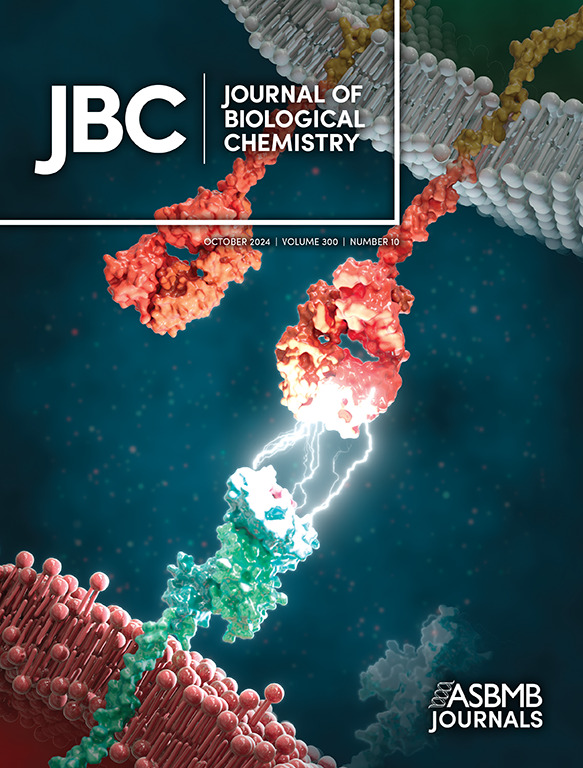
Taste receptor type 1 member 3 in osteoclasts regulates osteoclastogenesis via detection of glucose.
The taste system extends beyond the oral cavity, with various taste receptors found in extraoral organs. Mice deficient in the taste receptor type 1 (TAS1R) family member, TAS1R3, and fed a high-fat, high-sugar diet showed high bone mass without altering food consumption. However, the underlying mechanisms, including the cell types responsible for TAS1R3 expression, remain unclear. Here, we demonstrate the expression and function of TAS1R3 in osteoclasts, which are responsible for bone resorption. The expression of Tas1r3, but not Tas1r1 or Tas1r2, is evoked during osteoclast differentiation. Osteoclastogenesis-related genes were downregulated in TAS1R3-deficient mice, whereas the opposite phenotypes were elicited by TAS1R3 overexpression. Contrary to the common heterodimerization with TAS1R1 or TAS1R2, TAS1R3 formed a homodimer that functioned to detect glucose, enhance p38 phosphorylation, and induce osteoclastogenesis. These results provide novel insights into the role of TAS1R3 in bone metabolism and suggest that TAS1R3 may be a viable target for therapeutic agents in bone metabolic diseases.
期刊介绍:
The Journal of Biological Chemistry welcomes high-quality science that seeks to elucidate the molecular and cellular basis of biological processes. Papers published in JBC can therefore fall under the umbrellas of not only biological chemistry, chemical biology, or biochemistry, but also allied disciplines such as biophysics, systems biology, RNA biology, immunology, microbiology, neurobiology, epigenetics, computational biology, ’omics, and many more. The outcome of our focus on papers that contribute novel and important mechanistic insights, rather than on a particular topic area, is that JBC is truly a melting pot for scientists across disciplines. In addition, JBC welcomes papers that describe methods that will help scientists push their biochemical inquiries forward and resources that will be of use to the research community.




 京公网安备 11010802042870号
京ICP备2023020795号-1
京公网安备 11010802042870号
京ICP备2023020795号-1

 分享
分享
 求助内容:
求助内容: 应助结果提醒方式:
 扫码关注我们
