Sugarniya Subramaniam , Varinder Jeet , Jennifer H. Gunter , Taskeen Janjua Khan , Yuran Feng , Judith A. Clements , Srilakshmi Srinivasan , Amirali Popat , Jyotsna Batra
{"title":"乳铁蛋白包封的二氯苯乙酮(DAP)纳米颗粒增强前列腺癌的药物传递和抗肿瘤疗效。","authors":"Sugarniya Subramaniam , Varinder Jeet , Jennifer H. Gunter , Taskeen Janjua Khan , Yuran Feng , Judith A. Clements , Srilakshmi Srinivasan , Amirali Popat , Jyotsna Batra","doi":"10.1016/j.canlet.2025.217522","DOIUrl":null,"url":null,"abstract":"<div><div>Pyruvate Dehydrogenase Kinase 1 (PDK1) regulates glycolysis and oxidative phosphorylation pathways and is linked to prostate cancer metastasis and poor prognosis. The therapeutic application of 2,2-dichloroacetophenone (DAP), a PDK1 inhibitor, remains underexplored in prostate cancer. In this study we demonstrated that DAP exhibited a superior ability to inhibit prostate cancer cell proliferation, migration and colony formation at a lower concentration (20 μM) compared to a previously established inhibitor, dichloroacetate (DCA), which required concentrations of 30 mM or higher. However, poor aqueous solubility and lower stability of DAP limits its therapeutic application. Nano formulation of DAP with natural lactoferrin enhanced its dispersion and stability by increasing polydispersity index and intensity, and reduced zeta potential values upon conjugation that overcame the solubility limitations of DAP. The lactoferrin-DAP nanoparticles exhibited enhanced therapeutic efficacy by precisely targeting prostate cancer cells that express high lactoferrin receptors and high anti-tumor activity <em>in vitro</em> (at 1 μM) and in mouse prostate tumor xenografts (20 mg/kg). Mechanistically, these nanoparticles induce apoptosis in cancer cells by inducing caspase3/7 activity and disrupting the glycolytic and oxidative phosphorylation pathways. Moreover, lactoferrin-conjugated DAP nanoparticles suppressed the viability of docetaxel-resistant cells exhibiting a higher inhibitory efficacy compared to free DAP and DCA. Targeting PDK1 through lactoferrin-conjugated DAP nanoparticles represents a potent targeted therapeutic strategy for disrupting prostate tumor metabolism and offers promising implications for overcoming drug resistance.</div></div>","PeriodicalId":9506,"journal":{"name":"Cancer letters","volume":"616 ","pages":"Article 217522"},"PeriodicalIF":11.8000,"publicationDate":"2025-04-28","publicationTypes":"Journal Article","fieldsOfStudy":null,"isOpenAccess":false,"openAccessPdf":"","citationCount":"0","resultStr":"{\"title\":\"Lactoferrin-encapsulated dichloroacetophenone (DAP) nanoparticles enhance drug delivery and anti-tumor efficacy in prostate cancer\",\"authors\":\"Sugarniya Subramaniam , Varinder Jeet , Jennifer H. Gunter , Taskeen Janjua Khan , Yuran Feng , Judith A. Clements , Srilakshmi Srinivasan , Amirali Popat , Jyotsna Batra\",\"doi\":\"10.1016/j.canlet.2025.217522\",\"DOIUrl\":null,\"url\":null,\"abstract\":\"<div><div>Pyruvate Dehydrogenase Kinase 1 (PDK1) regulates glycolysis and oxidative phosphorylation pathways and is linked to prostate cancer metastasis and poor prognosis. The therapeutic application of 2,2-dichloroacetophenone (DAP), a PDK1 inhibitor, remains underexplored in prostate cancer. In this study we demonstrated that DAP exhibited a superior ability to inhibit prostate cancer cell proliferation, migration and colony formation at a lower concentration (20 μM) compared to a previously established inhibitor, dichloroacetate (DCA), which required concentrations of 30 mM or higher. However, poor aqueous solubility and lower stability of DAP limits its therapeutic application. Nano formulation of DAP with natural lactoferrin enhanced its dispersion and stability by increasing polydispersity index and intensity, and reduced zeta potential values upon conjugation that overcame the solubility limitations of DAP. The lactoferrin-DAP nanoparticles exhibited enhanced therapeutic efficacy by precisely targeting prostate cancer cells that express high lactoferrin receptors and high anti-tumor activity <em>in vitro</em> (at 1 μM) and in mouse prostate tumor xenografts (20 mg/kg). Mechanistically, these nanoparticles induce apoptosis in cancer cells by inducing caspase3/7 activity and disrupting the glycolytic and oxidative phosphorylation pathways. Moreover, lactoferrin-conjugated DAP nanoparticles suppressed the viability of docetaxel-resistant cells exhibiting a higher inhibitory efficacy compared to free DAP and DCA. Targeting PDK1 through lactoferrin-conjugated DAP nanoparticles represents a potent targeted therapeutic strategy for disrupting prostate tumor metabolism and offers promising implications for overcoming drug resistance.</div></div>\",\"PeriodicalId\":9506,\"journal\":{\"name\":\"Cancer letters\",\"volume\":\"616 \",\"pages\":\"Article 217522\"},\"PeriodicalIF\":11.8000,\"publicationDate\":\"2025-04-28\",\"publicationTypes\":\"Journal Article\",\"fieldsOfStudy\":null,\"isOpenAccess\":false,\"openAccessPdf\":\"\",\"citationCount\":\"0\",\"resultStr\":null,\"platform\":\"Semanticscholar\",\"paperid\":null,\"PeriodicalName\":\"Cancer letters\",\"FirstCategoryId\":\"3\",\"ListUrlMain\":\"https://www.sciencedirect.com/science/article/pii/S0304383525000862\",\"RegionNum\":1,\"RegionCategory\":\"医学\",\"ArticlePicture\":[],\"TitleCN\":null,\"AbstractTextCN\":null,\"PMCID\":null,\"EPubDate\":\"2025/2/7 0:00:00\",\"PubModel\":\"Epub\",\"JCR\":\"Q1\",\"JCRName\":\"ONCOLOGY\",\"Score\":null,\"Total\":0}","platform":"Semanticscholar","paperid":null,"PeriodicalName":"Cancer letters","FirstCategoryId":"3","ListUrlMain":"https://www.sciencedirect.com/science/article/pii/S0304383525000862","RegionNum":1,"RegionCategory":"医学","ArticlePicture":[],"TitleCN":null,"AbstractTextCN":null,"PMCID":null,"EPubDate":"2025/2/7 0:00:00","PubModel":"Epub","JCR":"Q1","JCRName":"ONCOLOGY","Score":null,"Total":0}
Lactoferrin-encapsulated dichloroacetophenone (DAP) nanoparticles enhance drug delivery and anti-tumor efficacy in prostate cancer
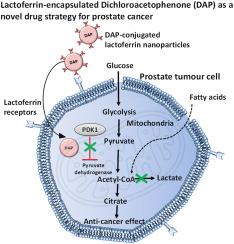
Pyruvate Dehydrogenase Kinase 1 (PDK1) regulates glycolysis and oxidative phosphorylation pathways and is linked to prostate cancer metastasis and poor prognosis. The therapeutic application of 2,2-dichloroacetophenone (DAP), a PDK1 inhibitor, remains underexplored in prostate cancer. In this study we demonstrated that DAP exhibited a superior ability to inhibit prostate cancer cell proliferation, migration and colony formation at a lower concentration (20 μM) compared to a previously established inhibitor, dichloroacetate (DCA), which required concentrations of 30 mM or higher. However, poor aqueous solubility and lower stability of DAP limits its therapeutic application. Nano formulation of DAP with natural lactoferrin enhanced its dispersion and stability by increasing polydispersity index and intensity, and reduced zeta potential values upon conjugation that overcame the solubility limitations of DAP. The lactoferrin-DAP nanoparticles exhibited enhanced therapeutic efficacy by precisely targeting prostate cancer cells that express high lactoferrin receptors and high anti-tumor activity in vitro (at 1 μM) and in mouse prostate tumor xenografts (20 mg/kg). Mechanistically, these nanoparticles induce apoptosis in cancer cells by inducing caspase3/7 activity and disrupting the glycolytic and oxidative phosphorylation pathways. Moreover, lactoferrin-conjugated DAP nanoparticles suppressed the viability of docetaxel-resistant cells exhibiting a higher inhibitory efficacy compared to free DAP and DCA. Targeting PDK1 through lactoferrin-conjugated DAP nanoparticles represents a potent targeted therapeutic strategy for disrupting prostate tumor metabolism and offers promising implications for overcoming drug resistance.
期刊介绍:
Cancer Letters is a reputable international journal that serves as a platform for significant and original contributions in cancer research. The journal welcomes both full-length articles and Mini Reviews in the wide-ranging field of basic and translational oncology. Furthermore, it frequently presents Special Issues that shed light on current and topical areas in cancer research.
Cancer Letters is highly interested in various fundamental aspects that can cater to a diverse readership. These areas include the molecular genetics and cell biology of cancer, radiation biology, molecular pathology, hormones and cancer, viral oncology, metastasis, and chemoprevention. The journal actively focuses on experimental therapeutics, particularly the advancement of targeted therapies for personalized cancer medicine, such as metronomic chemotherapy.
By publishing groundbreaking research and promoting advancements in cancer treatments, Cancer Letters aims to actively contribute to the fight against cancer and the improvement of patient outcomes.




 京公网安备 11010802042870号
京ICP备2023020795号-1
京公网安备 11010802042870号
京ICP备2023020795号-1

 分享
分享
 求助内容:
求助内容: 应助结果提醒方式:
 扫码关注我们
