María Dolores Arenas Jiménez, Julia Audije-Gil, Rodrigo Martínez, Natalia Martín Vaquero, Miquel Gómez, Jesús Portillo, Gerard Pereda, David Hernán Gascueña, Brett Duane, Marta Sanjuan, José Luis Fernández Martín, Fabiola Dapena, Alberto Ortiz, Marta Arias
{"title":"如何改善血液透析对环境的影响:小行动,大改变。","authors":"María Dolores Arenas Jiménez, Julia Audije-Gil, Rodrigo Martínez, Natalia Martín Vaquero, Miquel Gómez, Jesús Portillo, Gerard Pereda, David Hernán Gascueña, Brett Duane, Marta Sanjuan, José Luis Fernández Martín, Fabiola Dapena, Alberto Ortiz, Marta Arias","doi":"10.1093/ckj/sfae407","DOIUrl":null,"url":null,"abstract":"<p><strong>Background: </strong>The burden of chronic kidney disease is increasing, driven by population aging and the increase in risk factors. In-centre haemodialysis (HD), which accounts for most of the environmental impact of kidney replacement therapy, is a power-hungry, water-hungry and a waste-generating intervention.</p><p><strong>Methods: </strong>Here we characterize the environmental impact of 20 HD centres over 5 years and its modulation by operational changes (centre size, opening days, geographic location, type of water treatment plant and disinfection, dialysis modalities such as HD versus haemodiafiltration, seasonal variations and the impact of various corrective actions throughout time).</p><p><strong>Results: </strong>Average water and energy consumption per session were lower in larger centres compared with smaller ones, as well as in centres that operated daily compared with those that opened three times a week (both <i>P</i> < .05). Seasonality, which depends on the geographic region, had a marked influence (<i>P</i> < .001) on water and energy consumption, as does the choice of water treatment plant (<i>P</i> < .001). Actions taken in certain centres significantly reduced energy consumption up to 30%, plastic waste up to 65% and hazardous waste up to 63%.</p><p><strong>Conclusion: </strong>Annual monitoring must be performed to detect variations and plans must be designed to reduce the environmental impact. As it is not possible to reduce HD water and energy consumption to zero, implementing targeted actions offers a promising strategy for reducing the environmental burden.</p>","PeriodicalId":10435,"journal":{"name":"Clinical Kidney Journal","volume":"18 2","pages":"sfae407"},"PeriodicalIF":5.3000,"publicationDate":"2024-12-20","publicationTypes":"Journal Article","fieldsOfStudy":null,"isOpenAccess":false,"openAccessPdf":"https://www.ncbi.nlm.nih.gov/pmc/articles/PMC11806634/pdf/","citationCount":"0","resultStr":"{\"title\":\"How to improve the environmental impact in haemodialysis: small actions, big changes.\",\"authors\":\"María Dolores Arenas Jiménez, Julia Audije-Gil, Rodrigo Martínez, Natalia Martín Vaquero, Miquel Gómez, Jesús Portillo, Gerard Pereda, David Hernán Gascueña, Brett Duane, Marta Sanjuan, José Luis Fernández Martín, Fabiola Dapena, Alberto Ortiz, Marta Arias\",\"doi\":\"10.1093/ckj/sfae407\",\"DOIUrl\":null,\"url\":null,\"abstract\":\"<p><strong>Background: </strong>The burden of chronic kidney disease is increasing, driven by population aging and the increase in risk factors. In-centre haemodialysis (HD), which accounts for most of the environmental impact of kidney replacement therapy, is a power-hungry, water-hungry and a waste-generating intervention.</p><p><strong>Methods: </strong>Here we characterize the environmental impact of 20 HD centres over 5 years and its modulation by operational changes (centre size, opening days, geographic location, type of water treatment plant and disinfection, dialysis modalities such as HD versus haemodiafiltration, seasonal variations and the impact of various corrective actions throughout time).</p><p><strong>Results: </strong>Average water and energy consumption per session were lower in larger centres compared with smaller ones, as well as in centres that operated daily compared with those that opened three times a week (both <i>P</i> < .05). Seasonality, which depends on the geographic region, had a marked influence (<i>P</i> < .001) on water and energy consumption, as does the choice of water treatment plant (<i>P</i> < .001). Actions taken in certain centres significantly reduced energy consumption up to 30%, plastic waste up to 65% and hazardous waste up to 63%.</p><p><strong>Conclusion: </strong>Annual monitoring must be performed to detect variations and plans must be designed to reduce the environmental impact. As it is not possible to reduce HD water and energy consumption to zero, implementing targeted actions offers a promising strategy for reducing the environmental burden.</p>\",\"PeriodicalId\":10435,\"journal\":{\"name\":\"Clinical Kidney Journal\",\"volume\":\"18 2\",\"pages\":\"sfae407\"},\"PeriodicalIF\":5.3000,\"publicationDate\":\"2024-12-20\",\"publicationTypes\":\"Journal Article\",\"fieldsOfStudy\":null,\"isOpenAccess\":false,\"openAccessPdf\":\"https://www.ncbi.nlm.nih.gov/pmc/articles/PMC11806634/pdf/\",\"citationCount\":\"0\",\"resultStr\":null,\"platform\":\"Semanticscholar\",\"paperid\":null,\"PeriodicalName\":\"Clinical Kidney Journal\",\"FirstCategoryId\":\"3\",\"ListUrlMain\":\"https://doi.org/10.1093/ckj/sfae407\",\"RegionNum\":2,\"RegionCategory\":\"医学\",\"ArticlePicture\":[],\"TitleCN\":null,\"AbstractTextCN\":null,\"PMCID\":null,\"EPubDate\":\"2025/2/1 0:00:00\",\"PubModel\":\"eCollection\",\"JCR\":\"Q1\",\"JCRName\":\"UROLOGY & NEPHROLOGY\",\"Score\":null,\"Total\":0}","platform":"Semanticscholar","paperid":null,"PeriodicalName":"Clinical Kidney Journal","FirstCategoryId":"3","ListUrlMain":"https://doi.org/10.1093/ckj/sfae407","RegionNum":2,"RegionCategory":"医学","ArticlePicture":[],"TitleCN":null,"AbstractTextCN":null,"PMCID":null,"EPubDate":"2025/2/1 0:00:00","PubModel":"eCollection","JCR":"Q1","JCRName":"UROLOGY & NEPHROLOGY","Score":null,"Total":0}
引用次数: 0
摘要
背景:在人口老龄化和危险因素增加的推动下,慢性肾脏疾病的负担正在增加。中心血液透析(HD)占肾脏替代疗法对环境影响的大部分,是一种耗电、耗水和产生废物的干预。方法:在这里,我们描述了20个HD中心5年来对环境的影响,以及运营变化(中心规模、开放天数、地理位置、水处理厂和消毒类型、透析方式(如HD与血液渗透)、季节变化以及各种纠正措施的影响)对环境的影响。结果:与小型中心相比,大型中心的每次平均水和能源消耗更低,而每天运营的中心与每周开放三次的中心相比(两者都是P P P)结论:必须进行年度监测以发现变化,必须设计计划以减少对环境的影响。由于不可能将HD水和能源消耗减少到零,因此实施有针对性的行动为减轻环境负担提供了一个有希望的战略。
How to improve the environmental impact in haemodialysis: small actions, big changes.
Background: The burden of chronic kidney disease is increasing, driven by population aging and the increase in risk factors. In-centre haemodialysis (HD), which accounts for most of the environmental impact of kidney replacement therapy, is a power-hungry, water-hungry and a waste-generating intervention.
Methods: Here we characterize the environmental impact of 20 HD centres over 5 years and its modulation by operational changes (centre size, opening days, geographic location, type of water treatment plant and disinfection, dialysis modalities such as HD versus haemodiafiltration, seasonal variations and the impact of various corrective actions throughout time).
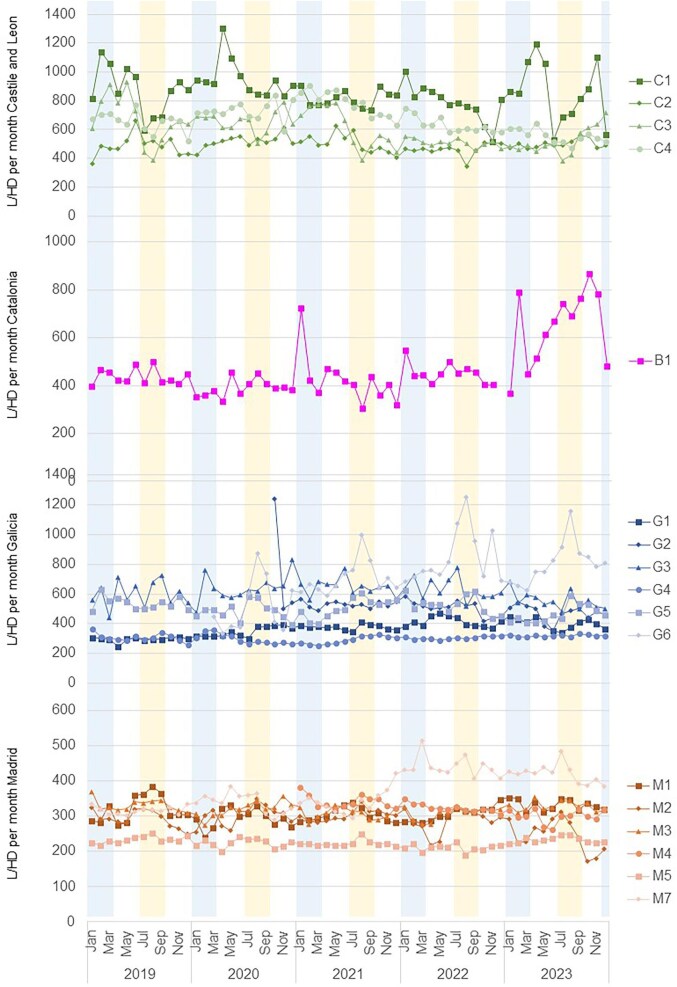
Results: Average water and energy consumption per session were lower in larger centres compared with smaller ones, as well as in centres that operated daily compared with those that opened three times a week (both P < .05). Seasonality, which depends on the geographic region, had a marked influence (P < .001) on water and energy consumption, as does the choice of water treatment plant (P < .001). Actions taken in certain centres significantly reduced energy consumption up to 30%, plastic waste up to 65% and hazardous waste up to 63%.
Conclusion: Annual monitoring must be performed to detect variations and plans must be designed to reduce the environmental impact. As it is not possible to reduce HD water and energy consumption to zero, implementing targeted actions offers a promising strategy for reducing the environmental burden.
期刊介绍:
About the Journal
Clinical Kidney Journal: Clinical and Translational Nephrology (ckj), an official journal of the ERA-EDTA (European Renal Association-European Dialysis and Transplant Association), is a fully open access, online only journal publishing bimonthly. The journal is an essential educational and training resource integrating clinical, translational and educational research into clinical practice. ckj aims to contribute to a translational research culture among nephrologists and kidney pathologists that helps close the gap between basic researchers and practicing clinicians and promote sorely needed innovation in the Nephrology field. All research articles in this journal have undergone peer review.






 京公网安备 11010802042870号
京ICP备2023020795号-1
京公网安备 11010802042870号
京ICP备2023020795号-1

 分享
分享
 求助内容:
求助内容: 应助结果提醒方式:
 扫码关注我们
