{"title":"“遗憾成为持久的痛苦之源”:一项关于家庭照顾者导致亲属死亡的经历的定性研究。","authors":"Hui-Ju Liang, Qian Xiong, Peng-Chan Lin, Jui-Hung Tsai, Nancy Preston","doi":"10.1177/02692163251316677","DOIUrl":null,"url":null,"abstract":"<p><strong>Background: </strong>Death preparations can benefit families both before and during bereavement. While these preparations are culturally influenced, evidence from non-Western cultures, like Eastern Asia, is limited.</p><p><strong>Aim: </strong>To explore how family caregivers prepare for a relative's death in Taiwan.</p><p><strong>Design: </strong>A qualitative interview study analysed with reflexive thematic analysis.</p><p><strong>Setting/participants: </strong>Twenty-two primary family caregivers following a death involving specialist palliative care were interviewed.</p><p><strong>Results: </strong>An overarching theme was 'getting everything right to have no regrets between the dead and the living'. Within this, two themes focussed upon improving the dying relative's outcomes and the families' subsequent bereavement: (1) 'making the right end-of-life decisions is crucial but complex', exploring preparations to involve (or not) the dying relative in making choices to minimise regrets. Participants often felt they understood the dying relative's wishes so respected their preferences while maintaining family harmony through consensus-building and professional guidance. (2) 'becoming a competent caregiver is the priority', addressing preparations for fulfilling responsibilities, making sacrifices and developing caregiving competence to ensure the dying relative's comfort. This would help reduce feelings of regret about not having done enough.</p><p><strong>Conclusion: </strong>Preparing for end-of-life decisions and caregiving is important for participants to reduce regret, benefiting subsequent bereavement. Of particular importance is family involvement and consensus-building in end-of-life decisions, reflecting Taiwan's family-led culture. These findings can inform clinical practices in family-centric decision-making cultures where healthcare workers should be aware of the need to build consensus, sometimes without involving the dying person. Future research should include patients' and healthcare professionals' perspectives.</p>","PeriodicalId":19849,"journal":{"name":"Palliative Medicine","volume":" ","pages":"401-412"},"PeriodicalIF":3.9000,"publicationDate":"2025-03-01","publicationTypes":"Journal Article","fieldsOfStudy":null,"isOpenAccess":false,"openAccessPdf":"https://www.ncbi.nlm.nih.gov/pmc/articles/PMC11877984/pdf/","citationCount":"0","resultStr":"{\"title\":\"'Regrets become a lasting source of pain': A qualitative study on family caregivers' experiences leading up to a relative's death.\",\"authors\":\"Hui-Ju Liang, Qian Xiong, Peng-Chan Lin, Jui-Hung Tsai, Nancy Preston\",\"doi\":\"10.1177/02692163251316677\",\"DOIUrl\":null,\"url\":null,\"abstract\":\"<p><strong>Background: </strong>Death preparations can benefit families both before and during bereavement. While these preparations are culturally influenced, evidence from non-Western cultures, like Eastern Asia, is limited.</p><p><strong>Aim: </strong>To explore how family caregivers prepare for a relative's death in Taiwan.</p><p><strong>Design: </strong>A qualitative interview study analysed with reflexive thematic analysis.</p><p><strong>Setting/participants: </strong>Twenty-two primary family caregivers following a death involving specialist palliative care were interviewed.</p><p><strong>Results: </strong>An overarching theme was 'getting everything right to have no regrets between the dead and the living'. Within this, two themes focussed upon improving the dying relative's outcomes and the families' subsequent bereavement: (1) 'making the right end-of-life decisions is crucial but complex', exploring preparations to involve (or not) the dying relative in making choices to minimise regrets. Participants often felt they understood the dying relative's wishes so respected their preferences while maintaining family harmony through consensus-building and professional guidance. (2) 'becoming a competent caregiver is the priority', addressing preparations for fulfilling responsibilities, making sacrifices and developing caregiving competence to ensure the dying relative's comfort. This would help reduce feelings of regret about not having done enough.</p><p><strong>Conclusion: </strong>Preparing for end-of-life decisions and caregiving is important for participants to reduce regret, benefiting subsequent bereavement. Of particular importance is family involvement and consensus-building in end-of-life decisions, reflecting Taiwan's family-led culture. These findings can inform clinical practices in family-centric decision-making cultures where healthcare workers should be aware of the need to build consensus, sometimes without involving the dying person. Future research should include patients' and healthcare professionals' perspectives.</p>\",\"PeriodicalId\":19849,\"journal\":{\"name\":\"Palliative Medicine\",\"volume\":\" \",\"pages\":\"401-412\"},\"PeriodicalIF\":3.9000,\"publicationDate\":\"2025-03-01\",\"publicationTypes\":\"Journal Article\",\"fieldsOfStudy\":null,\"isOpenAccess\":false,\"openAccessPdf\":\"https://www.ncbi.nlm.nih.gov/pmc/articles/PMC11877984/pdf/\",\"citationCount\":\"0\",\"resultStr\":null,\"platform\":\"Semanticscholar\",\"paperid\":null,\"PeriodicalName\":\"Palliative Medicine\",\"FirstCategoryId\":\"3\",\"ListUrlMain\":\"https://doi.org/10.1177/02692163251316677\",\"RegionNum\":2,\"RegionCategory\":\"医学\",\"ArticlePicture\":[],\"TitleCN\":null,\"AbstractTextCN\":null,\"PMCID\":null,\"EPubDate\":\"2025/2/10 0:00:00\",\"PubModel\":\"Epub\",\"JCR\":\"Q1\",\"JCRName\":\"HEALTH CARE SCIENCES & SERVICES\",\"Score\":null,\"Total\":0}","platform":"Semanticscholar","paperid":null,"PeriodicalName":"Palliative Medicine","FirstCategoryId":"3","ListUrlMain":"https://doi.org/10.1177/02692163251316677","RegionNum":2,"RegionCategory":"医学","ArticlePicture":[],"TitleCN":null,"AbstractTextCN":null,"PMCID":null,"EPubDate":"2025/2/10 0:00:00","PubModel":"Epub","JCR":"Q1","JCRName":"HEALTH CARE SCIENCES & SERVICES","Score":null,"Total":0}
'Regrets become a lasting source of pain': A qualitative study on family caregivers' experiences leading up to a relative's death.
Background: Death preparations can benefit families both before and during bereavement. While these preparations are culturally influenced, evidence from non-Western cultures, like Eastern Asia, is limited.
Aim: To explore how family caregivers prepare for a relative's death in Taiwan.
Design: A qualitative interview study analysed with reflexive thematic analysis.
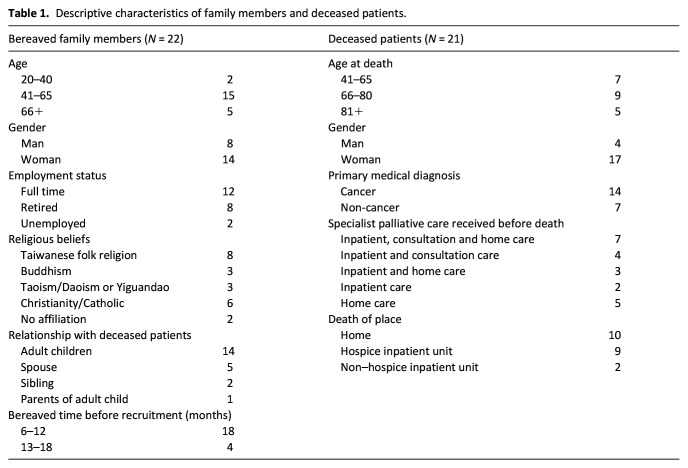
Setting/participants: Twenty-two primary family caregivers following a death involving specialist palliative care were interviewed.
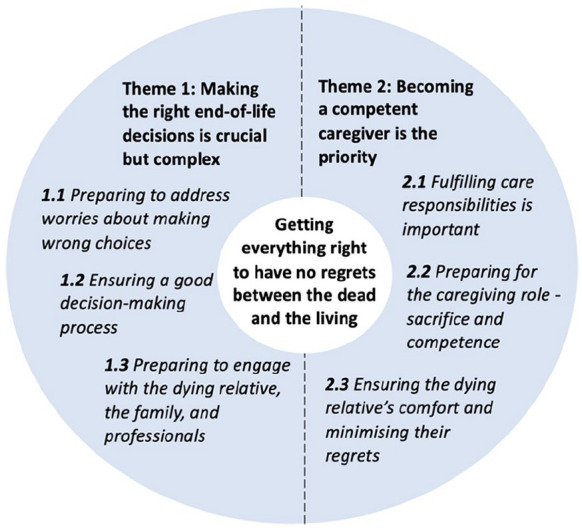
Results: An overarching theme was 'getting everything right to have no regrets between the dead and the living'. Within this, two themes focussed upon improving the dying relative's outcomes and the families' subsequent bereavement: (1) 'making the right end-of-life decisions is crucial but complex', exploring preparations to involve (or not) the dying relative in making choices to minimise regrets. Participants often felt they understood the dying relative's wishes so respected their preferences while maintaining family harmony through consensus-building and professional guidance. (2) 'becoming a competent caregiver is the priority', addressing preparations for fulfilling responsibilities, making sacrifices and developing caregiving competence to ensure the dying relative's comfort. This would help reduce feelings of regret about not having done enough.
Conclusion: Preparing for end-of-life decisions and caregiving is important for participants to reduce regret, benefiting subsequent bereavement. Of particular importance is family involvement and consensus-building in end-of-life decisions, reflecting Taiwan's family-led culture. These findings can inform clinical practices in family-centric decision-making cultures where healthcare workers should be aware of the need to build consensus, sometimes without involving the dying person. Future research should include patients' and healthcare professionals' perspectives.
期刊介绍:
Palliative Medicine is a highly ranked, peer reviewed scholarly journal dedicated to improving knowledge and clinical practice in the palliative care of patients with far advanced disease. This outstanding journal features editorials, original papers, review articles, case reports, correspondence and book reviews. Essential reading for all members of the palliative care team. This journal is a member of the Committee on Publication Ethics (COPE).





 京公网安备 11010802042870号
京ICP备2023020795号-1
京公网安备 11010802042870号
京ICP备2023020795号-1

 分享
分享
 求助内容:
求助内容: 应助结果提醒方式:
 扫码关注我们
