Jibon Kumar Paul, Mahir Azmal, Anm Shah Newaz Been Haque, Meghla Meem, Omar Faruk Talukder, Ajit Ghosh
{"title":"解开人类肠道微生物群的秘密:对其在不同疾病中的作用的综合综述。","authors":"Jibon Kumar Paul, Mahir Azmal, Anm Shah Newaz Been Haque, Meghla Meem, Omar Faruk Talukder, Ajit Ghosh","doi":"10.3748/wjg.v31.i5.99913","DOIUrl":null,"url":null,"abstract":"<p><p>The human gut microbiota, a complex and diverse community of microorganisms, plays a crucial role in maintaining overall health by influencing various physiological processes, including digestion, immune function, and disease susceptibility. The balance between beneficial and harmful bacteria is essential for health, with dysbiosis - disruption of this balance - linked to numerous conditions such as metabolic disorders, autoimmune diseases, and cancers. This review highlights key genera such as <i>Enterococcus</i>, <i>Ruminococcus</i>, <i>Bacteroides</i>, <i>Bifidobacterium</i>, <i>Escherichia coli</i>, <i>Akkermansia muciniphila</i>, <i>Firmicutes</i> (including <i>Clostridium</i> and <i>Lactobacillus</i>), and <i>Roseburia</i> due to their well-established roles in immune regulation and metabolic processes, but other bacteria, including <i>Clostridioides difficile</i>, <i>Salmonella</i>, <i>Helicobacter pylori</i>, and <i>Fusobacterium nucleatum</i>, are also implicated in dysbiosis and various diseases. Pathogenic bacteria, including <i>Escherichia coli</i> and <i>Bacteroides fragilis</i>, contribute to inflammation and cancer progression by disrupting immune responses and damaging tissues. The potential for microbiota-based therapies, such as probiotics, prebiotics, fecal microbiota transplantation, and dietary interventions, to improve health outcomes is examined. Future research directions in the integration of multi-omics, the impact of diet and lifestyle on microbiota composition, and advancing microbiota engineering techniques are also discussed. Understanding the gut microbiota's role in health and disease is essential for formulating personalized, efficacious treatments and preventive strategies, thereby enhancing health outcomes and progressing microbiome research.</p>","PeriodicalId":23778,"journal":{"name":"World Journal of Gastroenterology","volume":"31 5","pages":"99913"},"PeriodicalIF":7.7000,"publicationDate":"2025-02-07","publicationTypes":"Journal Article","fieldsOfStudy":null,"isOpenAccess":false,"openAccessPdf":"https://www.ncbi.nlm.nih.gov/pmc/articles/PMC11718612/pdf/","citationCount":"0","resultStr":"{\"title\":\"Unlocking the secrets of the human gut microbiota: Comprehensive review on its role in different diseases.\",\"authors\":\"Jibon Kumar Paul, Mahir Azmal, Anm Shah Newaz Been Haque, Meghla Meem, Omar Faruk Talukder, Ajit Ghosh\",\"doi\":\"10.3748/wjg.v31.i5.99913\",\"DOIUrl\":null,\"url\":null,\"abstract\":\"<p><p>The human gut microbiota, a complex and diverse community of microorganisms, plays a crucial role in maintaining overall health by influencing various physiological processes, including digestion, immune function, and disease susceptibility. The balance between beneficial and harmful bacteria is essential for health, with dysbiosis - disruption of this balance - linked to numerous conditions such as metabolic disorders, autoimmune diseases, and cancers. This review highlights key genera such as <i>Enterococcus</i>, <i>Ruminococcus</i>, <i>Bacteroides</i>, <i>Bifidobacterium</i>, <i>Escherichia coli</i>, <i>Akkermansia muciniphila</i>, <i>Firmicutes</i> (including <i>Clostridium</i> and <i>Lactobacillus</i>), and <i>Roseburia</i> due to their well-established roles in immune regulation and metabolic processes, but other bacteria, including <i>Clostridioides difficile</i>, <i>Salmonella</i>, <i>Helicobacter pylori</i>, and <i>Fusobacterium nucleatum</i>, are also implicated in dysbiosis and various diseases. Pathogenic bacteria, including <i>Escherichia coli</i> and <i>Bacteroides fragilis</i>, contribute to inflammation and cancer progression by disrupting immune responses and damaging tissues. The potential for microbiota-based therapies, such as probiotics, prebiotics, fecal microbiota transplantation, and dietary interventions, to improve health outcomes is examined. Future research directions in the integration of multi-omics, the impact of diet and lifestyle on microbiota composition, and advancing microbiota engineering techniques are also discussed. Understanding the gut microbiota's role in health and disease is essential for formulating personalized, efficacious treatments and preventive strategies, thereby enhancing health outcomes and progressing microbiome research.</p>\",\"PeriodicalId\":23778,\"journal\":{\"name\":\"World Journal of Gastroenterology\",\"volume\":\"31 5\",\"pages\":\"99913\"},\"PeriodicalIF\":7.7000,\"publicationDate\":\"2025-02-07\",\"publicationTypes\":\"Journal Article\",\"fieldsOfStudy\":null,\"isOpenAccess\":false,\"openAccessPdf\":\"https://www.ncbi.nlm.nih.gov/pmc/articles/PMC11718612/pdf/\",\"citationCount\":\"0\",\"resultStr\":null,\"platform\":\"Semanticscholar\",\"paperid\":null,\"PeriodicalName\":\"World Journal of Gastroenterology\",\"FirstCategoryId\":\"3\",\"ListUrlMain\":\"https://doi.org/10.3748/wjg.v31.i5.99913\",\"RegionNum\":3,\"RegionCategory\":\"医学\",\"ArticlePicture\":[],\"TitleCN\":null,\"AbstractTextCN\":null,\"PMCID\":null,\"EPubDate\":\"\",\"PubModel\":\"\",\"JCR\":\"Q1\",\"JCRName\":\"GASTROENTEROLOGY & HEPATOLOGY\",\"Score\":null,\"Total\":0}","platform":"Semanticscholar","paperid":null,"PeriodicalName":"World Journal of Gastroenterology","FirstCategoryId":"3","ListUrlMain":"https://doi.org/10.3748/wjg.v31.i5.99913","RegionNum":3,"RegionCategory":"医学","ArticlePicture":[],"TitleCN":null,"AbstractTextCN":null,"PMCID":null,"EPubDate":"","PubModel":"","JCR":"Q1","JCRName":"GASTROENTEROLOGY & HEPATOLOGY","Score":null,"Total":0}
Unlocking the secrets of the human gut microbiota: Comprehensive review on its role in different diseases.
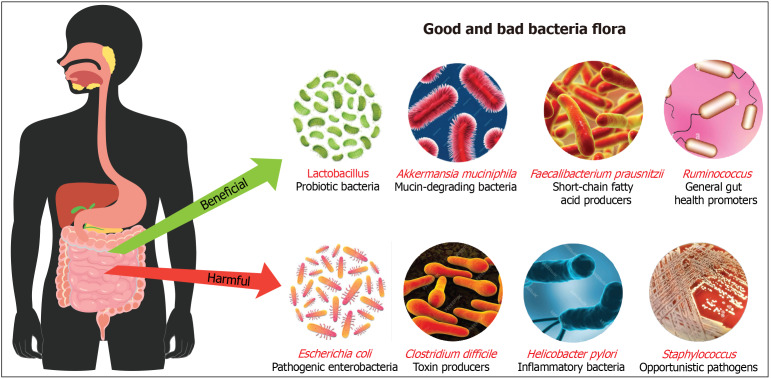
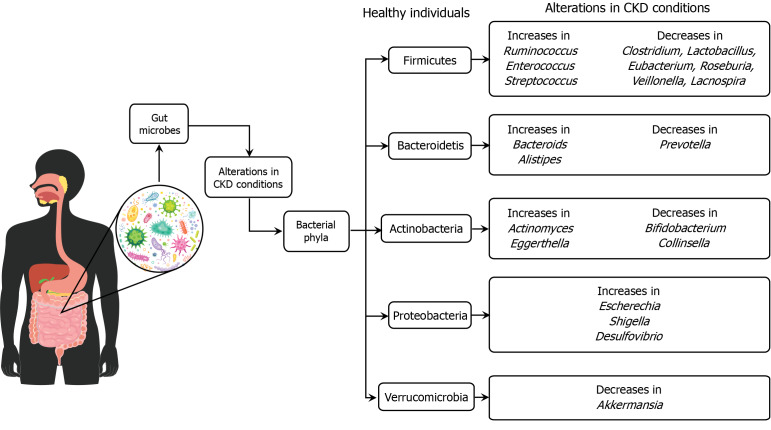
The human gut microbiota, a complex and diverse community of microorganisms, plays a crucial role in maintaining overall health by influencing various physiological processes, including digestion, immune function, and disease susceptibility. The balance between beneficial and harmful bacteria is essential for health, with dysbiosis - disruption of this balance - linked to numerous conditions such as metabolic disorders, autoimmune diseases, and cancers. This review highlights key genera such as Enterococcus, Ruminococcus, Bacteroides, Bifidobacterium, Escherichia coli, Akkermansia muciniphila, Firmicutes (including Clostridium and Lactobacillus), and Roseburia due to their well-established roles in immune regulation and metabolic processes, but other bacteria, including Clostridioides difficile, Salmonella, Helicobacter pylori, and Fusobacterium nucleatum, are also implicated in dysbiosis and various diseases. Pathogenic bacteria, including Escherichia coli and Bacteroides fragilis, contribute to inflammation and cancer progression by disrupting immune responses and damaging tissues. The potential for microbiota-based therapies, such as probiotics, prebiotics, fecal microbiota transplantation, and dietary interventions, to improve health outcomes is examined. Future research directions in the integration of multi-omics, the impact of diet and lifestyle on microbiota composition, and advancing microbiota engineering techniques are also discussed. Understanding the gut microbiota's role in health and disease is essential for formulating personalized, efficacious treatments and preventive strategies, thereby enhancing health outcomes and progressing microbiome research.
期刊介绍:
The primary aims of the WJG are to improve diagnostic, therapeutic and preventive modalities and the skills of clinicians and to guide clinical practice in gastroenterology and hepatology.





 京公网安备 11010802042870号
京ICP备2023020795号-1
京公网安备 11010802042870号
京ICP备2023020795号-1

 分享
分享
 求助内容:
求助内容: 应助结果提醒方式:
 扫码关注我们
