{"title":"头颈部及其他实体肿瘤微环境中的结缔组织增生反应:治疗屏障。","authors":"Kohei Okuyama, Maiko Tsuchiya, Kala Chand Debnath, Shajedul Islam, Souichi Yanamoto","doi":"10.1177/17588359251317144","DOIUrl":null,"url":null,"abstract":"<p><p>Head and neck squamous cell carcinoma (HNSCC) remains a challenge due to limited prognostic biomarkers and therapeutic options. The tumor microenvironment (TME), particularly the desmoplastic reaction (DR) characterized by stromal fibrosis, plays a crucial role in cancer progression and resistance to therapy. This review aims to summarize the biological significance of DR in HNSCC initiation, progression, and treatment resistance. Histologically, DR in HNSCC correlates with invasion patterns and clinical outcomes, affecting disease-free and overall survival. The interaction between cancer-associated fibroblasts (CAFs) and TME influences immune responses, including resistance to immunotherapy. Notably, human papillomavirus-driven HNSCC exhibits distinct DR characteristics that further influence the prognosis. DR promotes epithelial-mesenchymal transition and cancer cell invasion through CAF-mediated extracellular matrix remodeling and signaling pathways such as transforming growth factor-beta. DR also affects bone invasion and chemotherapy resistance by modulating stromal responses. Therapeutic strategies targeting DR and stromal components show promise in overcoming therapeutic resistance including resistance to immune checkpoint inhibitors. Understanding the role of DR in HNSCC biology and its impact on treatment response is critical to developing effective therapeutic interventions.</p>","PeriodicalId":23053,"journal":{"name":"Therapeutic Advances in Medical Oncology","volume":"17 ","pages":"17588359251317144"},"PeriodicalIF":4.1000,"publicationDate":"2025-02-07","publicationTypes":"Journal Article","fieldsOfStudy":null,"isOpenAccess":false,"openAccessPdf":"https://www.ncbi.nlm.nih.gov/pmc/articles/PMC11806477/pdf/","citationCount":"0","resultStr":"{\"title\":\"Desmoplastic reaction in the microenvironment of head and neck and other solid tumors: the therapeutic barrier.\",\"authors\":\"Kohei Okuyama, Maiko Tsuchiya, Kala Chand Debnath, Shajedul Islam, Souichi Yanamoto\",\"doi\":\"10.1177/17588359251317144\",\"DOIUrl\":null,\"url\":null,\"abstract\":\"<p><p>Head and neck squamous cell carcinoma (HNSCC) remains a challenge due to limited prognostic biomarkers and therapeutic options. The tumor microenvironment (TME), particularly the desmoplastic reaction (DR) characterized by stromal fibrosis, plays a crucial role in cancer progression and resistance to therapy. This review aims to summarize the biological significance of DR in HNSCC initiation, progression, and treatment resistance. Histologically, DR in HNSCC correlates with invasion patterns and clinical outcomes, affecting disease-free and overall survival. The interaction between cancer-associated fibroblasts (CAFs) and TME influences immune responses, including resistance to immunotherapy. Notably, human papillomavirus-driven HNSCC exhibits distinct DR characteristics that further influence the prognosis. DR promotes epithelial-mesenchymal transition and cancer cell invasion through CAF-mediated extracellular matrix remodeling and signaling pathways such as transforming growth factor-beta. DR also affects bone invasion and chemotherapy resistance by modulating stromal responses. Therapeutic strategies targeting DR and stromal components show promise in overcoming therapeutic resistance including resistance to immune checkpoint inhibitors. Understanding the role of DR in HNSCC biology and its impact on treatment response is critical to developing effective therapeutic interventions.</p>\",\"PeriodicalId\":23053,\"journal\":{\"name\":\"Therapeutic Advances in Medical Oncology\",\"volume\":\"17 \",\"pages\":\"17588359251317144\"},\"PeriodicalIF\":4.1000,\"publicationDate\":\"2025-02-07\",\"publicationTypes\":\"Journal Article\",\"fieldsOfStudy\":null,\"isOpenAccess\":false,\"openAccessPdf\":\"https://www.ncbi.nlm.nih.gov/pmc/articles/PMC11806477/pdf/\",\"citationCount\":\"0\",\"resultStr\":null,\"platform\":\"Semanticscholar\",\"paperid\":null,\"PeriodicalName\":\"Therapeutic Advances in Medical Oncology\",\"FirstCategoryId\":\"3\",\"ListUrlMain\":\"https://doi.org/10.1177/17588359251317144\",\"RegionNum\":2,\"RegionCategory\":\"医学\",\"ArticlePicture\":[],\"TitleCN\":null,\"AbstractTextCN\":null,\"PMCID\":null,\"EPubDate\":\"2025/1/1 0:00:00\",\"PubModel\":\"eCollection\",\"JCR\":\"Q2\",\"JCRName\":\"ONCOLOGY\",\"Score\":null,\"Total\":0}","platform":"Semanticscholar","paperid":null,"PeriodicalName":"Therapeutic Advances in Medical Oncology","FirstCategoryId":"3","ListUrlMain":"https://doi.org/10.1177/17588359251317144","RegionNum":2,"RegionCategory":"医学","ArticlePicture":[],"TitleCN":null,"AbstractTextCN":null,"PMCID":null,"EPubDate":"2025/1/1 0:00:00","PubModel":"eCollection","JCR":"Q2","JCRName":"ONCOLOGY","Score":null,"Total":0}
Desmoplastic reaction in the microenvironment of head and neck and other solid tumors: the therapeutic barrier.
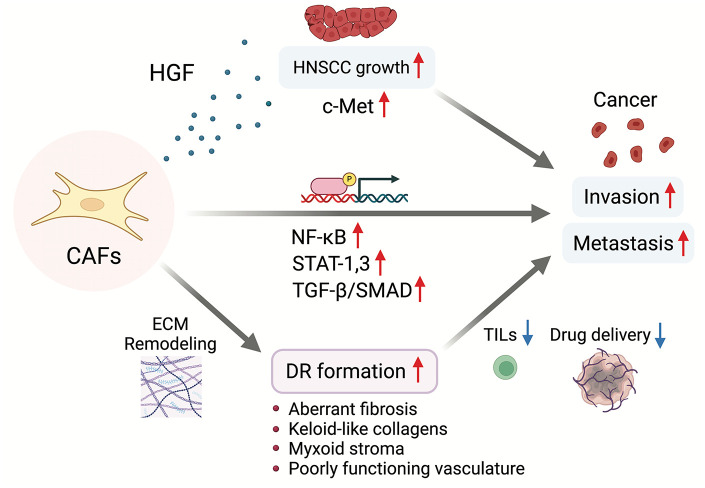
Head and neck squamous cell carcinoma (HNSCC) remains a challenge due to limited prognostic biomarkers and therapeutic options. The tumor microenvironment (TME), particularly the desmoplastic reaction (DR) characterized by stromal fibrosis, plays a crucial role in cancer progression and resistance to therapy. This review aims to summarize the biological significance of DR in HNSCC initiation, progression, and treatment resistance. Histologically, DR in HNSCC correlates with invasion patterns and clinical outcomes, affecting disease-free and overall survival. The interaction between cancer-associated fibroblasts (CAFs) and TME influences immune responses, including resistance to immunotherapy. Notably, human papillomavirus-driven HNSCC exhibits distinct DR characteristics that further influence the prognosis. DR promotes epithelial-mesenchymal transition and cancer cell invasion through CAF-mediated extracellular matrix remodeling and signaling pathways such as transforming growth factor-beta. DR also affects bone invasion and chemotherapy resistance by modulating stromal responses. Therapeutic strategies targeting DR and stromal components show promise in overcoming therapeutic resistance including resistance to immune checkpoint inhibitors. Understanding the role of DR in HNSCC biology and its impact on treatment response is critical to developing effective therapeutic interventions.
期刊介绍:
Therapeutic Advances in Medical Oncology is an open access, peer-reviewed journal delivering the highest quality articles, reviews, and scholarly comment on pioneering efforts and innovative studies in the medical treatment of cancer. The journal has a strong clinical and pharmacological focus and is aimed at clinicians and researchers in medical oncology, providing a forum in print and online for publishing the highest quality articles in this area. This journal is a member of the Committee on Publication Ethics (COPE).






 京公网安备 11010802042870号
京ICP备2023020795号-1
京公网安备 11010802042870号
京ICP备2023020795号-1

 分享
分享
 求助内容:
求助内容: 应助结果提醒方式:
 扫码关注我们
