{"title":"居住在低海拔地区的一般人群的血红蛋白水平。","authors":"Mami Mizuta, Hiroshi Nishi, Motoki Odawara, Yasuhiro Oda, Masaomi Nangaku","doi":"10.37737/ace.25002","DOIUrl":null,"url":null,"abstract":"<p><strong>Background: </strong>Polycythemia often develops in the highland areas. However, it remains to be clarified whether blood hemoglobin levels in the general population are affected by elevations above sea level of <1,000 m.</p><p><strong>Methods: </strong>This ecological study targeting secondary medical areas in Japan considered residential altitude at 0-800 m as the exposure and the mean hemoglobin level of the inhabitants aged between 40-44 years as the main outcome, based on the data extracted from the nationwide Special Health Checkup for 2021. The secondary outcome was the proportion of examinees with low hemoglobin levels. The results were validated using a 2018 dataset.</p><p><strong>Results: </strong>Individual data from approximately 1.21 million women and 1.93 million men in 335 secondary medical areas were summarized. When these areas were categorized into four groups by their altitude, the mean hemoglobin level at 600-800 m was elevated with a mean difference of 0.27 g/dL in women (p for trend <0.01) and with a mean difference of 0.21 g/dL in men (p for trend <0.01), compared to that at 0-200 m in 2021 dataset. Moreover, the proportion of women examinees with hemoglobin level <12.0 g/dL was 21.3% at 0-200 m and 17.6% at 600-800 m in 2021 (p for trend <0.01). These results were confirmed using the 2018 dataset.</p><p><strong>Conclusions: </strong>As the residential altitude increased from sea level to 800 m, blood hemoglobin levels were slightly elevated, and anemia prevalence in women decreased, implying caution in hemoglobin measurements.</p>","PeriodicalId":517436,"journal":{"name":"Annals of clinical epidemiology","volume":"7 1","pages":"10-16"},"PeriodicalIF":0.0000,"publicationDate":"2024-10-31","publicationTypes":"Journal Article","fieldsOfStudy":null,"isOpenAccess":false,"openAccessPdf":"https://www.ncbi.nlm.nih.gov/pmc/articles/PMC11799857/pdf/","citationCount":"0","resultStr":"{\"title\":\"Blood hemoglobin levels of the general population residing at low range altitudes.\",\"authors\":\"Mami Mizuta, Hiroshi Nishi, Motoki Odawara, Yasuhiro Oda, Masaomi Nangaku\",\"doi\":\"10.37737/ace.25002\",\"DOIUrl\":null,\"url\":null,\"abstract\":\"<p><strong>Background: </strong>Polycythemia often develops in the highland areas. However, it remains to be clarified whether blood hemoglobin levels in the general population are affected by elevations above sea level of <1,000 m.</p><p><strong>Methods: </strong>This ecological study targeting secondary medical areas in Japan considered residential altitude at 0-800 m as the exposure and the mean hemoglobin level of the inhabitants aged between 40-44 years as the main outcome, based on the data extracted from the nationwide Special Health Checkup for 2021. The secondary outcome was the proportion of examinees with low hemoglobin levels. The results were validated using a 2018 dataset.</p><p><strong>Results: </strong>Individual data from approximately 1.21 million women and 1.93 million men in 335 secondary medical areas were summarized. When these areas were categorized into four groups by their altitude, the mean hemoglobin level at 600-800 m was elevated with a mean difference of 0.27 g/dL in women (p for trend <0.01) and with a mean difference of 0.21 g/dL in men (p for trend <0.01), compared to that at 0-200 m in 2021 dataset. Moreover, the proportion of women examinees with hemoglobin level <12.0 g/dL was 21.3% at 0-200 m and 17.6% at 600-800 m in 2021 (p for trend <0.01). These results were confirmed using the 2018 dataset.</p><p><strong>Conclusions: </strong>As the residential altitude increased from sea level to 800 m, blood hemoglobin levels were slightly elevated, and anemia prevalence in women decreased, implying caution in hemoglobin measurements.</p>\",\"PeriodicalId\":517436,\"journal\":{\"name\":\"Annals of clinical epidemiology\",\"volume\":\"7 1\",\"pages\":\"10-16\"},\"PeriodicalIF\":0.0000,\"publicationDate\":\"2024-10-31\",\"publicationTypes\":\"Journal Article\",\"fieldsOfStudy\":null,\"isOpenAccess\":false,\"openAccessPdf\":\"https://www.ncbi.nlm.nih.gov/pmc/articles/PMC11799857/pdf/\",\"citationCount\":\"0\",\"resultStr\":null,\"platform\":\"Semanticscholar\",\"paperid\":null,\"PeriodicalName\":\"Annals of clinical epidemiology\",\"FirstCategoryId\":\"1085\",\"ListUrlMain\":\"https://doi.org/10.37737/ace.25002\",\"RegionNum\":0,\"RegionCategory\":null,\"ArticlePicture\":[],\"TitleCN\":null,\"AbstractTextCN\":null,\"PMCID\":null,\"EPubDate\":\"2025/1/1 0:00:00\",\"PubModel\":\"eCollection\",\"JCR\":\"\",\"JCRName\":\"\",\"Score\":null,\"Total\":0}","platform":"Semanticscholar","paperid":null,"PeriodicalName":"Annals of clinical epidemiology","FirstCategoryId":"1085","ListUrlMain":"https://doi.org/10.37737/ace.25002","RegionNum":0,"RegionCategory":null,"ArticlePicture":[],"TitleCN":null,"AbstractTextCN":null,"PMCID":null,"EPubDate":"2025/1/1 0:00:00","PubModel":"eCollection","JCR":"","JCRName":"","Score":null,"Total":0}
Blood hemoglobin levels of the general population residing at low range altitudes.
Background: Polycythemia often develops in the highland areas. However, it remains to be clarified whether blood hemoglobin levels in the general population are affected by elevations above sea level of <1,000 m.
Methods: This ecological study targeting secondary medical areas in Japan considered residential altitude at 0-800 m as the exposure and the mean hemoglobin level of the inhabitants aged between 40-44 years as the main outcome, based on the data extracted from the nationwide Special Health Checkup for 2021. The secondary outcome was the proportion of examinees with low hemoglobin levels. The results were validated using a 2018 dataset.
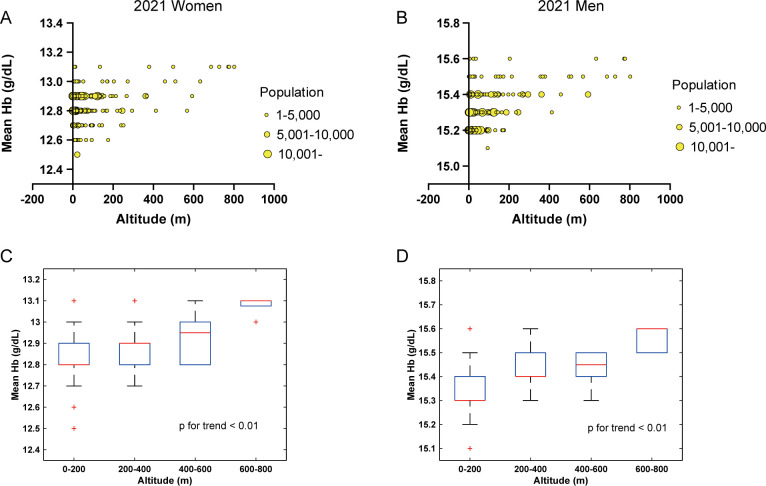
Results: Individual data from approximately 1.21 million women and 1.93 million men in 335 secondary medical areas were summarized. When these areas were categorized into four groups by their altitude, the mean hemoglobin level at 600-800 m was elevated with a mean difference of 0.27 g/dL in women (p for trend <0.01) and with a mean difference of 0.21 g/dL in men (p for trend <0.01), compared to that at 0-200 m in 2021 dataset. Moreover, the proportion of women examinees with hemoglobin level <12.0 g/dL was 21.3% at 0-200 m and 17.6% at 600-800 m in 2021 (p for trend <0.01). These results were confirmed using the 2018 dataset.
Conclusions: As the residential altitude increased from sea level to 800 m, blood hemoglobin levels were slightly elevated, and anemia prevalence in women decreased, implying caution in hemoglobin measurements.





 京公网安备 11010802042870号
京ICP备2023020795号-1
京公网安备 11010802042870号
京ICP备2023020795号-1

 分享
分享

 求助内容:
求助内容: 应助结果提醒方式:
 扫码关注我们
