Fatemeh Sameni, Parisa Abedi Elkhichi, Ali Dadashi, Mohammad Sadeghi, Mehdi Goudarzi, Maedeh Pourali Eshkalak, Masoud Dadashi
{"title":"结直肠癌患者中核梭杆菌和脆弱拟杆菌的全球患病率:病例报告/病例系列综述和患病率研究的荟萃分析","authors":"Fatemeh Sameni, Parisa Abedi Elkhichi, Ali Dadashi, Mohammad Sadeghi, Mehdi Goudarzi, Maedeh Pourali Eshkalak, Masoud Dadashi","doi":"10.1186/s12876-025-03664-x","DOIUrl":null,"url":null,"abstract":"<p><strong>Background: </strong>Colorectal cancer (CRC) is the second deadliest carcinoma across the globe and has been known as a multi-factor induced-disease. Emerging research have demonstrated that bacterial colonization may contribute to the initiation and promotion of the CRC. The presence of Fusobacterium nucleatum (F. nucleatum) and Bacteroides fragilis (B. fragilis) in the gut is associated with the development of CRC. In this study, the prevalence of F. nucleatum and B. fragilis among CRC patients has been assessed worldwide through a systematic review and meta-analysis.</p><p><strong>Methods: </strong>The extensive search was performed using \"Fusobacterium nucleatum\", \"Bacteroides fragilis\", \"Colorectal cancer\" and all relevant keywords. Then, a systematic paper screening was done following a comprehensive search in Embase, Web of Science, and PubMed databases while the time range was limited between the years 2000 and 2024. Afterwards, statistical analysis was performed utilizing the comprehensive meta-analysis (CMA) software (version 2.0, Biostat, USA).</p><p><strong>Results: </strong>According to the meta-analysis of prevalence studies, the prevalence of F. nucleatum among 19 countries and B. fragilis among 10 countries were indicated to be 38.9% (95% CI 33.7-44.3%) and 42.5% (95% CI 34.4-51.1%), respectively, among the CRC patients. It was then revealed that Asia had the highest prevalence of F. nucleatum while most of the B. fragilis isolates in CRC cases were reported in European countries. Moreover, the data suggested that the most common comorbidity observed among the CRC cases was diabetes.</p><p><strong>Conclusion: </strong>Our results emphasized the high prevalence of F. nucleatum and B. fragilis in CRC patients. Based on this meta-analysis review, regulating the gut microbiota in CRC patients seemed to be a promising approach to improving the efficacy of CRC therapy.</p>","PeriodicalId":9129,"journal":{"name":"BMC Gastroenterology","volume":"25 1","pages":"71"},"PeriodicalIF":2.5000,"publicationDate":"2025-02-10","publicationTypes":"Journal Article","fieldsOfStudy":null,"isOpenAccess":false,"openAccessPdf":"https://www.ncbi.nlm.nih.gov/pmc/articles/PMC11808969/pdf/","citationCount":"0","resultStr":"{\"title\":\"Global prevalence of Fusobacterium nucleatum and Bacteroides fragilis in patients with colorectal cancer: an overview of case reports/case series and meta-analysis of prevalence studies.\",\"authors\":\"Fatemeh Sameni, Parisa Abedi Elkhichi, Ali Dadashi, Mohammad Sadeghi, Mehdi Goudarzi, Maedeh Pourali Eshkalak, Masoud Dadashi\",\"doi\":\"10.1186/s12876-025-03664-x\",\"DOIUrl\":null,\"url\":null,\"abstract\":\"<p><strong>Background: </strong>Colorectal cancer (CRC) is the second deadliest carcinoma across the globe and has been known as a multi-factor induced-disease. Emerging research have demonstrated that bacterial colonization may contribute to the initiation and promotion of the CRC. The presence of Fusobacterium nucleatum (F. nucleatum) and Bacteroides fragilis (B. fragilis) in the gut is associated with the development of CRC. In this study, the prevalence of F. nucleatum and B. fragilis among CRC patients has been assessed worldwide through a systematic review and meta-analysis.</p><p><strong>Methods: </strong>The extensive search was performed using \\\"Fusobacterium nucleatum\\\", \\\"Bacteroides fragilis\\\", \\\"Colorectal cancer\\\" and all relevant keywords. Then, a systematic paper screening was done following a comprehensive search in Embase, Web of Science, and PubMed databases while the time range was limited between the years 2000 and 2024. Afterwards, statistical analysis was performed utilizing the comprehensive meta-analysis (CMA) software (version 2.0, Biostat, USA).</p><p><strong>Results: </strong>According to the meta-analysis of prevalence studies, the prevalence of F. nucleatum among 19 countries and B. fragilis among 10 countries were indicated to be 38.9% (95% CI 33.7-44.3%) and 42.5% (95% CI 34.4-51.1%), respectively, among the CRC patients. It was then revealed that Asia had the highest prevalence of F. nucleatum while most of the B. fragilis isolates in CRC cases were reported in European countries. Moreover, the data suggested that the most common comorbidity observed among the CRC cases was diabetes.</p><p><strong>Conclusion: </strong>Our results emphasized the high prevalence of F. nucleatum and B. fragilis in CRC patients. Based on this meta-analysis review, regulating the gut microbiota in CRC patients seemed to be a promising approach to improving the efficacy of CRC therapy.</p>\",\"PeriodicalId\":9129,\"journal\":{\"name\":\"BMC Gastroenterology\",\"volume\":\"25 1\",\"pages\":\"71\"},\"PeriodicalIF\":2.5000,\"publicationDate\":\"2025-02-10\",\"publicationTypes\":\"Journal Article\",\"fieldsOfStudy\":null,\"isOpenAccess\":false,\"openAccessPdf\":\"https://www.ncbi.nlm.nih.gov/pmc/articles/PMC11808969/pdf/\",\"citationCount\":\"0\",\"resultStr\":null,\"platform\":\"Semanticscholar\",\"paperid\":null,\"PeriodicalName\":\"BMC Gastroenterology\",\"FirstCategoryId\":\"3\",\"ListUrlMain\":\"https://doi.org/10.1186/s12876-025-03664-x\",\"RegionNum\":3,\"RegionCategory\":\"医学\",\"ArticlePicture\":[],\"TitleCN\":null,\"AbstractTextCN\":null,\"PMCID\":null,\"EPubDate\":\"\",\"PubModel\":\"\",\"JCR\":\"Q2\",\"JCRName\":\"GASTROENTEROLOGY & HEPATOLOGY\",\"Score\":null,\"Total\":0}","platform":"Semanticscholar","paperid":null,"PeriodicalName":"BMC Gastroenterology","FirstCategoryId":"3","ListUrlMain":"https://doi.org/10.1186/s12876-025-03664-x","RegionNum":3,"RegionCategory":"医学","ArticlePicture":[],"TitleCN":null,"AbstractTextCN":null,"PMCID":null,"EPubDate":"","PubModel":"","JCR":"Q2","JCRName":"GASTROENTEROLOGY & HEPATOLOGY","Score":null,"Total":0}
引用次数: 0
摘要
背景:结直肠癌(CRC)是全球第二致命的癌症,被认为是一种多因素诱发的疾病。新的研究表明,细菌定植可能有助于CRC的发生和促进。肠内核梭杆菌(F. nucleatum)和脆弱拟杆菌(B. fragilis)的存在与结直肠癌的发生有关。在这项研究中,通过系统回顾和荟萃分析,评估了全球CRC患者中具核梭菌和脆弱梭菌的患病率。方法:采用“核梭杆菌”、“脆弱拟杆菌”、“结直肠癌”等相关关键词进行广泛检索。然后,在Embase、Web of Science和PubMed数据库中进行了系统的论文筛选,时间范围限制在2000年至2024年之间。随后,采用综合meta分析(CMA)软件(2.0版,Biostat,美国)进行统计分析。结果:根据流行病学研究的荟萃分析,19个国家的结直肠癌患者中具核梭菌的患病率为38.9% (95% CI 33.7-44.3%), 10个国家的脆弱梭菌的患病率为42.5% (95% CI 34.4-51.1%)。结果显示,亚洲是具核梭菌流行率最高的地区,而在结直肠癌病例中报告的脆弱芽孢杆菌分离株大多在欧洲国家。此外,数据表明,在结直肠癌病例中观察到的最常见的合并症是糖尿病。结论:我们的研究结果强调了CRC患者中具核梭菌和脆弱梭菌的高患病率。基于这项荟萃分析综述,调节CRC患者的肠道微生物群似乎是提高CRC治疗疗效的一种有希望的方法。
Global prevalence of Fusobacterium nucleatum and Bacteroides fragilis in patients with colorectal cancer: an overview of case reports/case series and meta-analysis of prevalence studies.
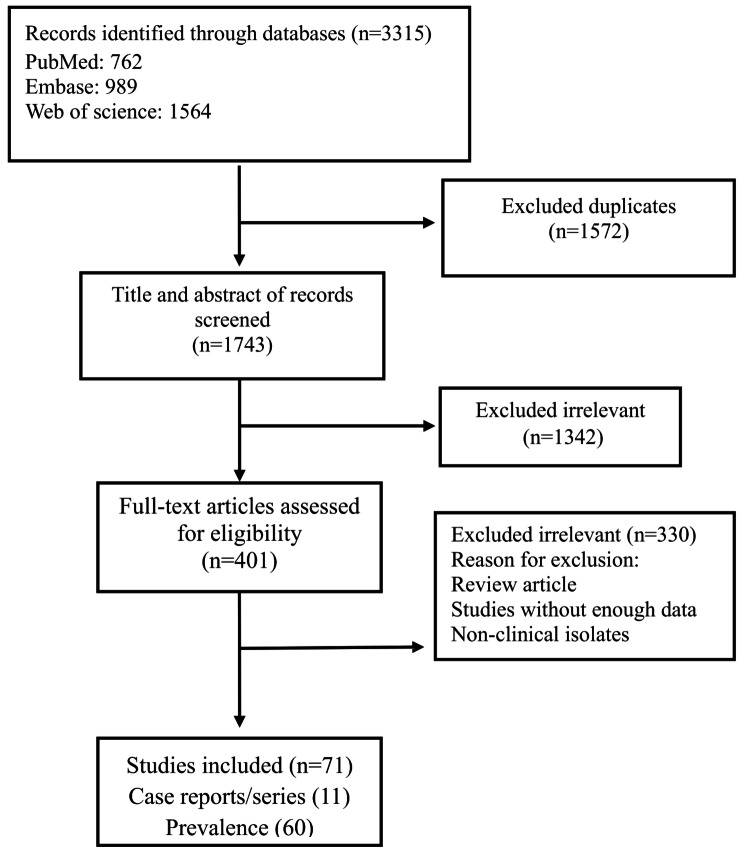
Background: Colorectal cancer (CRC) is the second deadliest carcinoma across the globe and has been known as a multi-factor induced-disease. Emerging research have demonstrated that bacterial colonization may contribute to the initiation and promotion of the CRC. The presence of Fusobacterium nucleatum (F. nucleatum) and Bacteroides fragilis (B. fragilis) in the gut is associated with the development of CRC. In this study, the prevalence of F. nucleatum and B. fragilis among CRC patients has been assessed worldwide through a systematic review and meta-analysis.
Methods: The extensive search was performed using "Fusobacterium nucleatum", "Bacteroides fragilis", "Colorectal cancer" and all relevant keywords. Then, a systematic paper screening was done following a comprehensive search in Embase, Web of Science, and PubMed databases while the time range was limited between the years 2000 and 2024. Afterwards, statistical analysis was performed utilizing the comprehensive meta-analysis (CMA) software (version 2.0, Biostat, USA).
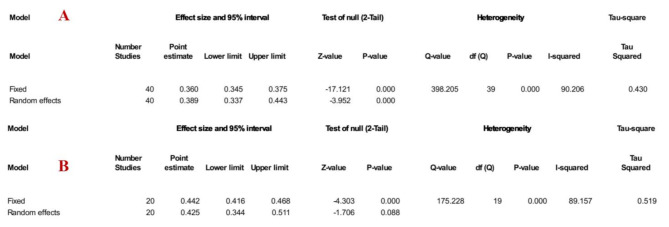
Results: According to the meta-analysis of prevalence studies, the prevalence of F. nucleatum among 19 countries and B. fragilis among 10 countries were indicated to be 38.9% (95% CI 33.7-44.3%) and 42.5% (95% CI 34.4-51.1%), respectively, among the CRC patients. It was then revealed that Asia had the highest prevalence of F. nucleatum while most of the B. fragilis isolates in CRC cases were reported in European countries. Moreover, the data suggested that the most common comorbidity observed among the CRC cases was diabetes.
Conclusion: Our results emphasized the high prevalence of F. nucleatum and B. fragilis in CRC patients. Based on this meta-analysis review, regulating the gut microbiota in CRC patients seemed to be a promising approach to improving the efficacy of CRC therapy.
期刊介绍:
BMC Gastroenterology is an open access, peer-reviewed journal that considers articles on all aspects of the prevention, diagnosis and management of gastrointestinal and hepatobiliary disorders, as well as related molecular genetics, pathophysiology, and epidemiology.





 京公网安备 11010802042870号
京ICP备2023020795号-1
京公网安备 11010802042870号
京ICP备2023020795号-1

 分享
分享
 求助内容:
求助内容: 应助结果提醒方式:
 扫码关注我们
