Fang Ye, Jie Chen, Qin Hui, Die Liu, Qi Sun, Jing Liu, Qi Zhang
{"title":"全文标题:基于广义估计方程的北京婴儿超重患病率及危险因素:一项纵向研究。","authors":"Fang Ye, Jie Chen, Qin Hui, Die Liu, Qi Sun, Jing Liu, Qi Zhang","doi":"10.1186/s12889-025-21704-9","DOIUrl":null,"url":null,"abstract":"<p><strong>Background: </strong>The prevalence of childhood overweight and obesity in China has been rapidly increasing in recent years. The purposes of this study were to investigate the prevalence of infant overweight in Beijing and to explore the influencing factors using a generalized estimating equation (GEE) model.</p><p><strong>Methods: </strong>This is a birth cohort study from January 2022 to December 2022 in Beijing, involving 2,008 newborns from local residents. Four times of follow-up visits were conducted at 2, 5, 8, and 12 months of age for physical measurements and health information collection. Multiple exposures were considered, including demographic characteristics of infants, maternal pregnancy information, feeding pattern and outdoor activities of infants. The GEE model was utilized to identify influencing factors for infant overweight while adjusting for potential confounders.</p><p><strong>Results: </strong>The prevalence of overweight for 2-, 5-, 8-, and 12-month-old infants were 14.4%, 21.6%, 24.4%, and 24.2%, respectively. Among the influencing factors, irregular exercise during pregnancy (OR = 1.190, P = 0.045), mixed feeding or artificial feeding (non-exclusive breastfeeding) (OR = 1.233, P = 0.025), high birth weight (OR = 1.468, P < 0.001), and high pre-pregnancy body mass index (BMI) (OR = 2.113, P = 0.005) were positively correlated with infant overweight. Conversely, weight gain ≤ 15.0 kg during pregnancy (OR = 0.778, P = 0.016), high birth length (OR = 0.990, P = 0.003), and longer duration of outdoor activity for infants (OR = 0.764, P < 0.001) were negatively correlated with infant overweight.</p><p><strong>Conclusions: </strong>Our findings suggest certain factors are associated with infant overweight risk. Further research is required before making causal inferences and formulating preventive strategies for infant overweight.</p>","PeriodicalId":9039,"journal":{"name":"BMC Public Health","volume":"25 1","pages":"543"},"PeriodicalIF":3.6000,"publicationDate":"2025-02-10","publicationTypes":"Journal Article","fieldsOfStudy":null,"isOpenAccess":false,"openAccessPdf":"https://www.ncbi.nlm.nih.gov/pmc/articles/PMC11812179/pdf/","citationCount":"0","resultStr":"{\"title\":\"Full title: prevalence and risk factors of overweight in Beijing infants basing generalized estimating equation: a longitudinal study.\",\"authors\":\"Fang Ye, Jie Chen, Qin Hui, Die Liu, Qi Sun, Jing Liu, Qi Zhang\",\"doi\":\"10.1186/s12889-025-21704-9\",\"DOIUrl\":null,\"url\":null,\"abstract\":\"<p><strong>Background: </strong>The prevalence of childhood overweight and obesity in China has been rapidly increasing in recent years. The purposes of this study were to investigate the prevalence of infant overweight in Beijing and to explore the influencing factors using a generalized estimating equation (GEE) model.</p><p><strong>Methods: </strong>This is a birth cohort study from January 2022 to December 2022 in Beijing, involving 2,008 newborns from local residents. Four times of follow-up visits were conducted at 2, 5, 8, and 12 months of age for physical measurements and health information collection. Multiple exposures were considered, including demographic characteristics of infants, maternal pregnancy information, feeding pattern and outdoor activities of infants. The GEE model was utilized to identify influencing factors for infant overweight while adjusting for potential confounders.</p><p><strong>Results: </strong>The prevalence of overweight for 2-, 5-, 8-, and 12-month-old infants were 14.4%, 21.6%, 24.4%, and 24.2%, respectively. Among the influencing factors, irregular exercise during pregnancy (OR = 1.190, P = 0.045), mixed feeding or artificial feeding (non-exclusive breastfeeding) (OR = 1.233, P = 0.025), high birth weight (OR = 1.468, P < 0.001), and high pre-pregnancy body mass index (BMI) (OR = 2.113, P = 0.005) were positively correlated with infant overweight. Conversely, weight gain ≤ 15.0 kg during pregnancy (OR = 0.778, P = 0.016), high birth length (OR = 0.990, P = 0.003), and longer duration of outdoor activity for infants (OR = 0.764, P < 0.001) were negatively correlated with infant overweight.</p><p><strong>Conclusions: </strong>Our findings suggest certain factors are associated with infant overweight risk. Further research is required before making causal inferences and formulating preventive strategies for infant overweight.</p>\",\"PeriodicalId\":9039,\"journal\":{\"name\":\"BMC Public Health\",\"volume\":\"25 1\",\"pages\":\"543\"},\"PeriodicalIF\":3.6000,\"publicationDate\":\"2025-02-10\",\"publicationTypes\":\"Journal Article\",\"fieldsOfStudy\":null,\"isOpenAccess\":false,\"openAccessPdf\":\"https://www.ncbi.nlm.nih.gov/pmc/articles/PMC11812179/pdf/\",\"citationCount\":\"0\",\"resultStr\":null,\"platform\":\"Semanticscholar\",\"paperid\":null,\"PeriodicalName\":\"BMC Public Health\",\"FirstCategoryId\":\"3\",\"ListUrlMain\":\"https://doi.org/10.1186/s12889-025-21704-9\",\"RegionNum\":2,\"RegionCategory\":\"医学\",\"ArticlePicture\":[],\"TitleCN\":null,\"AbstractTextCN\":null,\"PMCID\":null,\"EPubDate\":\"\",\"PubModel\":\"\",\"JCR\":\"Q1\",\"JCRName\":\"PUBLIC, ENVIRONMENTAL & OCCUPATIONAL HEALTH\",\"Score\":null,\"Total\":0}","platform":"Semanticscholar","paperid":null,"PeriodicalName":"BMC Public Health","FirstCategoryId":"3","ListUrlMain":"https://doi.org/10.1186/s12889-025-21704-9","RegionNum":2,"RegionCategory":"医学","ArticlePicture":[],"TitleCN":null,"AbstractTextCN":null,"PMCID":null,"EPubDate":"","PubModel":"","JCR":"Q1","JCRName":"PUBLIC, ENVIRONMENTAL & OCCUPATIONAL HEALTH","Score":null,"Total":0}
引用次数: 0
摘要
背景:近年来,中国儿童超重和肥胖患病率呈快速上升趋势。摘要本研究采用广义估计方程(GEE)模型对北京市婴幼儿超重患病率进行调查,并探讨其影响因素。方法:本研究为2022年1月至2022年12月在北京进行的出生队列研究,涉及2008名来自当地居民的新生儿。在2、5、8和12个月时进行了四次随访,以进行身体测量和健康信息收集。多重暴露因素包括婴儿人口统计学特征、母亲妊娠信息、喂养方式和婴儿户外活动。GEE模型用于确定婴儿超重的影响因素,同时调整潜在的混杂因素。结果:2月龄、5月龄、8月龄和12月龄婴幼儿超重患病率分别为14.4%、21.6%、24.4%和24.2%。影响因素包括孕期运动不规律(OR = 1.190, P = 0.045)、混合喂养或人工喂养(非纯母乳喂养)(OR = 1.233, P = 0.025)、出生体重过高(OR = 1.468, P)。在对婴儿超重作出因果推论和制定预防策略之前,需要进一步的研究。
Full title: prevalence and risk factors of overweight in Beijing infants basing generalized estimating equation: a longitudinal study.
Background: The prevalence of childhood overweight and obesity in China has been rapidly increasing in recent years. The purposes of this study were to investigate the prevalence of infant overweight in Beijing and to explore the influencing factors using a generalized estimating equation (GEE) model.
Methods: This is a birth cohort study from January 2022 to December 2022 in Beijing, involving 2,008 newborns from local residents. Four times of follow-up visits were conducted at 2, 5, 8, and 12 months of age for physical measurements and health information collection. Multiple exposures were considered, including demographic characteristics of infants, maternal pregnancy information, feeding pattern and outdoor activities of infants. The GEE model was utilized to identify influencing factors for infant overweight while adjusting for potential confounders.
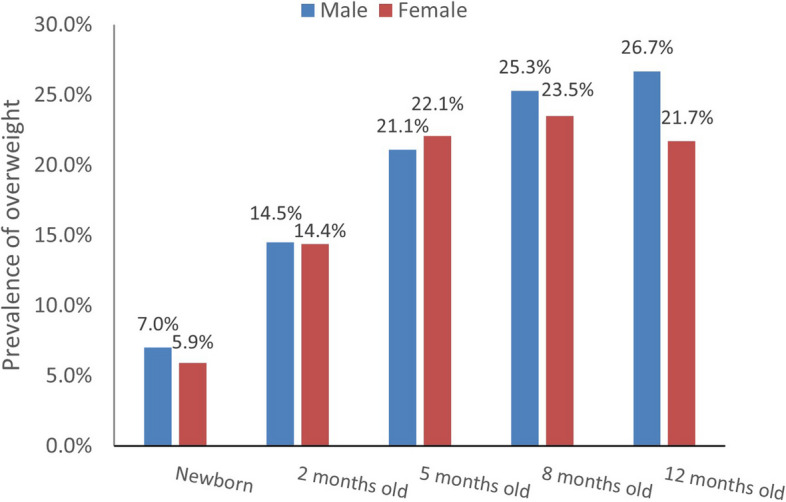
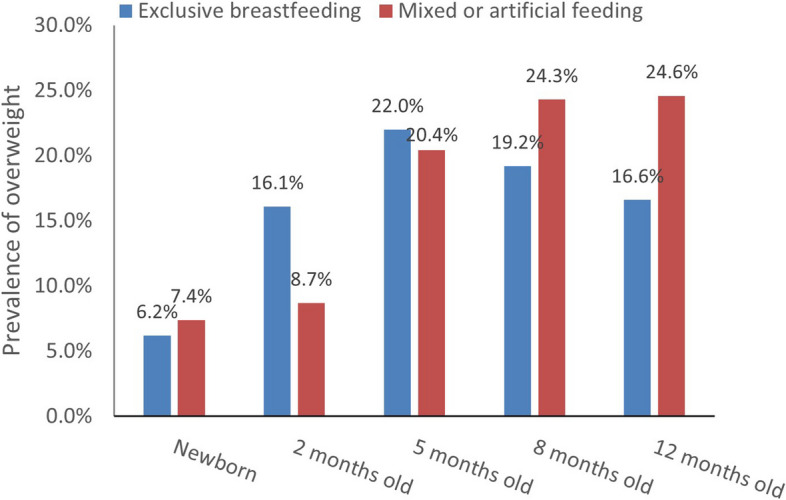
Results: The prevalence of overweight for 2-, 5-, 8-, and 12-month-old infants were 14.4%, 21.6%, 24.4%, and 24.2%, respectively. Among the influencing factors, irregular exercise during pregnancy (OR = 1.190, P = 0.045), mixed feeding or artificial feeding (non-exclusive breastfeeding) (OR = 1.233, P = 0.025), high birth weight (OR = 1.468, P < 0.001), and high pre-pregnancy body mass index (BMI) (OR = 2.113, P = 0.005) were positively correlated with infant overweight. Conversely, weight gain ≤ 15.0 kg during pregnancy (OR = 0.778, P = 0.016), high birth length (OR = 0.990, P = 0.003), and longer duration of outdoor activity for infants (OR = 0.764, P < 0.001) were negatively correlated with infant overweight.
Conclusions: Our findings suggest certain factors are associated with infant overweight risk. Further research is required before making causal inferences and formulating preventive strategies for infant overweight.
期刊介绍:
BMC Public Health is an open access, peer-reviewed journal that considers articles on the epidemiology of disease and the understanding of all aspects of public health. The journal has a special focus on the social determinants of health, the environmental, behavioral, and occupational correlates of health and disease, and the impact of health policies, practices and interventions on the community.





 京公网安备 11010802042870号
京ICP备2023020795号-1
京公网安备 11010802042870号
京ICP备2023020795号-1

 分享
分享
 求助内容:
求助内容: 应助结果提醒方式:
 扫码关注我们
