Olivia Marie Soliman, Antonina Mikocka-Walus, Molly M Warner, David Skvarc, Lisa Olive, Simon R Knowles
{"title":"系统回顾和荟萃分析:检查胃肠道疾病患者饮食失调量表的心理测量评估。","authors":"Olivia Marie Soliman, Antonina Mikocka-Walus, Molly M Warner, David Skvarc, Lisa Olive, Simon R Knowles","doi":"10.1111/nmo.15018","DOIUrl":null,"url":null,"abstract":"<p><strong>Background: </strong>The scales used to assess disordered eating are often not validated in adults living with gastrointestinal conditions (i.e., gastrointestinal populations). This systematic review and meta-analysis aimed to examine the psychometric evaluations (i.e., assessments of reliability and validity) of disordered eating scales in adult gastrointestinal populations and quantify the prevalence of disordered eating in both gastrointestinal and non-gastrointestinal populations.</p><p><strong>Methods: </strong>We conducted a search of observational studies up to May 2024 that measured disordered eating using a scale in adults with a gastrointestinal condition. Psychometric evaluations of the scales were narratively reviewed. Prevalence rates of disordered eating were pooled using a random-effects meta-analysis, and risk of bias was assessed using an adapted Newcastle Ottawa Scale.</p><p><strong>Key results: </strong>Among 29 studies (overall medium risk of bias), 23 reported prevalences of disordered eating in gastrointestinal populations, and eight of these studies also reported prevalences in non-gastrointestinal populations. Only one out of 10 scales was developed and psychometrically evaluated in gastrointestinal populations, and 11 studies reported internal consistency (range α = 0.63 to α = 0.95). The prevalence of disordered eating was 33.2% (p < 0.001; 95% confidence interval: 0.25-0.41; I<sup>2</sup> = 97.34%) in gastrointestinal populations and 21.0% (p < 0.001; 95% confidence interval: 0.09-0.32; I<sup>2</sup> = 97.41%) in non-gastrointestinal populations. Subgroup analyses showed consistently high heterogeneity.</p><p><strong>Conclusions and inferences: </strong>The utilisation of current disordered eating scales for adults living with gastrointestinal conditions should be undertaken with caution, and there is a need for disordered eating scales to be developed and validated in this population.</p>","PeriodicalId":19123,"journal":{"name":"Neurogastroenterology and Motility","volume":" ","pages":"e15018"},"PeriodicalIF":3.0000,"publicationDate":"2025-05-01","publicationTypes":"Journal Article","fieldsOfStudy":null,"isOpenAccess":false,"openAccessPdf":"https://www.ncbi.nlm.nih.gov/pmc/articles/PMC11996053/pdf/","citationCount":"0","resultStr":"{\"title\":\"Systematic Review and Meta-Analysis: Examining the Psychometric Evaluations of Disordered Eating Scales in Adults Living With Gastrointestinal Conditions.\",\"authors\":\"Olivia Marie Soliman, Antonina Mikocka-Walus, Molly M Warner, David Skvarc, Lisa Olive, Simon R Knowles\",\"doi\":\"10.1111/nmo.15018\",\"DOIUrl\":null,\"url\":null,\"abstract\":\"<p><strong>Background: </strong>The scales used to assess disordered eating are often not validated in adults living with gastrointestinal conditions (i.e., gastrointestinal populations). This systematic review and meta-analysis aimed to examine the psychometric evaluations (i.e., assessments of reliability and validity) of disordered eating scales in adult gastrointestinal populations and quantify the prevalence of disordered eating in both gastrointestinal and non-gastrointestinal populations.</p><p><strong>Methods: </strong>We conducted a search of observational studies up to May 2024 that measured disordered eating using a scale in adults with a gastrointestinal condition. Psychometric evaluations of the scales were narratively reviewed. Prevalence rates of disordered eating were pooled using a random-effects meta-analysis, and risk of bias was assessed using an adapted Newcastle Ottawa Scale.</p><p><strong>Key results: </strong>Among 29 studies (overall medium risk of bias), 23 reported prevalences of disordered eating in gastrointestinal populations, and eight of these studies also reported prevalences in non-gastrointestinal populations. Only one out of 10 scales was developed and psychometrically evaluated in gastrointestinal populations, and 11 studies reported internal consistency (range α = 0.63 to α = 0.95). The prevalence of disordered eating was 33.2% (p < 0.001; 95% confidence interval: 0.25-0.41; I<sup>2</sup> = 97.34%) in gastrointestinal populations and 21.0% (p < 0.001; 95% confidence interval: 0.09-0.32; I<sup>2</sup> = 97.41%) in non-gastrointestinal populations. Subgroup analyses showed consistently high heterogeneity.</p><p><strong>Conclusions and inferences: </strong>The utilisation of current disordered eating scales for adults living with gastrointestinal conditions should be undertaken with caution, and there is a need for disordered eating scales to be developed and validated in this population.</p>\",\"PeriodicalId\":19123,\"journal\":{\"name\":\"Neurogastroenterology and Motility\",\"volume\":\" \",\"pages\":\"e15018\"},\"PeriodicalIF\":3.0000,\"publicationDate\":\"2025-05-01\",\"publicationTypes\":\"Journal Article\",\"fieldsOfStudy\":null,\"isOpenAccess\":false,\"openAccessPdf\":\"https://www.ncbi.nlm.nih.gov/pmc/articles/PMC11996053/pdf/\",\"citationCount\":\"0\",\"resultStr\":null,\"platform\":\"Semanticscholar\",\"paperid\":null,\"PeriodicalName\":\"Neurogastroenterology and Motility\",\"FirstCategoryId\":\"3\",\"ListUrlMain\":\"https://doi.org/10.1111/nmo.15018\",\"RegionNum\":3,\"RegionCategory\":\"医学\",\"ArticlePicture\":[],\"TitleCN\":null,\"AbstractTextCN\":null,\"PMCID\":null,\"EPubDate\":\"2025/2/10 0:00:00\",\"PubModel\":\"Epub\",\"JCR\":\"Q1\",\"JCRName\":\"CLINICAL NEUROLOGY\",\"Score\":null,\"Total\":0}","platform":"Semanticscholar","paperid":null,"PeriodicalName":"Neurogastroenterology and Motility","FirstCategoryId":"3","ListUrlMain":"https://doi.org/10.1111/nmo.15018","RegionNum":3,"RegionCategory":"医学","ArticlePicture":[],"TitleCN":null,"AbstractTextCN":null,"PMCID":null,"EPubDate":"2025/2/10 0:00:00","PubModel":"Epub","JCR":"Q1","JCRName":"CLINICAL NEUROLOGY","Score":null,"Total":0}
Systematic Review and Meta-Analysis: Examining the Psychometric Evaluations of Disordered Eating Scales in Adults Living With Gastrointestinal Conditions.
Background: The scales used to assess disordered eating are often not validated in adults living with gastrointestinal conditions (i.e., gastrointestinal populations). This systematic review and meta-analysis aimed to examine the psychometric evaluations (i.e., assessments of reliability and validity) of disordered eating scales in adult gastrointestinal populations and quantify the prevalence of disordered eating in both gastrointestinal and non-gastrointestinal populations.
Methods: We conducted a search of observational studies up to May 2024 that measured disordered eating using a scale in adults with a gastrointestinal condition. Psychometric evaluations of the scales were narratively reviewed. Prevalence rates of disordered eating were pooled using a random-effects meta-analysis, and risk of bias was assessed using an adapted Newcastle Ottawa Scale.
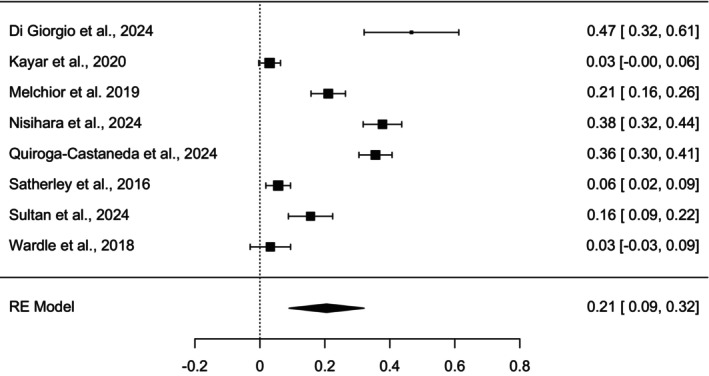
Key results: Among 29 studies (overall medium risk of bias), 23 reported prevalences of disordered eating in gastrointestinal populations, and eight of these studies also reported prevalences in non-gastrointestinal populations. Only one out of 10 scales was developed and psychometrically evaluated in gastrointestinal populations, and 11 studies reported internal consistency (range α = 0.63 to α = 0.95). The prevalence of disordered eating was 33.2% (p < 0.001; 95% confidence interval: 0.25-0.41; I2 = 97.34%) in gastrointestinal populations and 21.0% (p < 0.001; 95% confidence interval: 0.09-0.32; I2 = 97.41%) in non-gastrointestinal populations. Subgroup analyses showed consistently high heterogeneity.
Conclusions and inferences: The utilisation of current disordered eating scales for adults living with gastrointestinal conditions should be undertaken with caution, and there is a need for disordered eating scales to be developed and validated in this population.
期刊介绍:
Neurogastroenterology & Motility (NMO) is the official Journal of the European Society of Neurogastroenterology & Motility (ESNM) and the American Neurogastroenterology and Motility Society (ANMS). It is edited by James Galligan, Albert Bredenoord, and Stephen Vanner. The editorial and peer review process is independent of the societies affiliated to the journal and publisher: Neither the ANMS, the ESNM or the Publisher have editorial decision-making power. Whenever these are relevant to the content being considered or published, the editors, journal management committee and editorial board declare their interests and affiliations.






 京公网安备 11010802042870号
京ICP备2023020795号-1
京公网安备 11010802042870号
京ICP备2023020795号-1

 分享
分享
 求助内容:
求助内容: 应助结果提醒方式:
 扫码关注我们
